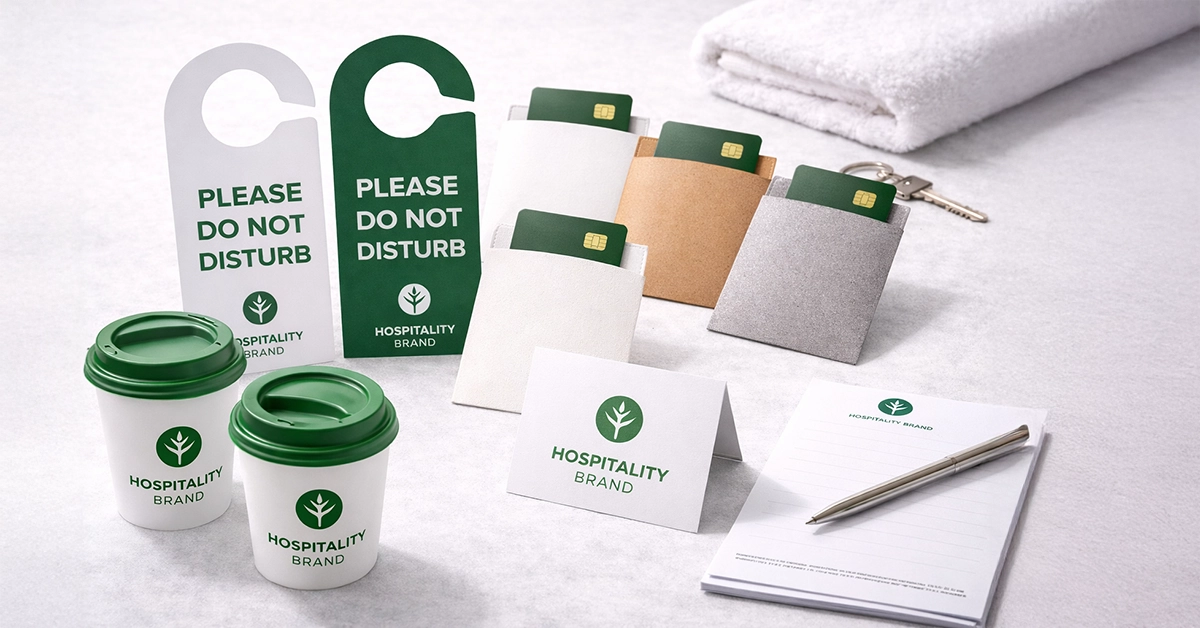
Branding in the hospitality sector extends far beyond logos or décor. Every printed item, such as a keycard holder, a guest interacts with supports how they perceive your hotel, venue or hospitality business. From the moment they arrive to the moment they leave, printed touchpoints influence trust, comfort and overall satisfaction.
This guide explains why guest touchpoint printing matters, which items are essential, and how to create consistent, high-quality materials that strengthen your brand throughout the entire guest journey.
Guests form opinions quickly. A well-designed keycard holder, a clear guest directory or a high-quality menu communicates professionalism and care. Research shows that brand consistency strongly correlates with guest satisfaction, making print a strategic asset rather than a functional necessity.
In the UK hospitality landscape, guests compare properties not just by cost but by perceived quality and atmosphere. Print remains one of the most effective ways to express identity, support navigation and create a cohesive, memorable experience.
Understanding every step of the guest journey helps identify where print can enhance communication and brand presence.
Each touchpoint contributes to a smooth and consistent brand experience.
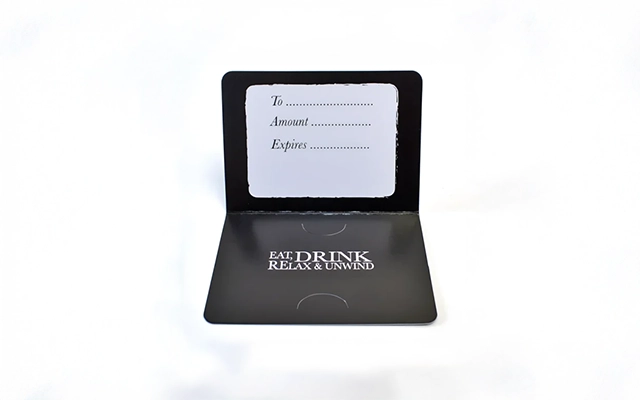
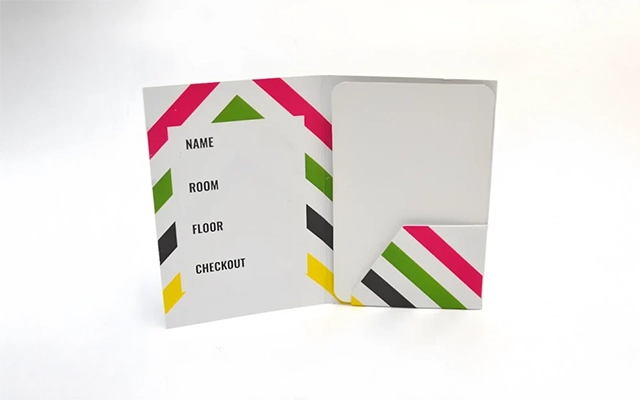
A strong hospitality print strategy covers several key categories.
These assets support communication, reinforce brand identity and help guests navigate your venue.
| Print Touchpoint | Primary Purpose | Where It Impacts the Guest Journey |
|---|---|---|
| Keycard holder | Sets first impression and communicates brand tone | Arrival |
| Guest directory | Provides in-room information and reinforces identity | In-stay |
| Menus | Shapes atmosphere and communicates food offering | F&B |
| Directional signage | Improves navigation and accessibility | Arrival / In-stay |
| Gift vouchers | Drives return visits and referrals | Departure / Marketing |
| Loyalty cards | Supports retention and reward programmes | Departure |
| Welcome folder | Organises important information for guests | Arrival |
| Door hanger | Communicates housekeeping preferences | In-stay |
Brand consistency builds trust and supports recognition. To achieve this, develop clear brand guidelines covering colour palette and typography, logo usage, photography and iconography, tone of voice for guest communication, and layout rules for print templates.
When these elements are aligned, every printed item feels intentional and professional. Consistency should also extend to staff communication, ensuring both service and materials reflect the same standard.
Printed items should align with the character and expectations of your venue.
These choices help create a coherent visual identity across the guest journey.
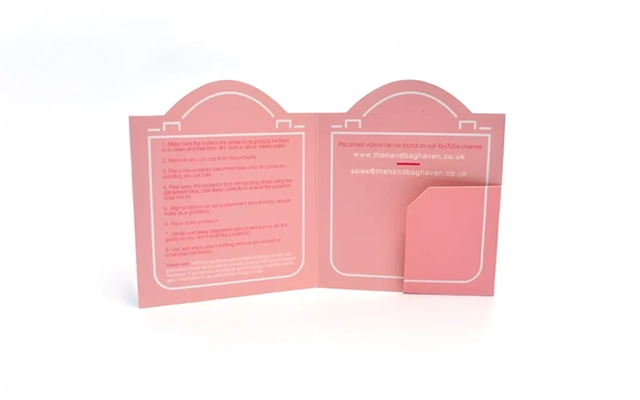
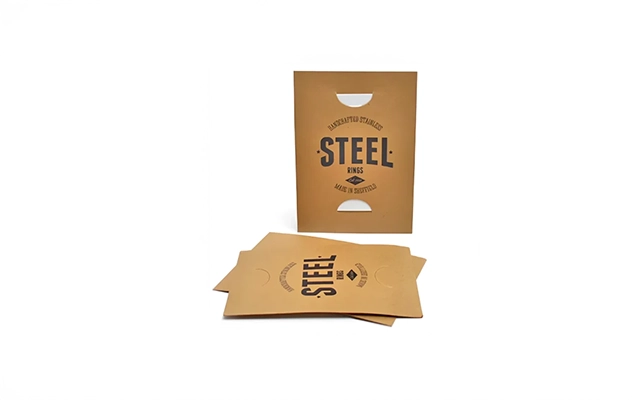
Print and digital touchpoints work best when used together. For example, QR codes on menus for allergen updates, printed maps connecting to digital guides, and WiFi cards linking to hotel apps or online directories.
Print provides the tactile foundation of the brand, while digital assets offer dynamic updates and convenience.
Sustainable print practices are increasingly important to guests. Hospitality brands can show their commitment by using FSC-certified or recycled paper, choosing environmentally conscious inks, reducing waste through responsible ordering, designing materials intended for re-use rather than disposal, and ensuring printed items remain durable and long-lasting.
Sustainability is not only an operational choice but a branding decision that shapes how guests perceive your values.
Use this framework to improve clarity, consistency and value across your printed assets.
This structured approach ensures long-term consistency and quality.
A few typical examples of how hospitality businesses apply thoughtful print design include a boutique hotel using textured, earthy paper stocks to reinforce a warm, rustic atmosphere, a spa resort choosing soft-touch laminated guest directories to convey tranquillity, and an eco-friendly retreat adopting uncoated recycled paper and minimalist layouts to reflect its values.
These details help express personality and shape guest perception.
Printed touchpoints are one of the most consistent and influential parts of the hospitality experience. When each item is designed with intention, aligned with brand guidelines and integrated into the wider guest journey, print becomes a powerful tool for building trust, encouraging repeat visits and reinforcing brand identity.
Strong hospitality branding is built on clarity, consistency and thoughtful design. Print remains central to that success.
If you want stronger guest experiences and more consistent branding across your venue, now is the time to review your printed materials. Identify areas for improvement, consider whether your current assets support your identity, and explore how a refreshed print strategy could create a more seamless guest journey.

Unit 4-10 Stanton Road Ind. Est.
Stanton Road
Southampton
Hampshire
United Kingdom
SO15 4HU