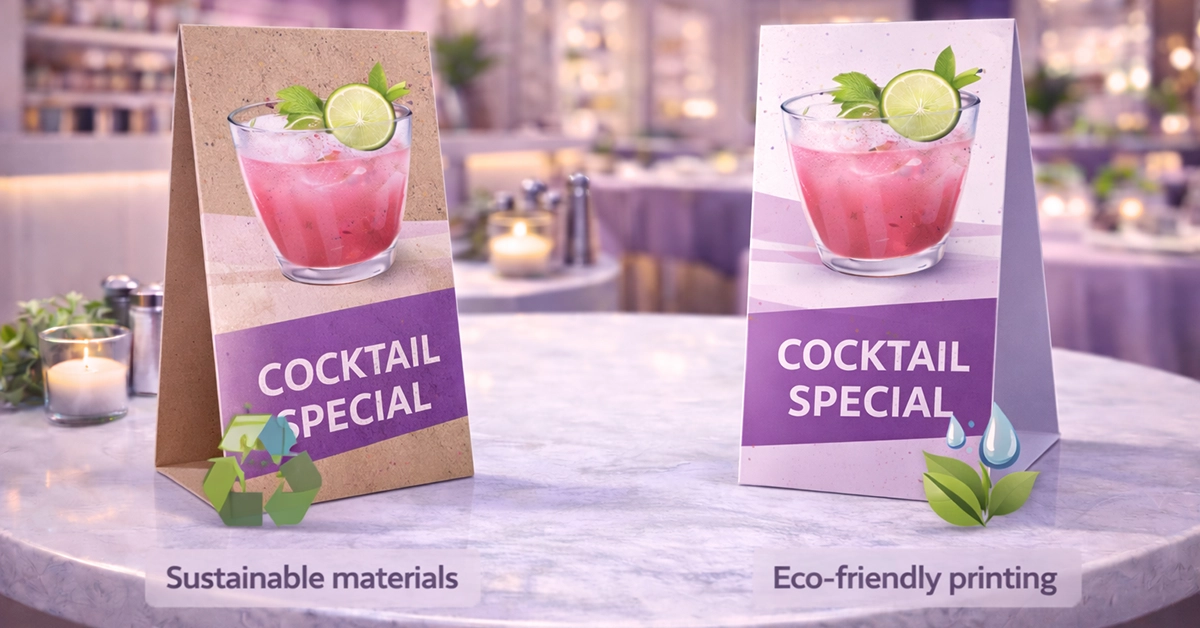
Sustainability has rapidly become a deciding factor for UK consumers choosing where to shop, dine, and spend their time. For retail and hospitality buyers, this shift means even the most familiar marketing tools – including table talkers – are under new scrutiny. Choosing sustainable printing is now a practical, brand-strengthening way to reduce waste, support environmental goals, and meet customer expectations.
This guide explores what sustainable table talker printing involves, the materials and methods that make the greatest impact, and how UK venues can integrate eco-friendly approaches into their marketing.
Table talkers remain one of the most effective point-of-sale displays in hospitality and retail. Sustainable printing focuses on producing these items in ways that reduce environmental impact through responsible sourcing, low-waste production, and improved recyclability.
Sustainable printing typically includes:
These choices support brand integrity while responding to the growing demand for environmentally responsible venues across the UK.
The Forest Stewardship Council provides clear guidance on responsibly sourced materials.
Choosing the right material has the greatest influence on the environmental impact of printed table talkers.
FSC certification assures buyers that fibres come from forests managed with environmental and social responsibility. This remains the most recognised sustainability credential among UK consumers.
Modern recycled stocks offer excellent print performance and significantly reduce reliance on virgin materials. They support circular economy goals without compromising print clarity.
Paper-based table talkers with minimal coatings are widely accepted by UK recycling facilities and help reduce landfill waste.
These sustainable materials are durable enough for high-traffic environments while still supporting responsible procurement.
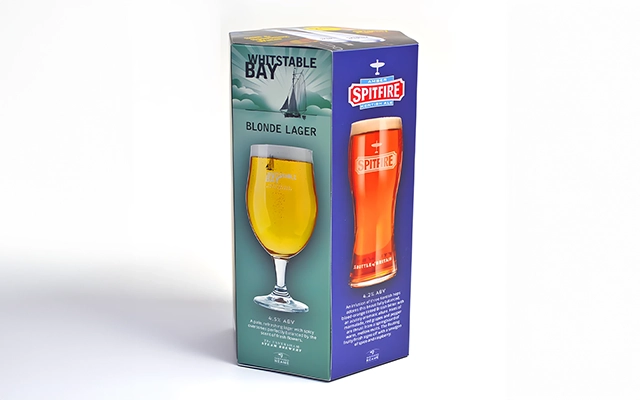

Beyond materials, sustainable table talker printing also relies on environmentally conscious production techniques.
These inks produce strong colours with lower volatile organic compound (VOC) emissions. They also support easier recycling compared with petroleum-based alternatives.
Digital production allows businesses to print only what they need. This results in:
Some print providers offer carbon-balanced processes or offset schemes, helping businesses account for the emissions associated with print production.
These methods support both environmental responsibility and procurement efficiency.
Environmentally responsible marketing materials do more than reduce waste – they strengthen brand perception and improve campaign performance.
Visible sustainability cues can influence customer choices at tables, counters, and checkout points, making eco-friendly table talkers a strategic asset.
This table supports quick decision-making when briefing a print supplier about the type of table talker you require.
| Sustainability Factor | Why It Matters | What Buyers Should Ask |
|---|---|---|
| FSC-Certified Paper | Responsible forest sourcing | “Is this paper FSC certified?” |
| Recycled Stocks | Reduced environmental impact | “What recycled options do you offer?” |
| Low-VOC or Vegetable Inks | Lower emissions and easier recycling | “Are low-VOC inks available?” |
| Digital Printing | Minimal waste and efficient short runs | “Can this be printed digitally?” |
| Recyclable Finishes | Easier end-of-life processing | “Is the finish compatible with recycling?” |
| Carbon-Conscious Production | Supports ESG reporting and sustainability goals | “Do you offer carbon-balanced print options?” |
Sustainable table talkers maintain the same promotional impact as traditional versions while supporting modern expectations around environmental responsibility.
They are especially effective for:
Using QR codes can reduce the frequency of reprints, supporting both sustainability and cost control. Clear eco-labelling also helps customers recognise your commitment to responsible practices.
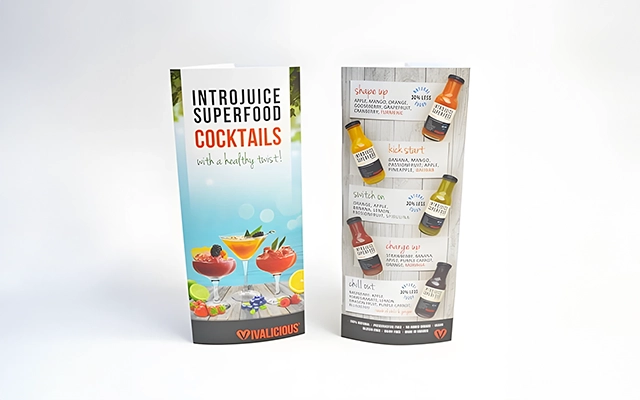

The assumption that sustainable printing is significantly more expensive is outdated. Pricing for eco-friendly materials has become far more accessible due to wider availability and improved production efficiency.
Cost advantages may include:
Many venues find that the commercial return – through improved customer perception and reduced waste – outweighs any small differences in material costs.
Before approving a table talker order, buyers should consider the following:
This ensures that sustainability claims are genuine and measurable.
Many UK venues have introduced sustainable table talkers as part of broader environmental initiatives. Examples include restaurants using recycled materials for seasonal campaigns and retail counters incorporating FSC-certified signage to reinforce their sustainability commitments. These efforts often deliver positive customer feedback and lead to measurable reductions in print waste.
Thoughtful design choices can further improve sustainability outcomes without affecting visual impact.
Recommended practices include:
Small adjustments during the design stage can significantly cut environmental impact while improving production efficiency.
Sustainable table talker printing gives UK hospitality and retail teams a practical, effective way to lower environmental impact while strengthening customer trust. By selecting responsible materials, efficient production methods, and thoughtful designs, your venue can deliver impactful point-of-sale messaging that aligns with modern expectations.
If you are ready to incorporate sustainable table talkers into your marketing mix, now is the ideal moment to begin. Review your current approach, speak with your preferred print partner, and take the next step towards environmentally responsible, high-performing printed marketing.

Unit 4-10 Stanton Road Ind. Est.
Stanton Road
Southampton
Hampshire
United Kingdom
SO15 4HU