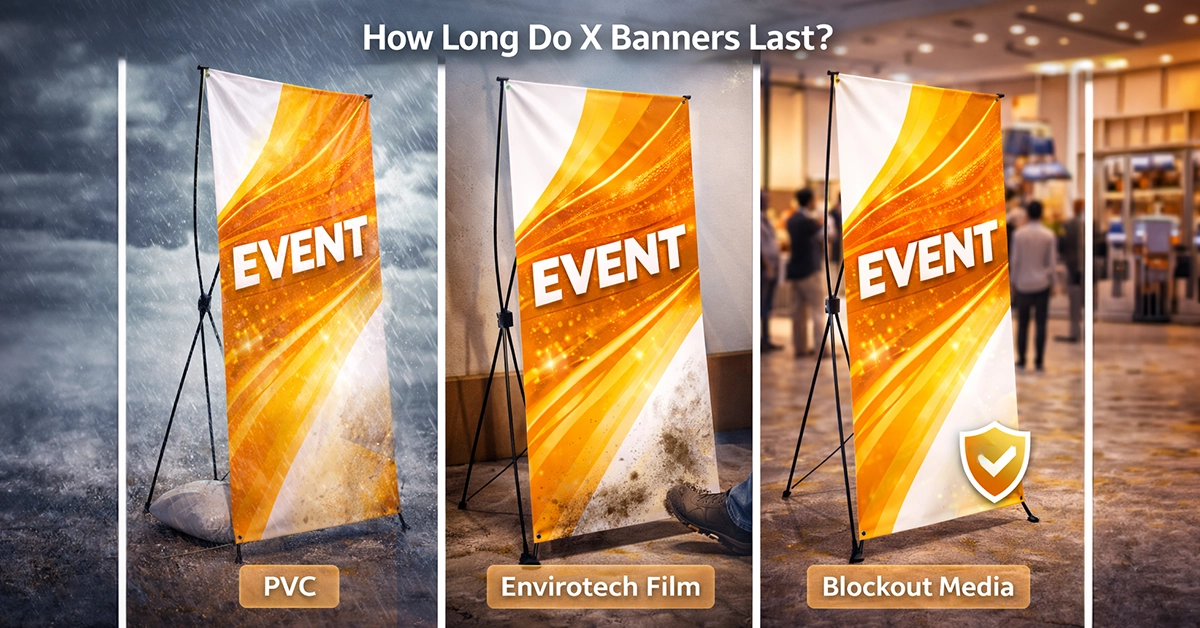
Printed X banners remain a trusted choice for UK businesses, charities and event teams that need a portable display with strong visual impact. One of the most common concerns for buyers is understanding exactly how long an X banner lasts and what affects its performance over time.
This guide explains the factors that influence lifespan, how durability is tested, and what real-world performance looks like for indoor and outdoor use. You’ll also find a practical reference table and insights that help you choose the right materials and conditions for long-term value.
The lifespan of an X banner depends on a combination of material quality, printing method, handling habits and the environment it is used in. Understanding how these factors interact helps you make informed decisions when investing in display graphics.
These variables determine whether a banner lasts months or several years.
For additional background on material longevity, refer to the British Plastics Federation.
Choosing the right graphic material is a major contributor to overall lifespan.
PVC remains the most widely used option for X banners due to its durability and moisture resistance. Key benefits include:
Indoor PVC banners typically last 2–5 years, while outdoor exposure reduces this dramatically to 3–12 months, depending on UV strength and weather.
For UK UV index information, see the Met Office.
Fabric prints deliver a smoother, crease-resistant finish and perform best indoors. They offer:
Expected lifespan indoors is 2–4 years, though long-term outdoor use is not recommended.
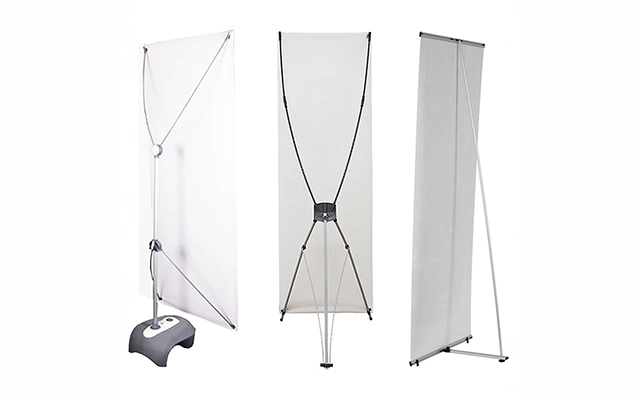
Hardware durability is just as important as the printed graphic.
When properly stored and handled, X banner hardware generally lasts 1–5 years, with the lower end associated with frequent transport and reassembly.
Environmental exposure significantly impacts the life of an X banner.
Indoor use offers:
With responsible storage, indoor banners often last 2–5 years.
Outdoor conditions introduce:
Outdoor banners typically last 3–12 months, depending on the season and location. Even limited outdoor use can accelerate wear. Weather guidance is available through the Met Office’s UV and climate data.
| Usage Type | Material | Expected Lifespan | Conditions |
|---|---|---|---|
| Indoor events | PVC or polyester | 2–3 years | Moderate setup and transport |
| Retail POS (static) | PVC or polyester | 3–5 years | Minimal handling |
| Outdoor seasonal use | PVC | 3–12 months | Weather and UV exposure |
| Mobile sales teams | PVC | 1–2 years | Frequent handling |
| Occasional one-off use | PVC or polyester | Many years | Rarely assembled |
To better understand performance, several testing methods are used across the display and signage industry.
Simulated UV light is used to accelerate ageing.
PVC graphics often show minor fade after around 500 hours of exposure.
PVC absorbs virtually no water, making it a strong choice for damp environments.
Fabric may retain moisture, so it performs best indoors.
X banners are not designed for windy conditions.
Wind speeds of 20–25 mph can cause the stand to tip or the print to tear around eyelets.
Repeated setup and breakdown places strain on connectors.
Visible wear commonly occurs after 500–1,000 cycles.
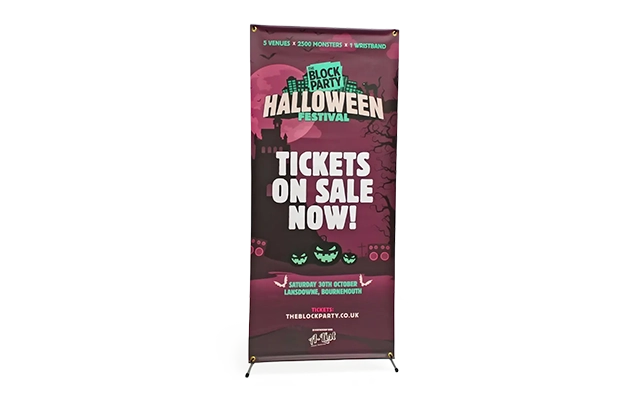
Here’s how X banners typically perform across common UK scenarios:
These ranges reflect common usage patterns across UK industries.
Preventive care has a significant impact on how long your banner lasts.
For guidance on more sustainable materials, WRAP offers helpful insights.
Many UK organisations now look for displays that minimise waste. X banner stands support this by allowing graphics to be replaced while retaining the existing frame. This lowers costs and extends product life.
Alternative materials such as polyester and polypropylene offer improved recyclability compared with PVC, helping businesses move towards more sustainable display choices.
X banner lifespan varies depending on materials, environment and frequency of use. Indoors, a well-maintained banner can last 2–5 years, while outdoor banners often require replacement after 3–12 months due to weathering. Hardware typically lasts 1–5 years, especially when handled and stored correctly.
If you’re planning a new marketing display or reviewing your current setup, now is an ideal time to assess your materials, usage conditions and sustainability goals. Choosing the right combination will help your displays perform consistently across events, campaigns and promotional seasons.

Unit 4-10 Stanton Road Ind. Est.
Stanton Road
Southampton
Hampshire
United Kingdom
SO15 4HU