Keeping marketing displays fresh while controlling spend is a challenge for UK businesses of all sizes. Whether you run events, manage retail promotions or handle branding for a charity, the need for updated visuals never stops. Yet buying new X banner stands for every campaign is costly and unsustainable.
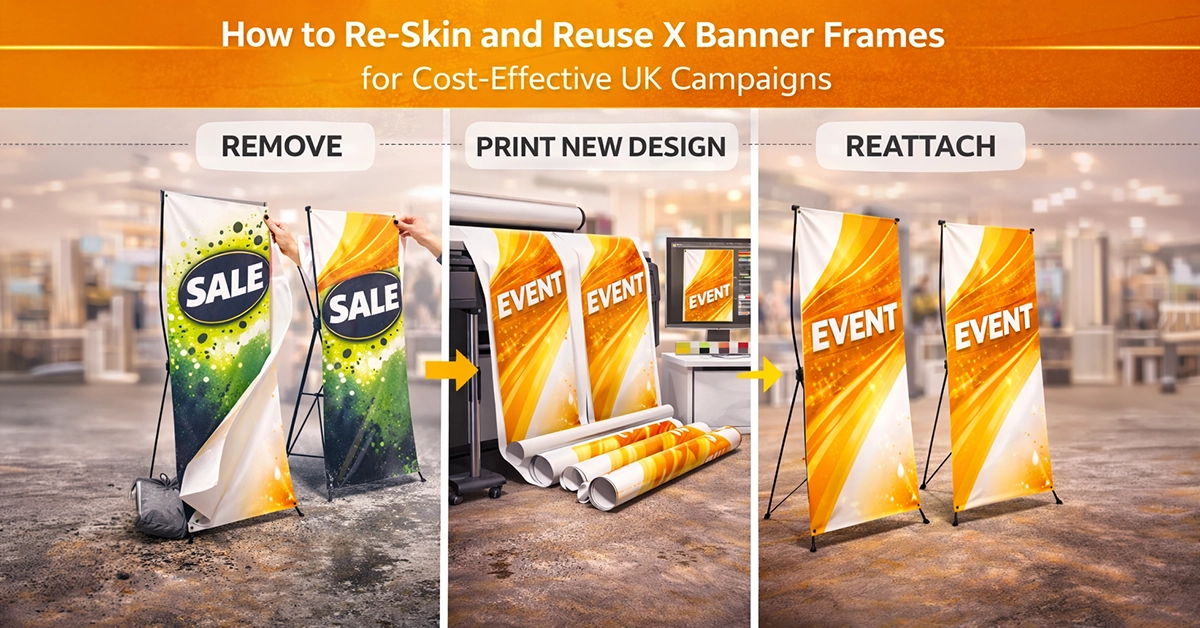
Re-skinning existing X banner frames offers a practical solution. These stands are designed for interchangeable graphics, allowing you to refresh your messaging while reusing your hardware. The result is reduced waste, lower long-term costs and consistently professional campaign displays.
This guide explains how to re-skin X banner frames, how to design artwork for multi-use campaigns and what savings you can expect when you stop replacing entire systems and start updating only the graphics.
Re-skinning is one of the most cost-effective ways to maintain updated campaign materials. Instead of replacing full systems, you simply update the printed panel.
PVC waste remains a significant contributor to UK signage disposal, which makes reuse an effective way to reduce environmental impact. You can also pair this approach with eco-friendly materials to further minimise waste.
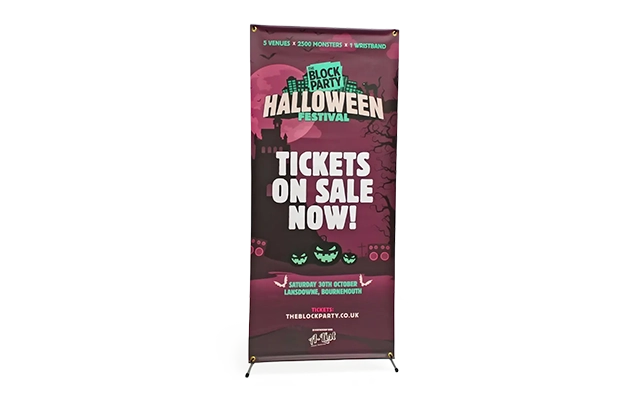
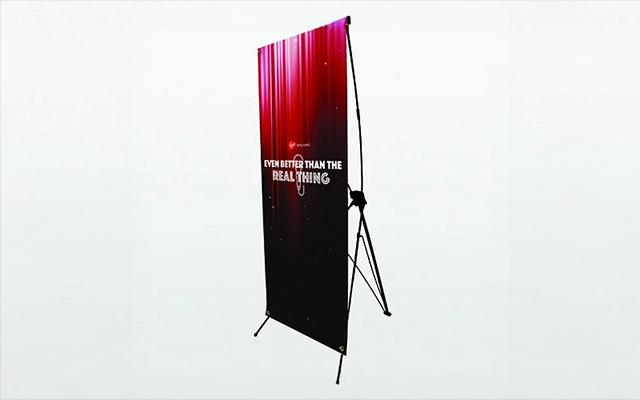
X banners use a lightweight cross-shaped frame with tension arms that clip into eyelets in each corner of the printed skin. Their design makes graphic replacement quick and tool-free.
Common UK display sizes include 800 x 1800 mm and 850 x 2000 mm, both offering strong visibility while remaining easy to transport.
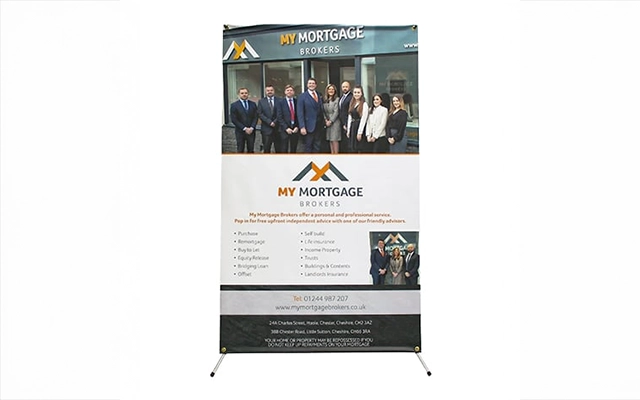
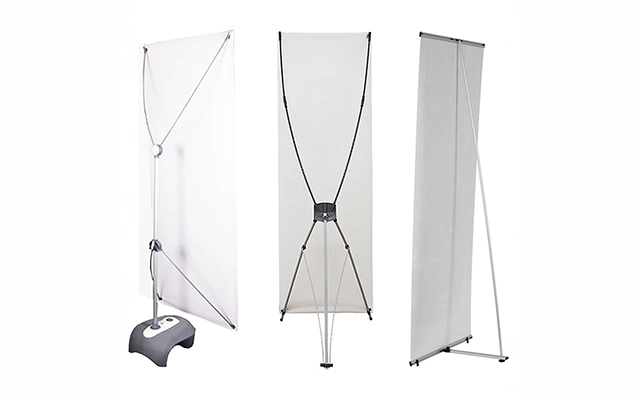
Before ordering a new graphic, check whether your frame is still fit for reuse.
If the frame shows visible twisting, cracking or tension loss, a replacement stand may be necessary. However, most X banner frames last for several years with proper storage and handling.
Re-skinning takes only a few minutes and requires no specialist skills.
Choosing a durable material is essential. PVC remains a reliable choice, but many organisations prefer light-stop films or fabric-based skins for a more sustainable finish. For design setup guidance, we offer print-ready artwork recommendations.
To maximise the working life of each graphic panel, build your artwork with reuse in mind.
This strategic approach ensures your skins can be reused across multiple events or seasons without needing a redesign.
| Category | Key Details | Notes |
|---|---|---|
| Standard UK Sizes | 800 x 1800 mm, 850 x 2000 mm | Most common for retail and event settings |
| Suitable Materials | PVC, light-stop film, eco-focused fabrics | Choose based on durability, sustainability and print quality |
| Typical Frame Lifespan | Several years | Dependent on storage and transport care |
| Replacement Requirement | Only the printed skin | Hardware replaced only if structurally damaged |
| Design Considerations | Avoid dates or fixed offers | Supports long-term reuse |
| Storage Recommendations | Roll loosely, store dry | Prevents creasing, stretching and frame warp |
Reusing existing hardware dramatically reduces long-term marketing costs. While new banner stands include the price of both the frame and the graphic, replacement skins allow you to update messaging for a fraction of the cost.
Beyond financial savings, reducing hardware disposal helps organisations contribute to sustainability goals outlined by government and environmental bodies such as WRAP.
If sustainability is a priority, consider alternative materials that minimise waste without compromising print quality.
Eco-friendly materials are increasingly common across UK print and signage sectors, supporting the shift to more responsible promotional practices.
Good storage habits significantly extend the lifespan of both frame and graphic skins.
With consistent care, X banner frames can support multiple campaigns over several years.
Consider a UK retailer running several seasonal promotions. Instead of buying six new stands across the year, they purchase one durable frame and six interchangeable skins.
Similar savings apply to charities, universities and exhibition planners managing high-frequency campaign changes.
Re-skinning X banner frames is one of the simplest ways to cut marketing costs, reduce waste and maintain a polished campaign presence. With durable hardware, well-planned artwork and suitable materials, you can refresh your message as often as needed without replacing the stand itself.
Now is the ideal time to review your current X banners, identify frames suitable for reuse and create future artwork designed for multi-campaign adaptability.
If you want to reduce costs and waste in your marketing operations, start by examining your existing banner inventory. Look for frames that can be reused, plan new artwork with long-term relevance and choose materials that support your sustainability objectives. Re-skinning allows you to keep your branding current without unnecessary expenditure or landfill waste.

Unit 4-10 Stanton Road Ind. Est.
Stanton Road
Southampton
Hampshire
United Kingdom
SO15 4HU