Print Foiling
At Inprint, we offer two professional foiling methods: Digital Foiling and Hot Foil Stamping. Both add elegance and impact to your printed materials, but they differ in cost, finish, application and production time. Below is your full guide to each technique so you can choose the best option for your project.
- Foiling adds a premium, eye-catching finish to print, ideal for logos, titles and luxury branding.
- Digital Foiling is best for short runs, fast turnaround and personalised items.
- Hot Foil Stamping delivers a luxury, tactile finish and is more cost-effective for larger quantities.
- Digital foiling requires laminated stock; hot foil works on more materials, including textured and uncoated papers.
- Hot foil offers the widest range of foil colours and special effects.
- Inprint provides both foiling methods in-house for high quality and competitive pricing.
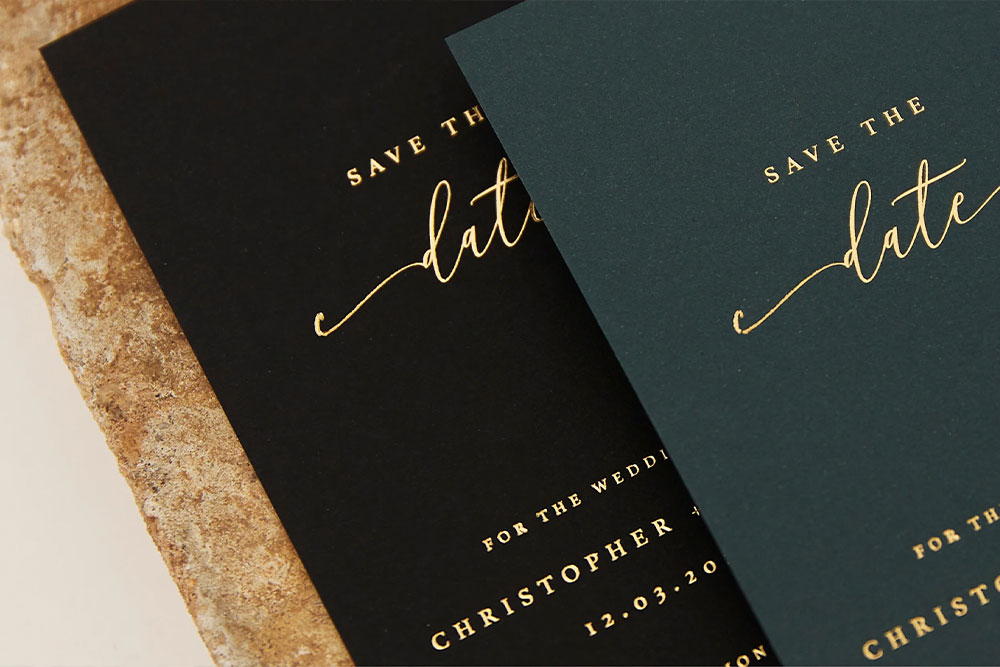
Why Use Foiling?
- Adds a premium, high-end look to branding
- Creates contrast, texture, and shine
- Draws attention to key design elements (logos, titles, patterns, borders)
- Suggests quality and luxury—ideal for brands that want to impress
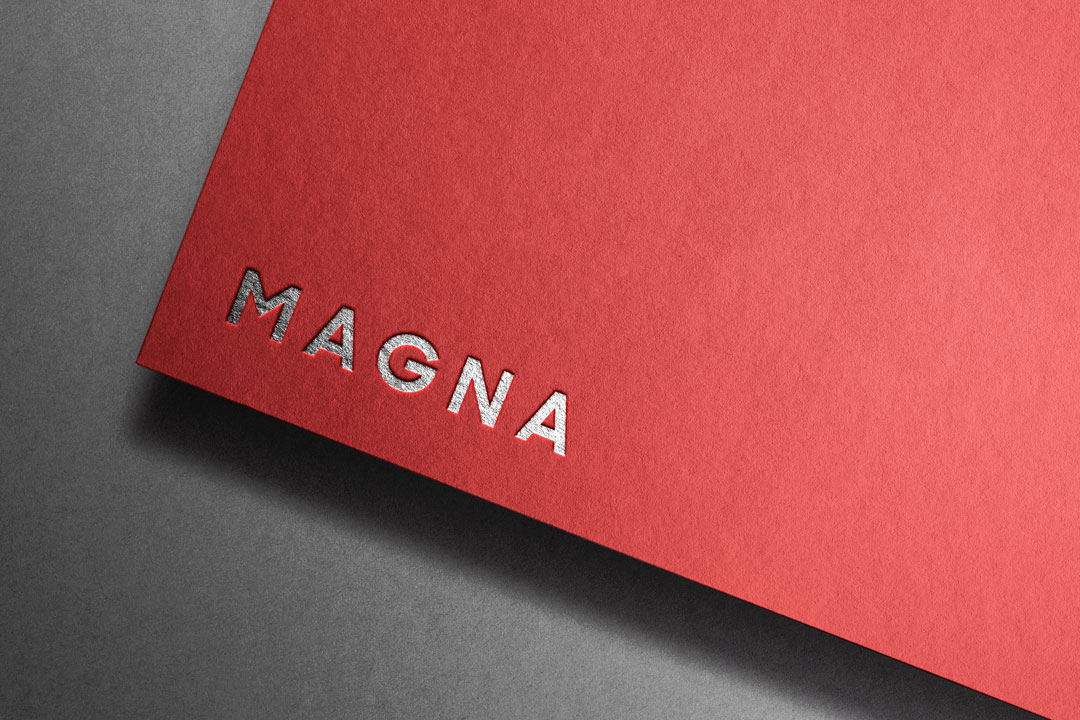
Digital Foiling
Best suited for:
Pros of Digital Foiling
- ✅ Cost-effective for smaller quantities - Because there’s no need to manufacture a physical die, setup costs are minimal—making digital foiling perfect for small or one-off orders.
- ✅ Fast production times - With no die to create, digital foil jobs can be turned around quickly—ideal for urgent or last-minute orders.
- ✅ Variable data compatible - Unlike hot foil stamping, digital foiling can personalise each item in a run — perfect for invitations, certificates or VIP event passes.
Cons of Digital Foiling
- ⚠️ Requires lamination- For best adhesion and durability, digital foiling works on laminated surfaces only—typically matt or soft-touch. If you want a natural, uncoated paper look, hot foil is the better option.
- ⚠️ Sits on the surface - Digital foil doesn’t create the same tactile, indented (de-bossed) finish as hot foil. It is smooth to the touch and slightly less reflective, though the difference is subtle.
- ⚠️ Less suited for large print runs - On high-volume orders, digital foiling becomes less cost-efficient compared to hot foil.
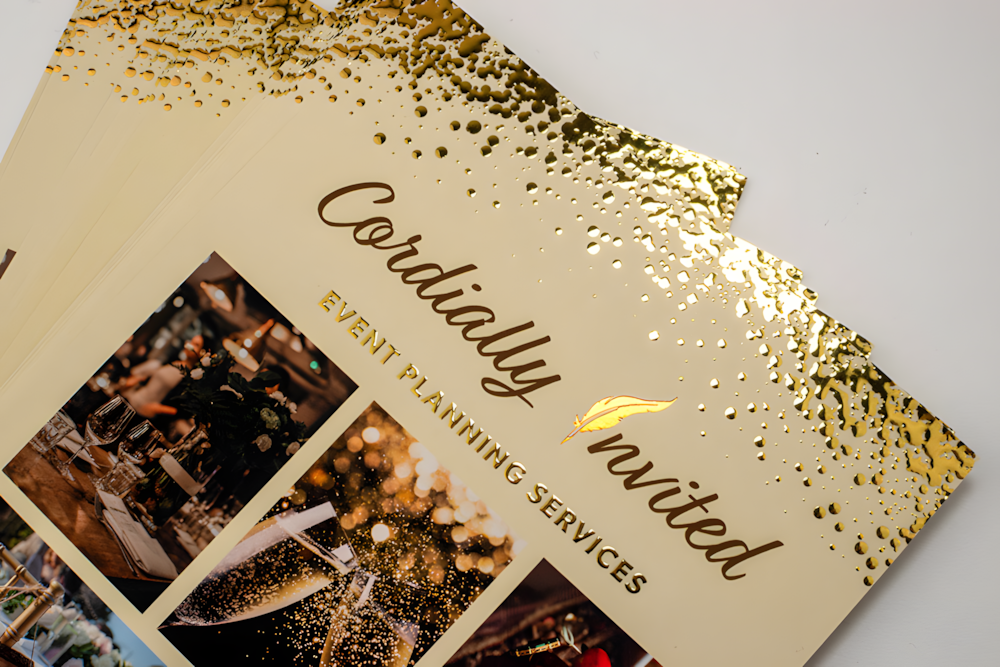
Hot Foil Stamping
Best suited for:
How It Works
- A custom metal die is created with your artwork design.
- The die is heated and mounted onto a foil stamping machine.
- Foil is placed between the die and the material.
- Heat + pressure transfers the foil only onto the raised areas of the die, creating a precise and often debossed finish.
Pros of Hot Foil Stamping
- ✅ Luxury, premium finish - Hot foil creates a rich shine and subtle de-boss that catches the light beautifully. Foiled elements feel tactile and look more refined.
- ✅ Exceptional detail & accuracy- Ideal for intricate designs, small text and fine lines. The pressure from the die delivers crisp, sharp definition.
- ✅ More efficient for large runs - The die is a one-time cost—so as quantities increase, the cost per unit decreases, making hot foil great value for bulk orders.
- ✅ Works on more materials- Unlike digital foiling, hot foil can be applied to uncoated papers, textured stocks, kraft, coloured card, plastics, leatherette and more.
Cons of Hot Foil Stamping
- ⚠️ Higher initial setup cost - The custom die is an additional expense, making hot foil less cost-effective for small quantities or one-off projects.
- ⚠️ Longer production times - Creating the die takes time. If you’re working to a tight deadline, digital foiling may be the better choice.
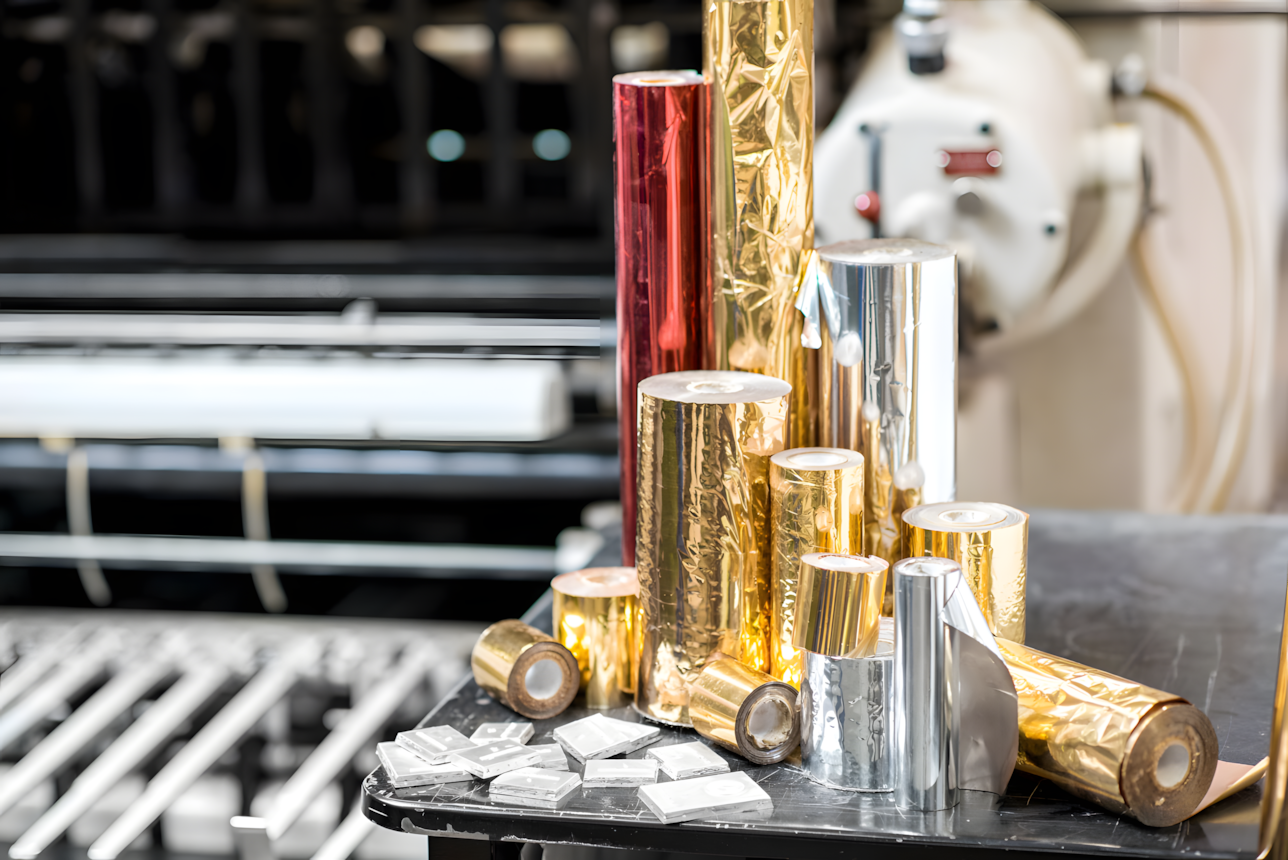
Foil Colours & Special Finishes
- Metallics – Gold, Silver, Rose Gold, Copper, Platinum, Bronze
- Pigment Foils – Colours without shine such as Matt Black, White, Red, Blue
- Holographic & Patterned Foils – Rainbow, glitter, brushed, holographic geometric patterns (Availability varies by method – hot foil offers the widest range.)
Which Foiling Method Should You Choose?
| Requirement | Best Option |
|---|---|
| Small quantities / one-off jobs | Digital Foiling |
| Fast turnaround | Digital Foiling |
| Luxury finish & deep shine | Hot Foil Stamping |
| Works on textured or uncoated stock | Hot Foil Stamping |
| Personalised names or variable data | Digital Foiling |
| Large print runs | Hot Foil Stamping |
Whether you’re enhancing business stationery, packaging or premium marketing materials, our team can help you choose the perfect foiling method for your project.
Frequently Asked Questions
Yes. Foiling can be used alongside embossing/debossing, spot UV, lamination, die-cutting and more. Many premium items use a combination for maximum impact.
When applied correctly, foil is long-lasting. Hot foil is extremely durable due to the heat-bonding process. Digital foil has strong adhesion on laminated surfaces but can be more prone to wear on items handled frequently.
Foil works best on smaller, selective areas. Large solid blocks of foil can show slight imperfections or uneven reflectivity. For full metallic coverage, metallic ink or a metallic board may be a better option.
Supply artwork as a print-ready PDF with the foiled elements on a separate spot colour layer labelled “FOIL” (or as advised by your printer). Vector art is strongly recommended for crisp results.
Yes. For best results:
- Digital Foil: minimum 0.75pt line weight
- Hot Foil: minimum 0.5pt line weight Smaller than this may fill in or lose detail — especially on textured stocks.
Yes. Both digital and hot foil can be applied to one or both sides, although double-sided foiling may increase cost and production time.
Absolutely. Foil looks different on white vs. coloured or dark stocks. Metallic foils pop dramatically on darker papers, while light papers give a cleaner, more classic look.
Foil is surprisingly eco-friendly. Once applied, it is considered paper for recycling purposes because the foil layer is extremely thin. Hot foil in particular is recyclable and non-toxic, and biodegradable foil options are available.
Foil is supplied in set colours rather than mixed like ink, so exact Pantone matching isn’t always possible — but there are many metallic and pigment foil shades available. We can advise on the closest match.