Presentation folder printing remains a powerful tool for businesses across the UK, from agencies and marketing teams to educators, retailers, and corporate organisations. Whether you are preparing a pitch, onboarding new staff, producing training packs, or organising event materials, the quality of your folder influences how your information is received.
The materials, laminations, and finishes you choose affect durability, sustainability, print clarity, and the overall impression of your brand. This guide explains every major option, helping you specify the right folder for professional results.
Folder materials form the foundation of any printed folder. They determine durability, print performance, recyclability, and the tactile impression that users experience.
Paperboard is the preferred choice for custom presentation folders due to its strength, print quality, and versatility.
Typical UK specifications include:
Key benefits:
Standards such as ISO 536 guide grammage measurements, while FSC UK and the Confederation of Paper Industries (CPI) provide sustainability guidance.
Polypropylene (PP) is engineered for environments where folders face intensive handling.
Benefits include:
It is frequently used for retail training packs, educational settings, and warehouse operations.
PVC offers strong durability but limited recyclability, making it less suitable for sustainability-driven organisations.
Strengths:
WRAP UK classifies PVC as difficult to recycle within household streams, so alternatives should be considered where environmental impact matters.
Kraft and recycled boards deliver a natural look while supporting sustainability goals.
Benefits:
They work particularly well for organisations promoting sustainability through their visual identity.
Lamination protects printed surfaces from wear while enhancing visual and tactile quality. Selecting the right lamination improves longevity and supports brand perception.
Gloss lamination provides a reflective sheen and strong colour vibrancy.
Best suited to:
Matt lamination offers a soft sheen with reduced glare, delivering a refined and professional appearance.
Best suited to:
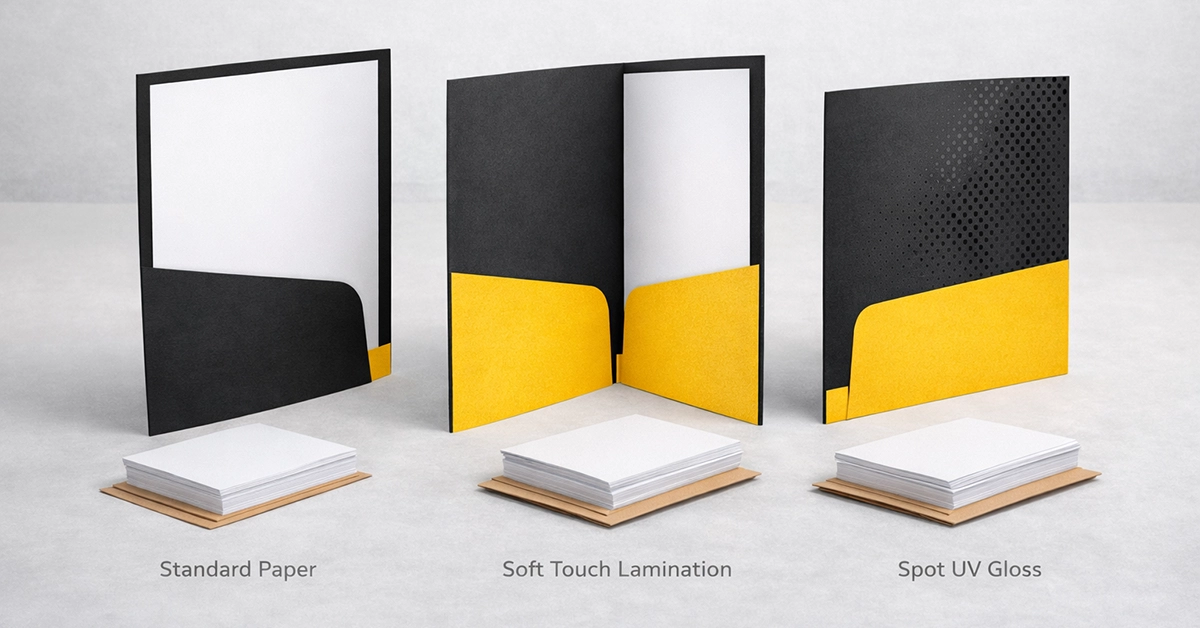
Soft-touch lamination creates a velvety surface that adds tactile distinction while remaining resistant to scuffing.
Why choose it:
Anti-scuff laminates are designed to remain mark-free under frequent use.
Recommended for:
Choosing no lamination allows the natural board texture to remain visible and improves recyclability.
Ideal for:
| Option | Durability | Recyclability | Print & Visual Quality | Typical Uses |
|---|---|---|---|---|
| Paperboard | Medium to high depending on gsm | High depending on finish | Excellent print clarity | Corporate presentations, events, welcome packs |
| Polypropylene (PP) | Very high | Medium (industrial recycling) | Moderate | Retail training, education, high-handling environments |
| PVC | Very high | Low | Moderate | Legacy or long-term reuse folders |
| Kraft / Recycled Board | Medium | High | Good, natural finish | Eco-focused projects, minimalist branding |
| Gloss Lamination | High | Medium | High colour vibrancy, shine | Retail, visual-heavy designs, events |
| Matt Lamination | Medium | Medium | Smooth, professional appearance | Corporate, legal, financial presentations |
| Soft-Touch Lamination | High | Medium | Premium tactile finish | Luxury branding, proposals, client packs |
| Anti-Scuff Lamination | Very high | Medium | Maintains appearance over time | Training packs, sales kits, heavy handling |
Print finishes add emphasis, texture, and depth, helping folders stand out in competitive environments.
Spot UV applies targeted gloss to specific areas, creating contrast against matt or soft-touch laminations.
Ideal for highlighting:
Foil blocking applies metallic or pigmented foil using heat and pressure.
Popular foil options include:
Foil is particularly effective on matt and soft-touch laminated folders.
Embossing raises the surface while debossing creates a recessed effect, allowing branding elements to be felt as well as seen.
Best used on:
Textured coatings such as linen or sand-grain finishes add character and tactile interest without requiring complex artwork.
Die-cutting enables custom shapes, business card slots, pockets, and windows, increasing both functionality and visual impact.


Different industries require different performance characteristics. Matching your folder specification to its use ensures better results.
Recommended combinations:
This approach creates a confident and professional presentation.
Durability should be the priority:
These materials withstand repeated handling.
Effective choices include:
Consider:
This supports sustainability goals while maintaining quality.
Environmental responsibility plays an increasingly important role in print decisions across the UK.
Based on guidance from WRAP UK and FSC UK:
Further guidance is available at https://wrap.org.uk
Bio-based films, plastic-free coatings, and water-based varnishes are becoming more accessible, reducing reliance on traditional plastic laminates.
These steps help reduce environmental impact while maintaining a professional finish.
A clear specification ensures your folder performs exactly as intended.
Key decisions include:
A detailed brief saves time and avoids unnecessary revisions.
Common sector preferences include:
These combinations reflect broader UK print trends.
Selecting the right materials, laminations, and finishes ensures your presentation folders perform reliably and represent your brand clearly. Whether your focus is durability, sustainability, or premium detail, the options outlined here provide a solid framework for informed decision-making.
If you are planning a presentation folder, welcome pack, training kit, or branded document set, now is a good time to refine your specification. Expert guidance can help you choose materials and finishes that support your objectives and deliver consistent results.

Unit 4-10 Stanton Road Ind. Est.
Stanton Road
Southampton
Hampshire
United Kingdom
SO15 4HU