Choosing the right presentation folder can significantly influence how your documents, brand and message are received. Whether you’re preparing a corporate pitch, assembling a retail marketing pack or organising materials for an event, the folder you select must be both functional and representative of your organisation’s identity.
Despite the rise of digital communication, printed materials continue to create a strong impact because of their tactile and visual qualities. A well-designed presentation folder helps you organise information neatly while strengthening your brand presence. This guide explores everything you need to know when choosing a presentation folder, covering folder types, materials, finishes, sizes, branding strategy and practical considerations tailored to UK businesses.
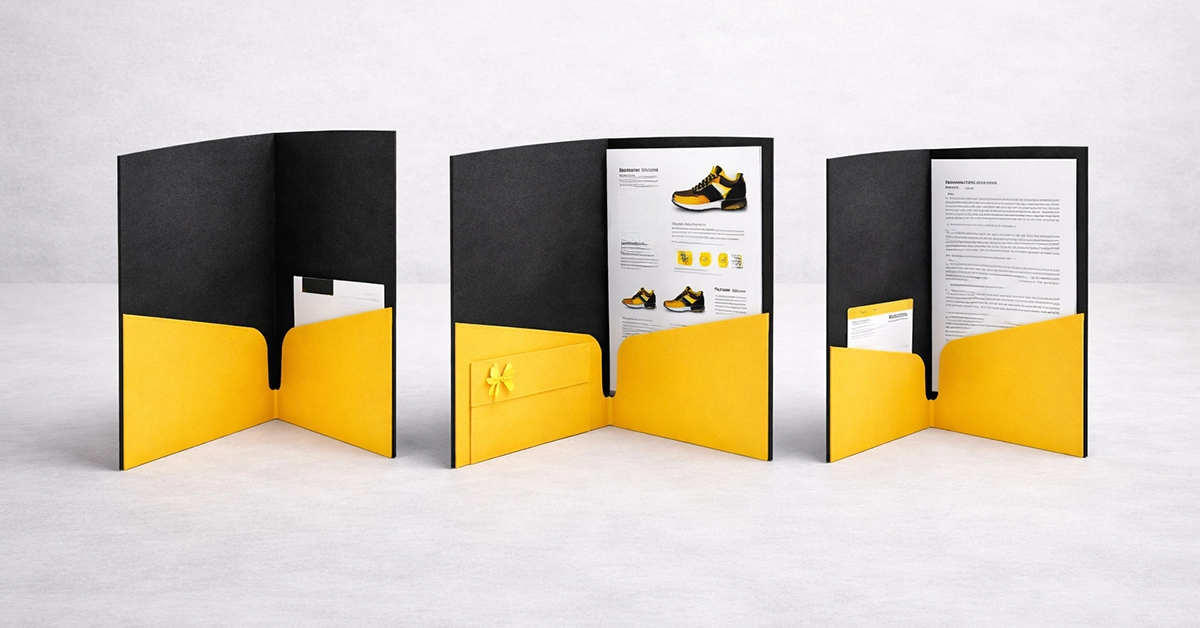
Two-pocket folders are among the most versatile and widely used formats. They hold brochures, loose sheets, product inserts and other handouts securely, often incorporating a business card slot for convenience. This type is ideal for:
They offer a clean, organised structure suitable for most corporate environments.
A tri-panel or three-panel folder provides additional space, allowing you to structure information in a clear sequence. This makes them particularly effective for:
The extra panel supports storytelling, enabling a layered, guided presentation experience.
Gusset folders offer increased capacity through an expandable spine. They remain firm even when filled with heavier content, making them suitable for:
If your project includes dense or varied content, expandable folders ensure everything remains secure and easy to handle.

A polished appearance is essential for corporate communication. Prioritise features such as:
These elements contribute to a strong, consistent impression that keeps attention on your message.
Retail materials often rely on high-impact visuals. Consider folders that allow for creative designs and layered information, such as tri-panel or expandable formats. These support the inclusion of:
Consistency in colour and texture also reinforces brand recognition across every customer touchpoint.
When folders are handled frequently, durability matters. Choose a sturdy card weight, secure pockets and added capacity so they remain presentable during repeated use.
A presentation folder should feel robust and well-made. Common UK options include:
Thicker stocks help protect documents while delivering a high-quality tactile experience.
Finishes affect both the aesthetic and sensory appeal of a folder. Popular options include:
Combining finishes can create a distinctive and memorable result.
Sustainability is increasingly important for UK businesses. Eco-friendly alternatives include:
These options help support ethical values while maintaining the quality expected of professional printed material.
| Folder Type | Ideal Use-Cases | Capacity | Best For | Common Finishes |
|---|---|---|---|---|
| Two-Pocket | Meetings, proposals, conferences | Light | Corporate communication | Matt, gloss, soft-touch |
| Tri-Panel | Marketing kits, launch packs, training | Medium | Brand storytelling | Matt, soft-touch, spot UV |
| Gusset / Expandable | Manuals, catalogues, multi-insert packs | High | Retail product sets, training materials | Gloss or matt laminates |
Most UK businesses rely on A4 documentation, making A4 folders the most practical option. They safely house:
A4 is compatible with office equipment and shelving, keeping things consistent across your organisation.
For content-heavy packs or uniquely shaped materials, oversized A4 or custom dimensions can provide the flexibility needed. These formats are particularly useful for:
Always check document thickness and intended storage or mailing requirements before finalising a size.
Presentation folders should reflect your brand clearly and consistently. Pay attention to:
Consistency builds trust and makes your materials instantly recognisable.
Think of the folder as a guided experience rather than a container. Effective layouts:
Tri-panel layouts work especially well for this type of narrative-driven structure.
To maintain a clean, professional appearance:
This ensures your folder complements your content rather than overshadowing it.
Larger print runs typically lower the cost per unit. If your folder design is versatile enough for multiple projects, printing in higher quantities is often more cost-effective. Consider future-proofing your design by avoiding dated copy or event-specific details.
Special finishes such as foiling or embossing can extend production timelines. Build in sufficient lead time for:
Clear planning prevents unnecessary stress near deadlines.
A carefully checked and well-planned design prevents costly reprints or last-minute changes.
A matt laminated A4 folder with structured inserts, a business card slot and subtle branding supports professional communication. It also ensures that documents remain neat during handling and meetings.
A tri-panel folder with soft-touch laminate and multiple insert pockets allows detailed product information to be presented in stages. This approach supports persuasive storytelling and helps sales teams guide customers through key features confidently.
A presentation folder is a powerful tool that supports clarity, organisation and brand impact. By choosing the right type, materials, finishes and layout, you can create a folder that enhances your message across both retail and corporate environments.
If you’re preparing for a pitch, launch or event, now is an ideal time to review your folder options and craft a design that aligns with your business goals. A well-planned presentation folder can help your content stand out and support stronger engagement with your audience.

Unit 4-10 Stanton Road Ind. Est.
Stanton Road
Southampton
Hampshire
United Kingdom
SO15 4HU