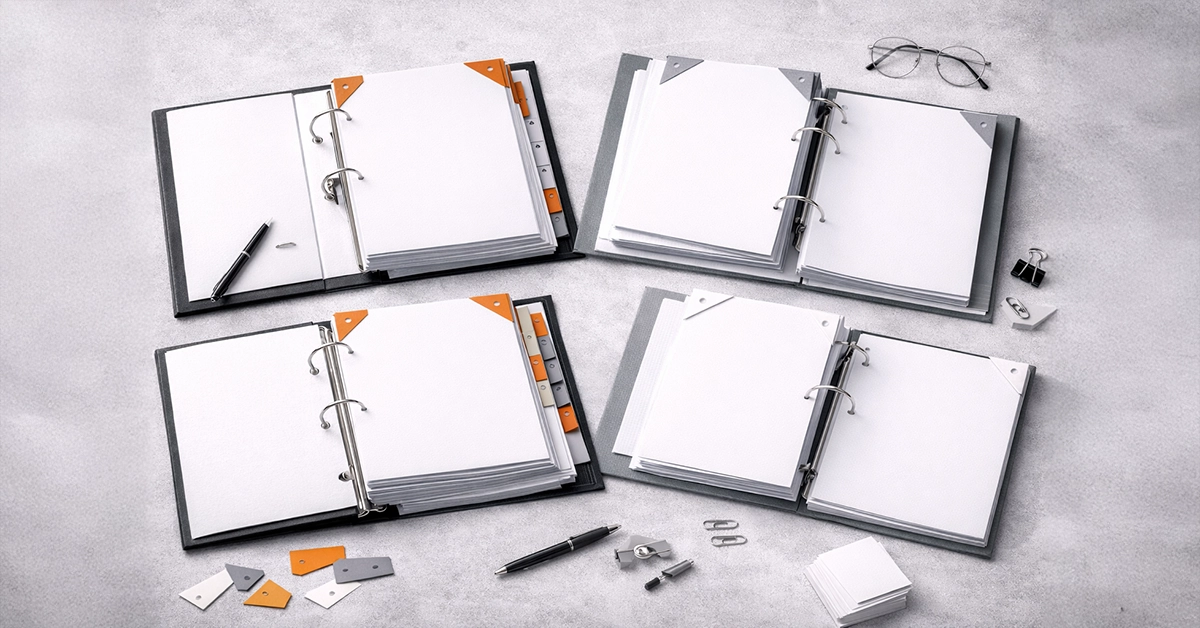
Preparing a court bundle that is secure, professionally organised, and easy to handle is essential for any UK hearing. While pagination, indexing, and layout often receive the most attention, the fastening method is just as important. Poorly secured bundles slow hearings, cause pages to loosen, and create avoidable disruption. Legal corner printing offers a dependable and court-friendly solution that keeps documents intact from preparation through to the final day of proceedings.
This guide explains why legal corners matter, how they support court compliance, and the most effective ways to use them when preparing bundles for UK courts.
Legal corners are strong, triangular fasteners designed to hold grouped documents securely without tearing or distorting pages. For hearings where bundles are frequently handled, passed between parties, and referenced under pressure, the stability they provide is invaluable.
Practitioners frequently report that secure fastening contributes to smoother hearings and reduces administrative issues linked to disorganised bundles.
While neither the Civil Procedure Rules nor Family Court guidance specifies a single mandatory fastening method, both emphasise clarity, durability, and consistency.
Using legal corners directly supports these principles by preventing loose sections, damaged pages, and misaligned documents that can disrupt proceedings.
Not all fastening methods can withstand the demands of courtroom use. Below is an overview of the most common options and when they are suitable.
Legal corners are generally the most reliable choice for maintaining structure throughout multi-day court hearings.


| Fastening Method | Best For | Limitations | Recommended Use in Court Bundles |
|---|---|---|---|
| Legal Corners | Medium to large grouped sections | Requires accurate alignment | Strong, reliable choice for main sections |
| Treasury Tags | Temporary or lightweight sections | Can become loose or over-tightened | Use selectively for small addendum sections |
| Staples | Very small page counts | Tears pages, weak under pressure | Avoid for formal court bundles |
| Lever-Arch / Ring Binder | Storing high-volume bundles | Needs inner fastening | Best used with legal corners securing internal groups |
Courtrooms rely heavily on efficiency, clarity, and predictable document handling. Legal corners support these expectations in several ways:
Judicial working groups frequently remark that secure, consistent presentation contributes to faster hearings and reduced administrative strain.
Even experienced practitioners encounter issues when assembling bundles. The following mistakes are the most common and can compromise the integrity of your documents:
Legal corners significantly reduce these risks by offering dependable structural support.


A 300-page bundle prepared with treasury tags repeatedly split during handling. Refastening the sections with legal corners stabilised the bundle and allowed the hearing to continue without further disruption.
A section secured with staples tore apart during cross-examination. The court paused for reassembly, highlighting the importance of choosing stronger fastening methods.
Clerks observed that bundles secured with legal corners retain alignment longer during multi-day hearings, reducing administrative corrections.
Legal corners are an essential element in producing secure, reliable, and courtroom-ready bundles. Their durability, simplicity, and consistency support the procedural expectations set across the UK justice system. By adopting a structured approach to fastening and following the steps in this guide, you can ensure your bundles remain tidy, accessible, and fit for use in any hearing.
If you want to produce court bundles that remain secure, present well, and support your case throughout the hearing process, now is the ideal time to refine your fastening approach. Implementing best practices such as consistent alignment, structured grouping, and using legal corners will help you create bundles that stand up to repeated use in the courtroom.

Unit 4-10 Stanton Road Ind. Est.
Stanton Road
Southampton
Hampshire
United Kingdom
SO15 4HU