Secure and professional document fastening is crucial across legal, corporate, and administrative environments in the UK. Whether preparing court bundles, organising contracts, or managing case files, the right fastening method ensures documents remain intact, compliant, and easy to handle. When fastening fails, the consequences can include lost pages, delays, document damage, and a significant loss of time.
This guide compares four widely used fastening methods in the legal sector: legal corners, treasury tags, staples, and paperclips. Each offers different strengths, limitations, and best-fit scenarios. By understanding how these methods perform, you can make informed choices that support accuracy, professionalism, and workflow efficiency.
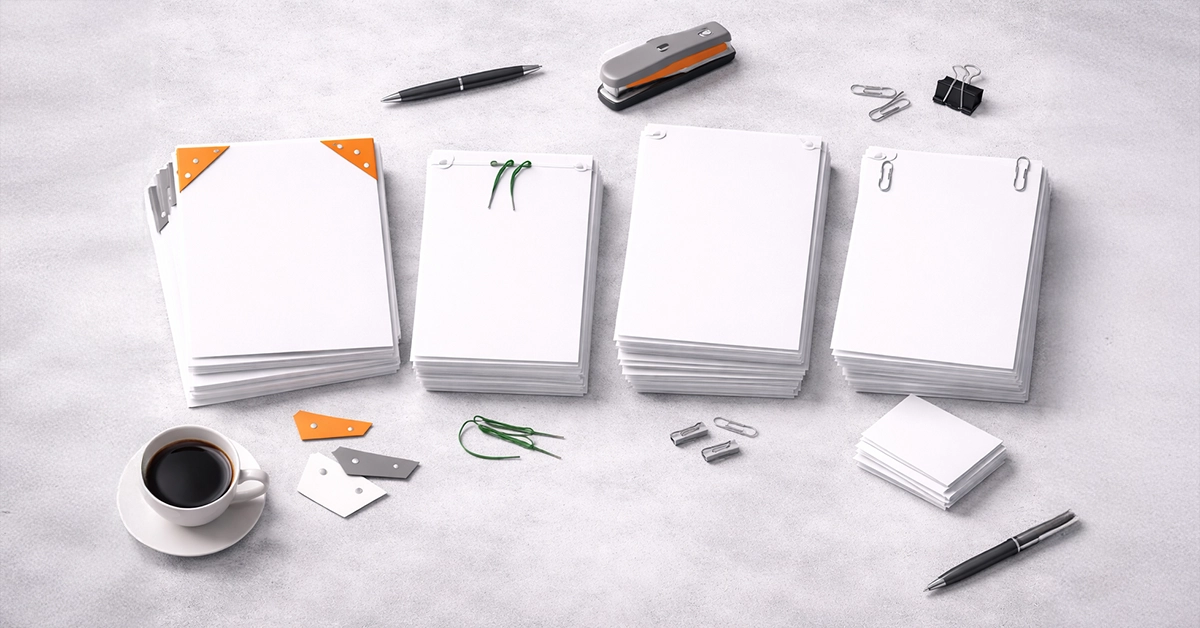
In daily legal practice, document fastening must support high-volume bundling, long-term storage, and frequent handling. The most common tools include:
Each option plays a specific role, and choosing the right method depends on the size, purpose, and sensitivity of the documents.
Legal corners remain a preferred choice for firms prioritising presentation and document integrity. Positioned on the top-left corner, they hold small to medium sets securely without piercing the paper.
Key advantages include:
Limitations:
Legal corners are particularly suited to contract packs and client file handovers, where presentation and non-destructive fastening matter.
Treasury tags are widely used in the legal sector due to their strength and stability. Threaded through pre-punched holes, they keep pages firmly together throughout heavy handling and transport.
Why treasury tags are a legal staple:
Limitations:
Court guidance stresses that bundles must be securely fastened and easy to manipulate. Treasury tags meet these expectations consistently and are often relied upon for formal submissions.

Staples offer fast and economical fastening for short-term or internal paperwork. They are commonly used for draft notes, memos, and small internal reports.
Strengths:
Weaknesses:
Staples serve a purpose in everyday administrative tasks but are rarely appropriate for professional presentation or compliance-driven documentation.
Paperclips are valuable during drafting phases or when grouping related papers temporarily. However, they offer only minimal security.
Strengths:
Weaknesses:
Paperclips are best kept for working documents rather than completed files or bundles shared with clients or courts.
| Fastening Method | Best Use Case | Security Level | Suitable for Court? | Page Damage Risk | Ideal Document Size |
|---|---|---|---|---|---|
| Legal Corners | Contracts, client packs | Medium | For correspondence | None | Small–medium |
| Treasury Tags | Court bundles, large files | High | Yes | Low (requires punching) | Medium–large |
| Staples | Internal notes, drafts | Low–Medium | Not recommended | High | Small |
| Paperclips | Temporary grouping | Low | No | Low–Medium | Small–medium |
Courts require securely fastened bundles that remain intact during consistent handling. Treasury tags are the preferred method because they support:
Excessive stapling should be avoided, as it makes bundles difficult to manage and increases the risk of torn pages. Legal teams often incorporate treasury tags into their standard bundle preparation workflows for this reason.
Presentation plays a significant role when sharing documents externally. Legal corners often provide the most appropriate solution for client packs or signed agreements because they maintain the integrity of original papers without creating holes or marks.
Best practice recommendations include:
A consistent internal policy helps improve efficiency and ensures that documents are always presented in a clear and professional manner.


Archival requirements introduce additional considerations. Metal fasteners may rust and damage documents over time, while certain materials may cause discolouration during extended storage.
For long-term retention, consider:
Selecting the appropriate fastening method supports document longevity and reduces the risk of deterioration.
When selecting a fastening method for legal documents, consider:
Suggested approach:
This approach enhances clarity throughout your workflow and reduces the risk of document mismanagement.
The choice between legal corners, treasury tags, staples, and paperclips helps determine how secure, clear, and professional your documentation appears. Understanding each method’s strengths ensures your bundles, contracts, and working files remain organised and compliant.
If you are planning to improve your document management process or are preparing upcoming bundles or client packs, now is the ideal time to review your fastening tools and ensure you are using the most suitable method. Should you need guidance choosing the right option, expert support is available to help you streamline your workflow and maintain document accuracy.

Unit 4-10 Stanton Road Ind. Est.
Stanton Road
Southampton
Hampshire
United Kingdom
SO15 4HU