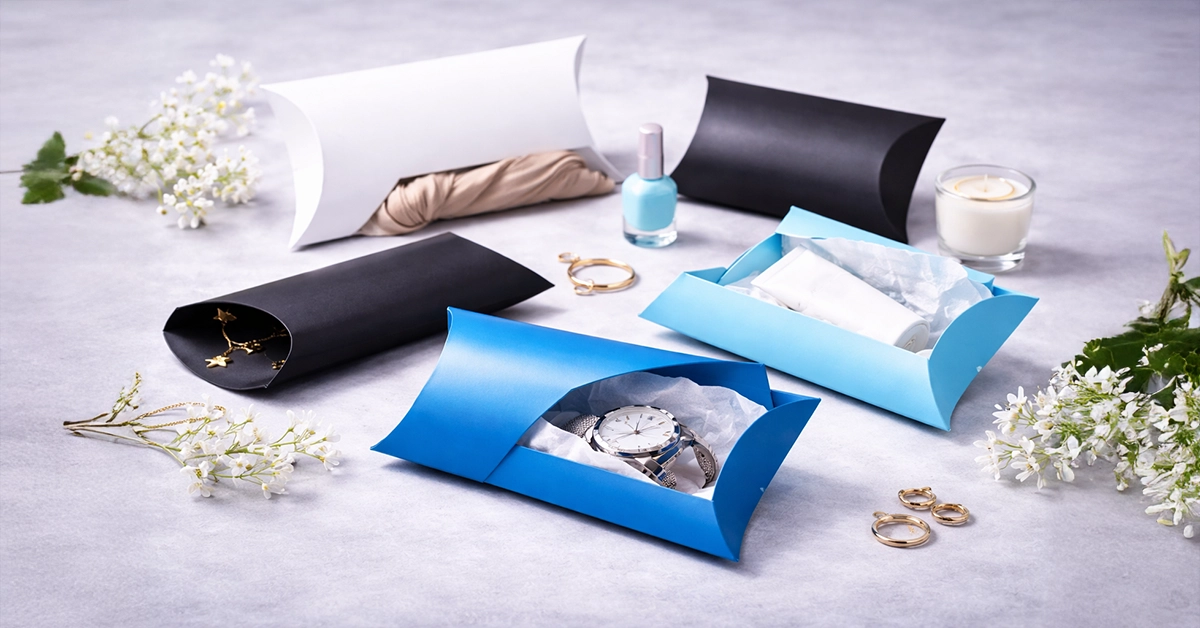
Choosing the right printed pillow box size is a fundamental part of retail packaging. The size of your box influences product protection, customer perception, postal efficiency, storage strategy and sustainability. Whether your range includes jewellery, cosmetics, handmade items or small gifts, choosing packaging that fits correctly ensures a smooth experience from dispatch to delivery.
This refined guide shows you how to measure your products accurately, select the right pillow box size for each category, improve packing efficiency, and streamline your packaging decisions across your SKU range.
Printed pillow boxes are curved, fold-flat cartons commonly used for small retail products. Their smooth shape, compact footprint and printable surface make them practical for jewellery, cosmetics, handmade soaps, wax melts and candles, party favours, and gift-ready retail items.
They can be produced in standard or custom sizes with finishes such as gloss, matte, soft-touch, foil and printed interiors. Because these boxes often contain delicate or high-value products, choosing a size that fits well is essential for both presentation and protection.
Accurate measurements ensure a secure and visually consistent fit.
Use these internal dimensions as your base:
Always base your decision on internal space, as this determines whether the product will fit once the flaps are closed. Allow extra room for tissue wrapping, protective padding, branding cards or inserts, and small presentation accessories.
Aim for a comfortable fit that prevents movement without restricting the contents.
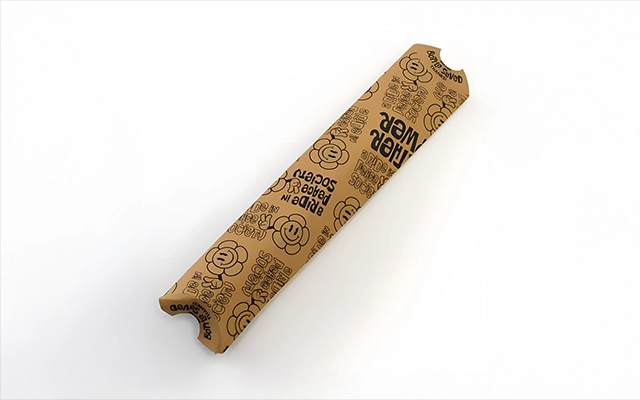

Jewellery items generally suit compact, shallow pillow boxes. Rings, earrings and pendants feel more premium when presented in a box that holds them securely without excess volume.
Small beauty items, such as balms or compact powders, often need more depth. Protecting rounded or lidded products may require cushioning, so choose a size that accommodates both the item and its wrapping.
Medium-sized pillow boxes work well for soap bars, wax melts and handmade gifts. Handmade products often vary slightly in shape, so selecting a box with modest tolerance helps maintain a consistent unboxing experience.
Custom sizes are ideal when a product does not fit common sizes, you want tighter control over material usage, or you need packaging tailored to a specific insert or presentation style. Custom sizing also supports brand continuity by ensuring each product matches your overall retail aesthetic.
| Product Type | Suggested Pillow Box Size Range | Key Notes |
|---|---|---|
| Jewellery (rings, earrings, pendants) | Small sizes (under approximately 100 mm length) | Shallow depth recommended and works well with backing cards |
| Cosmetics (balms, creams, compacts) | Small to medium sizes with extra depth | Allow space for cushioning or wrapping |
| Handmade soaps and artisan products | Medium sizes (100–150 mm length) | Helps accommodate natural product variations |
| Wax melts and small candles | Medium sizes with strong structural rigidity | Consider wrapping to prevent heat-transfer marks |
| Gift favours | Flexible depending on contents | Choose sizes that support visual balance |
| Multi-item bundles | Larger pillow boxes | Consider inserts or dividers to maintain order |
Choosing the right size is not just cosmetic. It directly impacts efficiency, cost and customer satisfaction.
Right-sized packaging reduces parcel volume, which can lower postage bands and help avoid courier surcharges based on dimensional weight. It also streamlines warehouse storage.
A properly sized pillow box prevents items from shifting, reducing the risk of scratches, dents or breakage during transit.
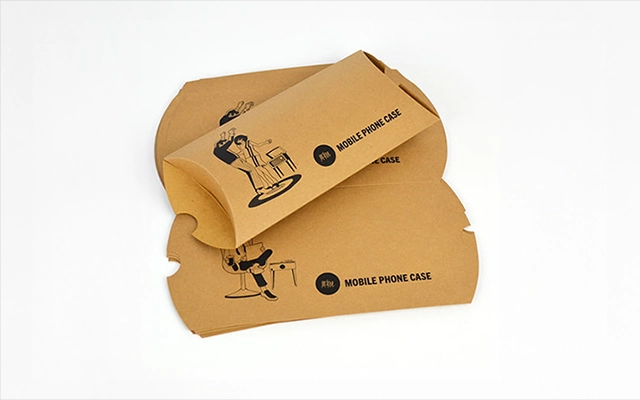
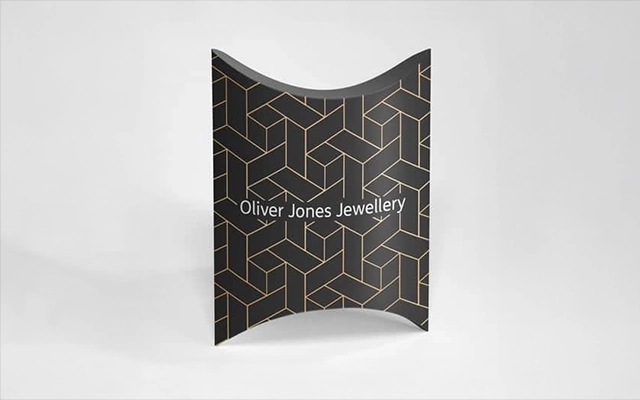
Right-sized packaging supports sustainability through less material consumption, reduced need for void fill, and a lower carbon footprint from shipments. Smaller packaging choices also align with increasing consumer preference for environmentally responsible brands.
Retailers with multiple product sizes can benefit from a structured packaging system.
Audit your full product range to identify size similarities. Group products into practical clusters based on dimensions. Develop a set of three to five standard pillow box sizes that cover most products. Test each size against real items to confirm fit and usability.
This approach reduces stock complexity, simplifies reordering and helps maintain consistency across your packaging line.
The board type and finish you select can subtly affect internal space.
Heavier or laminated boards slightly reduce interior capacity, so keep this in mind when matching box sizes to products.
Options include matte, gloss, soft-touch, foil detailing, and kraft or recycled card. These finishes influence rigidity and feel, which can enhance perceived product value without altering overall dimensions significantly.
Elements such as die-cut windows or printed interiors may require adjustments to internal spacing, depending on the product.
Before committing to a production run, request confirmation of internal dimensions, board grade and thickness, finish and any embellishments, sample availability, lead times and production windows, and postal suitability if using UK mailing services.
Sampling is an essential step. A physical or digital prototype gives you confidence that the product will fit comfortably and that the unboxing experience aligns with your brand’s style.
A slim pillow box with a card insert holds jewellery securely and enhances its presentation.
A deeper pillow box prevents movement and protects rounded beauty items, especially when using protective wrapping.
A medium pillow box accommodates natural shape variations while providing a consistent retail appearance.
These examples demonstrate how proper sizing contributes to product safety, visual appeal and customer satisfaction.
The right printed pillow box size enhances protection, creates a positive customer experience, reduces waste, and supports more efficient operations. By measuring accurately, choosing a suitable size range, and partnering closely with your supplier, you ensure your packaging reflects the care and quality of your products.
If you want to refine your packaging strategy, start by reviewing your current product dimensions, identifying size gaps, and testing a smaller selection of standardised pillow box sizes. Thoughtful sizing supports both your brand and your bottom line, helping your products look their best from shelf to doorstep.

Unit 4-10 Stanton Road Ind. Est.
Stanton Road
Southampton
Hampshire
United Kingdom
SO15 4HU