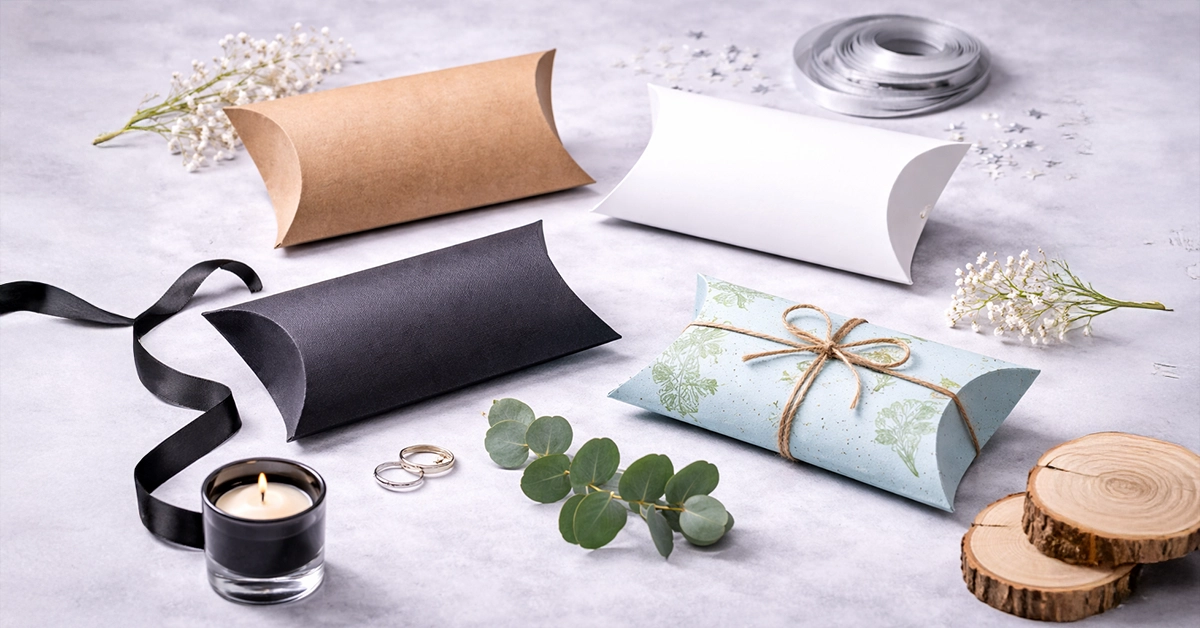
Choosing the right material for printed pillow boxes is one of the most important packaging decisions a brand can make. It affects durability, product protection, visual appeal and how customers perceive quality and sustainability. With UK consumers increasingly favouring packaging that reflects responsible design, understanding the strengths of each material type has never been more valuable.
This guide covers the four core pillow box materials used across gifting, retail and e-commerce: kraft, coated, textured and eco-friendly boards. Each option offers different benefits for print, sustainability and brand presentation, helping you select packaging that genuinely supports your product.
Pillow boxes may have a simple silhouette, but their material options vary widely in performance and appearance. The most common materials include:
• Kraft board – natural brown board with strong eco appeal
• Coated board – smooth, premium stock for vibrant printing
• Textured board – embossed surfaces for luxury applications
• Eco and recycled materials – plastic-free, recyclable, and increasingly preferred by UK buyers
These materials influence cost, print clarity, rigidity and recyclability, making material choice a key part of packaging strategy.
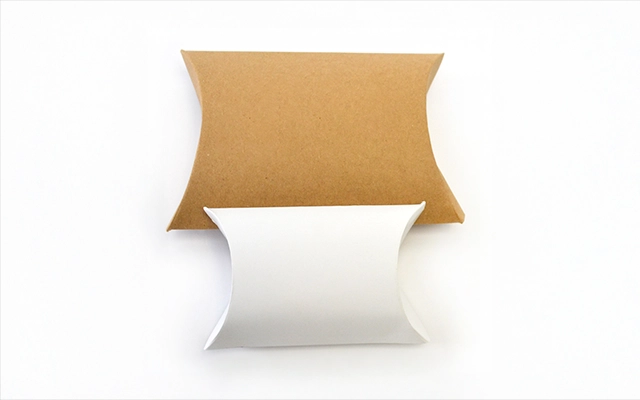
Kraft pillow boxes are made from unbleached pulp with long, durable fibres. They are widely recyclable and align strongly with sustainability-driven brands.
• Natural brown appearance suits minimalist and organic branding
• Excellent recyclability, supported by WRAP UK guidance
• Strong fibre structure suitable for lightweight and medium products
• Cost-effective choice for artisan brands and eco ranges
• Pairs well with simple line art, bold graphics and white ink accents
Because kraft absorbs ink more readily than coated board, colours print softly. High-contrast designs or white ink underlays create the strongest results.
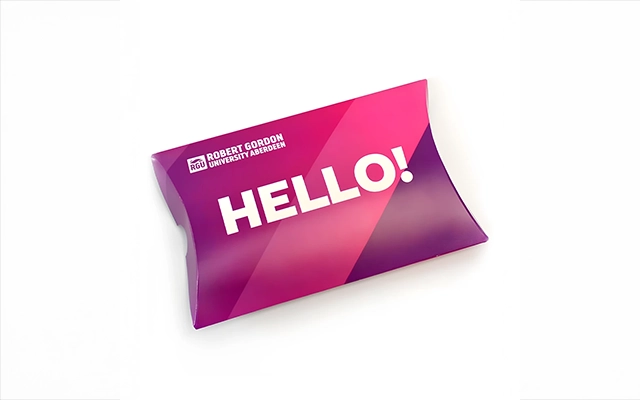
Coated boards (gloss, silk or matt) offer a premium surface ideal for sharp detail, clean lines and vivid colour reproduction. They are widely used across UK retail sectors that rely on strong brand visuals.
• Outstanding CMYK clarity and accurate colour reproduction
• Supports photographic artwork, gradients and detailed graphics
• Works with premium embellishments such as foil and Spot UV
• Polished, consistent appearance for retail displays
• Popular for cosmetics, small accessories and luxury gift items
Unlaminated coated board remains widely recyclable and is often chosen in FSC-certified formats to support sustainability requirements.
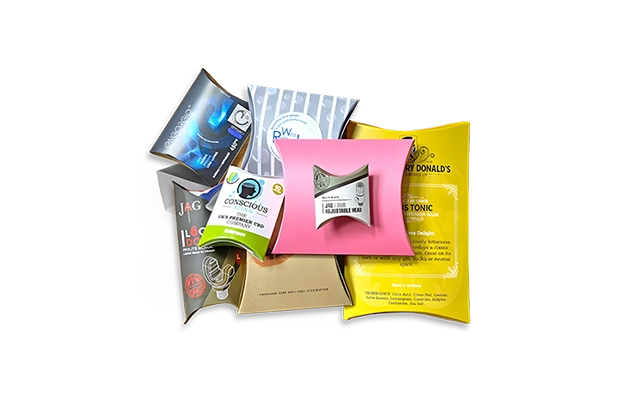
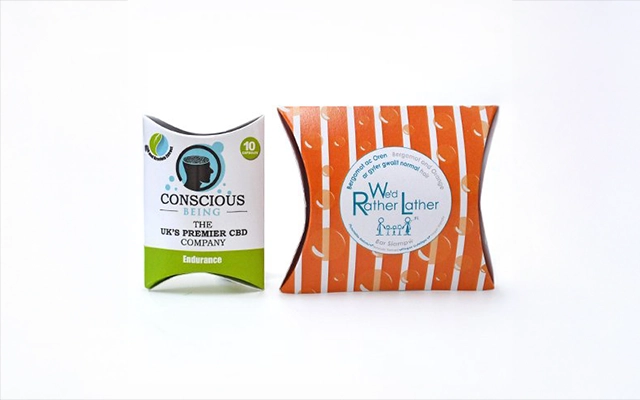
Textured boards such as linen, laid, ribbed or hammered finishes add a tactile dimension that instantly improves perceived quality. These materials help brands achieve a premium feel without relying on heavy graphic design.
• Creates a distinctive sensory experience
• Enhances premium brand positioning
• Works well with foiling, embossing and minimal layouts
• Suitable for jewellery, boutique gifting and artisan products
According to Two Sides, paper and cardboard are among the most preferred packaging materials, with consumers valuing their recyclability and lower environmental impact.
Demand for eco packaging continues to grow, supported by consumer expectations and UK regulations such as the Plastic Packaging Tax. Eco pillow box materials include:
• Recycled kraft (up to 100 percent recycled content)
• Recycled white board
• Uncoated fibre boards
• Agro-fibre materials such as bagasse or wheat straw
These options provide strong recyclability, lower environmental impact and a natural aesthetic.
| Material Type | Best Use Cases | Print Quality | Recyclability | Typical GSM | Key Advantages |
|---|---|---|---|---|---|
| Kraft | Natural brands, handmade goods, eco ranges | Soft colours, simple graphics | Excellent | 250–350 gsm | Rustic look, cost-effective, strong fibres |
| Coated | Cosmetics, jewellery, retail displays | Vivid, sharp, high-definition | Very good (unlaminated) | 250–350 gsm | Polished print, compatible with premium finishes |
| Textured | Luxury gifting, boutique products | Minimal graphics, foil detailing | Recyclable | 250–350 gsm | Tactile impact, premium feel |
| Eco Materials | Sustainable brands, e-commerce | Varies, often similar to kraft | Excellent | 250–350 gsm | Recycled content, plastic-free options |
Most pillow boxes use 250–350 gsm board, balancing structure and flexibility. Material choice influences both durability and visual outcome:
• Kraft – durable fibres, softer print results
• Coated – crisp detail and smooth ink holdout for photographic designs
• Textured – best for foiling and tactile finishes rather than full-coverage ink
• Eco materials – performance varies, but often similar to kraft in strength and print behaviour
Heavier products may require higher gsm or reinforced folds for better structural integrity.
Selecting the right material depends on several brand and product factors.
• Brand identity – natural, luxury, minimalist, bold or eco-focused
• Product weight – heavier products call for stronger board
• Print intentions – photo-led design, foiling, minimalist layouts, or textured emphasis
• Sustainability goals – recycled content, plastic-free finishes, FSC certification
• Budget – kraft and standard coated boards offer cost efficiency
• Customer experience – what should the packaging feel like and communicate?
A well-aligned material supports both presentation and practicality, improving the overall customer journey.
Sustainable choices strengthen brand trust and ensure packaging meets modern expectations.
Key UK considerations include:
• Selecting FSC-certified materials for responsible sourcing
• Avoiding laminations when prioritising recyclability
• Understanding how the Plastic Packaging Tax affects material choices
• Following WRAP guidelines to ensure packaging aligns with UK recycling streams
Packaging that is both attractive and easy to recycle supports long-term brand credibility.
Printed pillow boxes are widely used in UK retail for their compact shape and elegant silhouette. Common applications include:
• Handmade beauty and home products (kraft)
• Premium gifts, cosmetics and jewellery (coated or textured)
• Sustainable product lines and subscription packaging (recycled fibres)
These examples highlight how material choice shapes customer expectations and supports brand messaging.
Choosing the right pillow box material helps strengthen product presentation, supports sustainable goals and creates a memorable unboxing experience. Whether you prefer the natural look of kraft, the polished clarity of coated board, the tactile appeal of textured stock or the responsibility of eco-friendly materials, the right choice ensures your packaging performs well and reflects your brand values.
If you’re planning a packaging refresh or exploring new material options, now is an ideal moment to assess your goals and select a pillow box style that supports your brand’s next step.
Explore your material options and start creating packaging that leaves a lasting impression.

Unit 4-10 Stanton Road Ind. Est.
Stanton Road
Southampton
Hampshire
United Kingdom
SO15 4HU