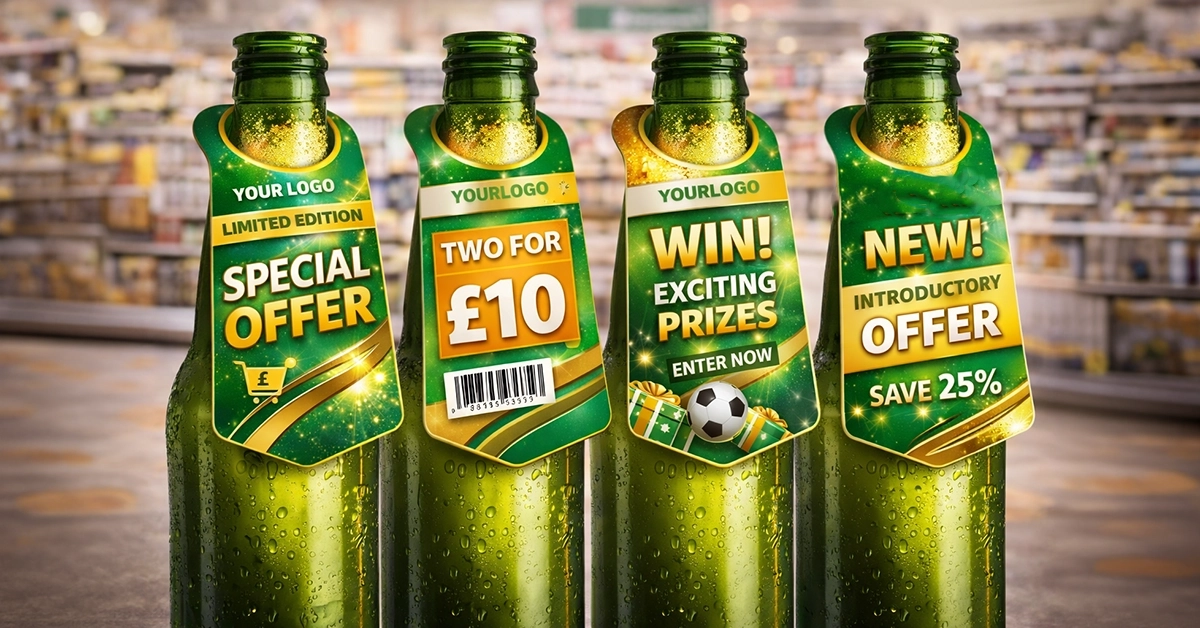
With UK shoppers making rapid on-shelf decisions and retail aisles becoming increasingly competitive, it has never been more important for brands to communicate clearly and confidently at the point of purchase. Bottleneck hanger printing provides a practical and impactful way to stand out, promote offers, and encourage customer engagement without altering primary packaging.
This guide explains how to design bottleneck hangers that perform strongly in UK retail environments, covering layout principles, material choices, messaging structure, artwork preparation, and examples of effective application.
Bottleneck hangers, also known as bottle tags or neck tags, slip over the neck of a bottle and add instant promotional messaging at minimal cost. They are used widely across wine, spirits, craft beer, soft drinks, personal care, and household categories.
They remain effective because they:
This POPAI UK study highlights the continued impact of on-pack messaging in driving shopper decision-making, making bottleneck hangers a practical choice for targeted campaigns.
A strong design must be visually clear, instantly recognisable, and easy for shoppers to scan in seconds.
Key design principles include:
Kantar shopper research reinforces that simple, bold messaging performs best in fast-paced retail environments.
Shape and size significantly influence overall visibility, stability, and shelf impact.
Design considerations:
WRAP guidance encourages early planning around material efficiency and recyclability.
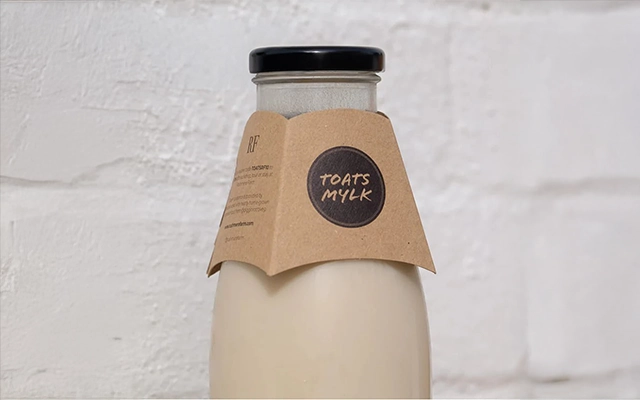
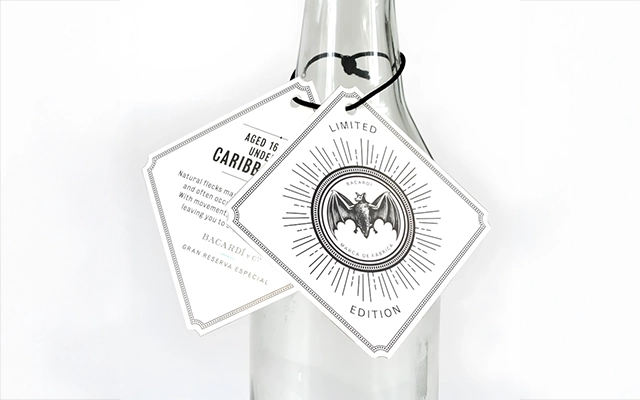
Material selection affects print quality, durability, and sustainability performance.
Popular material options include:
Using FSC-certified materials strengthens sustainability claims and can support consumer expectations around recyclable packaging.
Messaging must be concise, focused, and easy to digest from a distance.
Effective messaging structure includes:
| Design Element | Key Considerations | Why It Matters |
|---|---|---|
| Layout Hierarchy | Headline first, supportive text below | Improves readability and scan speed |
| Typography | Bold fonts, readable sizes | Strengthens visibility across distances |
| Colour Contrast | Light-on-dark or dark-on-light combinations | Helps the message stand out |
| Shape & Size | Balanced design suited to the bottle | Prevents slipping and maintains structure |
| Material Choice | 300–400gsm, FSC-certified | Ensures durability and recyclability |
| Finishes | Foil, UV, matt or gloss | Supports brand personality |
| QR Placement | Unobstructed, easily scannable | Encourages digital interaction |
| Bleed & Safe Zones | 3mm bleed, clean margins | Avoids print errors |
Your hanger should feel like a natural extension of your bottle’s design.
Branding best practices:
Strong branding reinforces recognition and helps the shopper understand the message faster.
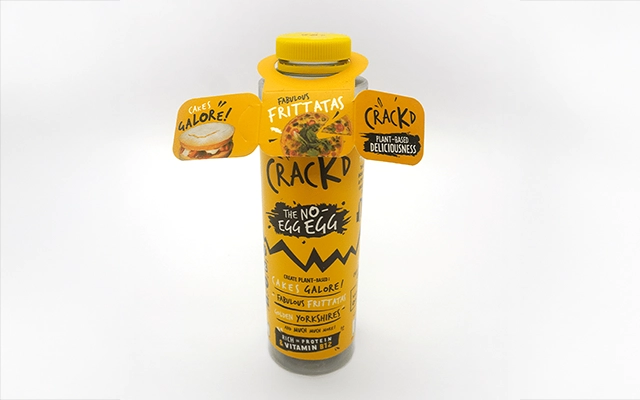
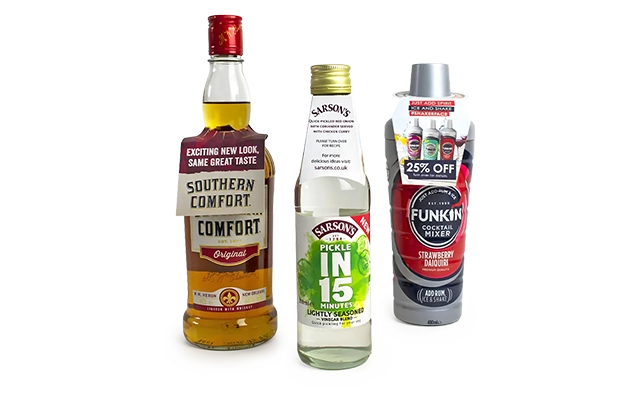
Avoiding simple errors helps maintain impact and print accuracy.
Mistakes to watch out for:
Preventing these mistakes ensures a cleaner, more professional final result.
High-quality artwork preparation ensures the hanger prints accurately and consistently.
Artwork essentials:
Adhering to standard UK print guidelines ensures clean results and reduces reprint risks.
These generic examples demonstrate how design choices support specific campaign goals:
Each design prioritises clarity, brand alignment, and ease of use.
Performance tracking helps refine future campaigns and justify budget allocation.
Useful performance indicators include:
These insights help brands improve their designs from one campaign to the next.
Strong bottleneck hanger design blends clarity, branding, sustainability, and print precision. By focusing on hierarchy, contrast, messaging, and material choice, brands can create bottle tags that attract attention, communicate effectively, and support their retail objectives.
If you’re planning an on-bottle promotion or exploring new POS concepts, now is the perfect time to refine your bottleneck hanger design. Whether your priority is sustainability, branding consistency, premium finishes, or digital engagement, thoughtful design can help your product stand out on crowded UK shelves.
If you’d like support developing artwork, shaping messaging, or expanding this into campaign-specific guidance, contact us today for expert advice and implementation.

Unit 4-10 Stanton Road Ind. Est.
Stanton Road
Southampton
Hampshire
United Kingdom
SO15 4HU