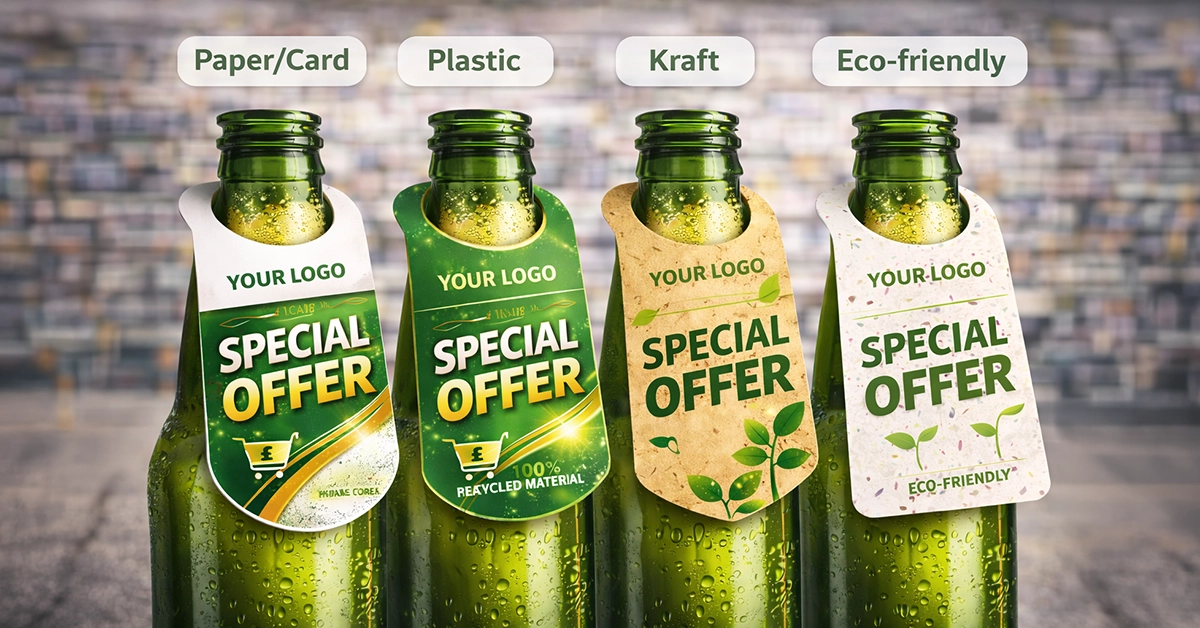
Bottleneck hangers may be small, but they have notable influence in retail. Whether used on spirits, sauces, soft drinks, home fragrance or gifting products, these tags work as branding tools, promotional drivers and customer-engagement touchpoints. The choice of material determines how well they perform in real retail conditions, how they support sustainability goals and how customers perceive product quality.
With UK retailers placing stronger emphasis on environmental responsibility, cost efficiency and stricter packaging compliance, buyers now need a clear framework for choosing bottleneck hanger materials. This guide provides a practical, brand-focused way to make that decision.
Bottleneck hangers attach to the neck of a bottle or container, offering valuable print space for promotions, limited editions, QR codes, product storytelling or user instructions. Their role goes beyond decoration: they influence purchase decisions at the critical moment when the customer is standing at the shelf.
Because they sit directly on-pack, the chosen material affects:
The right substrate supports the product’s environment, audience and marketing goals.
When comparing hanger materials, consider five core buying factors.
Products stored in chilled cabinets, outdoor retail spaces or high-handling environments demand tougher substrates than those used on ambient shelves.
Colour vibrancy, ink absorption and compatibility with finishes vary significantly between paper, card, synthetic and natural-fibre materials.
Recycled content, recyclability and low-impact finishes matter to buyers and consumers. Material decisions should support wider eco objectives and avoid unnecessary waste.
A luxury spirit demands a different tactile feel to an organic pantry brand. Material choice should reinforce the brand’s existing visual language.
The Packaging (Essential Requirements) Regulations 2015 require packaging components to minimise environmental impact and support recyclability.
Choosing compatible materials and finishes helps maintain compliance and supports transparent environmental claims.
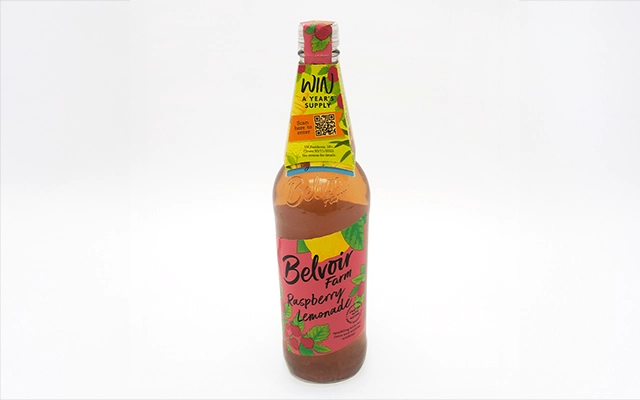
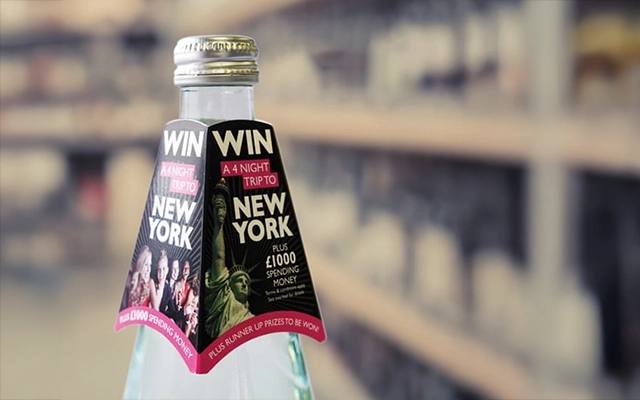
Paper and board remain the most popular choice for bottleneck hangers, used across drinks, cosmetics, gifting and lifestyle products.
Best for: Ambient beverages, gifting items, home fragrance, organic or artisanal brands.
Synthetic substrates such as polypropylene (PP), PET or vinyl outperform paper when moisture or condensation is expected.
Best for: Chilled bottled drinks, moisture-prone industrial products, outdoor retail and long-distance shipping.
| Material Type | Durability | Sustainability | Print Quality | Best Suited For | Notes |
|---|---|---|---|---|---|
| Paper / Card | Medium | High | High | Pantry goods, gifts, ambient beverages | Easy to recycle; coatings reduce recyclability |
| Kraft / Recycled Paper | Medium | Very High | Medium–High | Eco-led or artisan products | Strong sustainability messaging |
| Coated Board | Medium | Medium | High | Premium gifting, POS campaigns | Slightly more moisture resistance |
| Synthetic (PP, PET) | Very High | Low–Medium | High | Chilled or damp retail | Best for durability-focused uses |
| Alternative Materials (bamboo, seed paper, textile) | Medium | Very High | Varies | Boutique or campaign-led items | Higher cost; strong storytelling impact |
Alternative substrates can set products apart, strengthen sustainability claims and support campaign-led messaging.
These materials are ideal for short-run promotions or premium editions rather than high-volume everyday use.
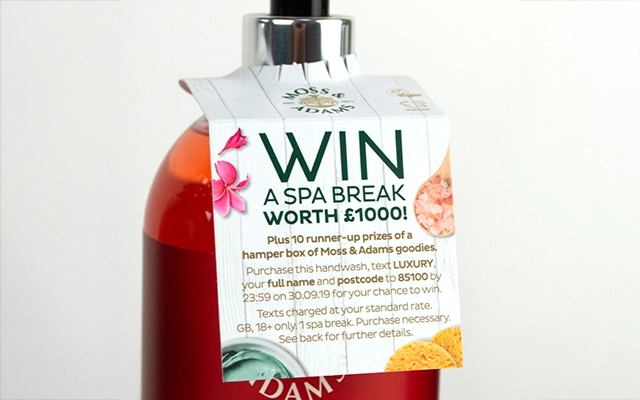
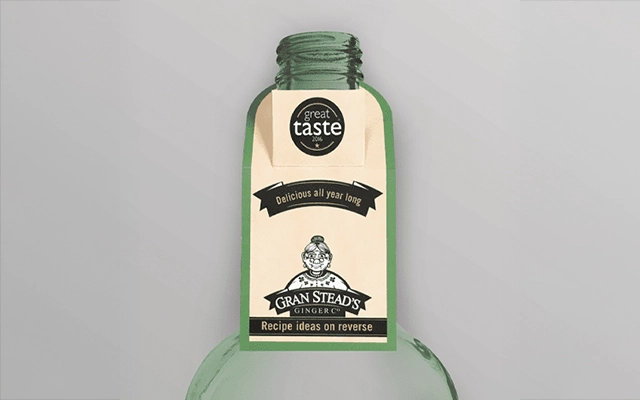
Material selection should directly support the product’s audience, usage and price point. Consider:
Textured or uncoated boards offer a refined, tactile finish that complements glass bottles and premium packaging.
Kraft or recycled stocks support eco positioning and communicate authenticity.
Coated board or light synthetic materials provide practical durability while keeping print quality strong.
Seed paper or shaped die-cuts enhance narrative value and create memorable unboxing moments.
Retail buyers are increasingly assessed on how packaging choices support broader sustainability goals. Choosing materials that minimise environmental impact is essential.
Refer again to UK regulations when planning long-term packaging strategies.
Material costs vary depending on thickness, finish, substrate type and print volume.
Choosing solely on price risks compromising brand cohesion or performance in store. Buyers should weigh long-term value rather than focusing on unit cost alone.
Use this checklist when assessing your next hanger project:
Working systematically reduces risk and ensures your selection supports both brand intentions and practical performance.
A producer moves from standard card to textured uncoated stock to create stronger alignment between the label, closure and bottleneck hanger. The cohesive finish enhances shelf presence and supports a luxury feel.
Condensation affected kraft hangers during transport. Switching to waterproof synthetic materials resolved the issue, providing a durable hanger that retained its visual quality in-store.
Seed paper was introduced for a campaign, supporting strong eco messaging and generating positive feedback thanks to its plantable function.
These examples show how strategic material decisions can improve presentation, durability and customer engagement.
Choosing the right bottleneck hanger material is a strategic decision that impacts branding, durability, sustainability and compliance. With a clear understanding of material properties and product requirements, retail buyers can make confident choices that support both customer experience and long-term packaging goals.

Unit 4-10 Stanton Road Ind. Est.
Stanton Road
Southampton
Hampshire
United Kingdom
SO15 4HU