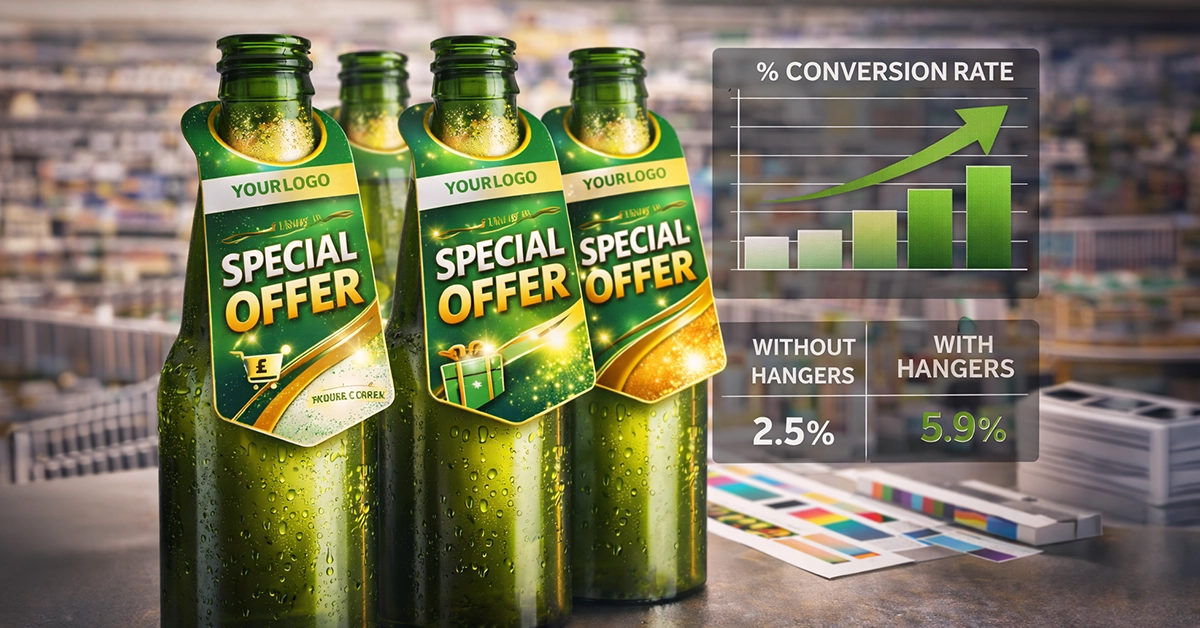
In the current UK retail landscape, shoppers have endless choice and high expectations. Simply driving footfall is no longer enough; retailers must convert browsing into buying. This is where subtle point-of-sale tools become essential and bottleneck hangers stand out as one of the most effective.
Placed directly on the product at the moment of decision, bottleneck hangers help items stand out on the shelf, communicate value instantly and support confident purchasing. Backed by clear merchandising principles and reliable industry data, they offer brands a compelling way to influence behaviour without altering store layouts or relying on staff interactions.
This article explores how bottleneck hangers work, why they influence shopper behaviour and the evidence behind their impact, alongside sector examples and practical design guidance.
Rising operational costs and strong competition mean UK retailers must get more value from every store visit. Improving in-store conversion rates is one of the most reliable ways to increase revenue without increasing footfall.
Visual merchandising research consistently shows that in-store displays and signage play a measurable role in shaping buying behaviour. Studies in retail environments highlight a clear link between organised product presentation and stronger purchase intention. Consumer research frequently cited by Nielsen indicates that a significant proportion of supermarket purchases are unplanned, demonstrating how in-store cues such as signage, layout and point-of-sale messaging can influence decision-making at the shelf. These findings reinforce how well-placed visual prompts can have a tangible impact on shopper behaviour.
Because bottleneck hangers live directly on the product, they influence selection at the most decisive moment, especially in crowded categories such as wine, spirits, oils, gourmet food and premium soft drinks.
A bottleneck hanger (or neck tag) is a printed tag that fits over the neck of a bottle. Simple yet strategically powerful, it supports in-store conversion by delivering targeted messaging in an immediate, high-visibility position.
Key ways bottleneck hangers influence buying decisions include:
This combination gives hangers an advantage over static signage, as they travel with the product and remain visible regardless of shelf height or store layout.

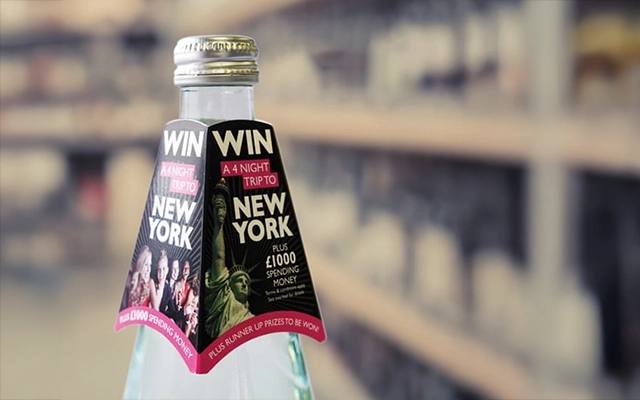
While UK-specific studies focusing solely on bottleneck hangers are limited, the wider body of research on point-of-sale materials and visual merchandising provides strong evidence of their value.
Academic and industry research consistently shows that in-store presentation and signage influence shopper behaviour at the point of decision.
Key findings relevant to hanger performance include:
Together, these findings explain why bottleneck hangers perform well. They combine targeted messaging with strategic placement directly on the product, ensuring communication occurs at the exact moment a customer is evaluating whether to buy. This alignment between visibility, relevance and timing is precisely what broader point-of-sale research identifies as critical to influencing shopper decisions.
| Insight Area | Key Information | Why It Matters for Conversion |
|---|---|---|
| Visibility | Hangers interrupt shelf scanning and attract attention. | Products are spotted earlier in the decision process. |
| Messaging | Short, benefit-led copy delivers clarity. | Reduces hesitation and supports confident decisions. |
| Impulse Trigger | On-product prompts influence quick choices. | Increases incremental sales opportunities. |
| Flexibility | Easily refreshed for seasonal or promotional changes. | Allows continual optimisation and testing. |
| Consumer Psychology | Tactile engagement encourages product handling. | Handling increases likelihood of purchase. |
Other point-of-sale formats such as posters, wobblers and shelf strips each play a role, but bottleneck hangers have distinct advantages:
This makes them especially useful for new products, seasonal releases and award-winning items that rely on quick recognition.
Across UK stores, bottleneck hangers are used to highlight key product attributes in categories where visual comparison is common. Effective applications include:
Independent retailers in particular use hangers to draw attention to lesser-known brands or underperforming SKUs, helping guide customers more quickly toward suitable choices.

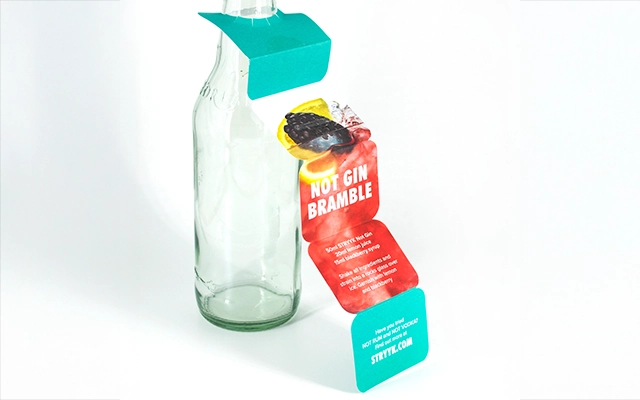
Like any merchandising tool, bottleneck hangers are most effective when used appropriately. They may be less successful when:
Addressing these issues ensures hangers support conversion rather than contributing to visual noise.
Strong hanger design relies on clarity, visual hierarchy and strategic messaging. Effective hangers share the following characteristics:
These design principles improve customer understanding and reduce decision friction.
For best results, bottleneck hangers should be integrated into wider merchandising and performance analysis. Retailers can assess impact through:
Treating hangers as part of an iterative strategy ensures continuous improvement rather than one-off usage.
To support consistent results, retailers and brands should:
These steps help maximise the tool’s contribution to in-store performance.
Bottleneck hangers offer a practical, persuasive and cost-effective way to improve in-store conversion by reaching shoppers at the moment of decision. When thoughtfully designed and integrated into a data-led retail strategy, they help products stand out, support customer confidence and drive sales without requiring major operational changes.
If you’re looking to increase product visibility and strengthen in-store decision-making, consider introducing bottleneck hangers into your merchandising plan. Explore design options, test messaging variations and integrate them into upcoming promotions to see how this simple tool can support measurable gains in conversion.

Unit 4-10 Stanton Road Ind. Est.
Stanton Road
Southampton
Hampshire
United Kingdom
SO15 4HU