Vinyl floor stickers have become a vital part of modern retail spaces. From guiding shoppers through busy aisles to supporting promotional campaigns and safety messaging, floor graphics shape how customers move through a store. However, the material behind these graphics is often overlooked. Choosing the wrong specification can cause early wear, reduced slip resistance or a poor customer experience.
This guide explains how to choose the right floor sticker material for retail environments, covering durability, safety ratings, installation, maintenance and suitability for different store conditions. If you want graphics that last, look professional and remain safe underfoot, understanding your material options is essential.
Floor stickers are now widely used beyond short-term promotions. They help retailers:
As many UK retailers adopt permanent or semi-permanent floor graphics, material choice has become a strategic decision. Poor-quality substrates peel, fade or lose grip, making them both unsafe and unprofessional.
Before selecting any material, retailers should assess:
The UK Health and Safety Executive highlights that floors must be safe for expected use. Floor stickers become part of the surface customers walk on, which means the material must support those safety requirements.


Choosing the right material depends on the demands of the environment and how long the graphics must stay in place.
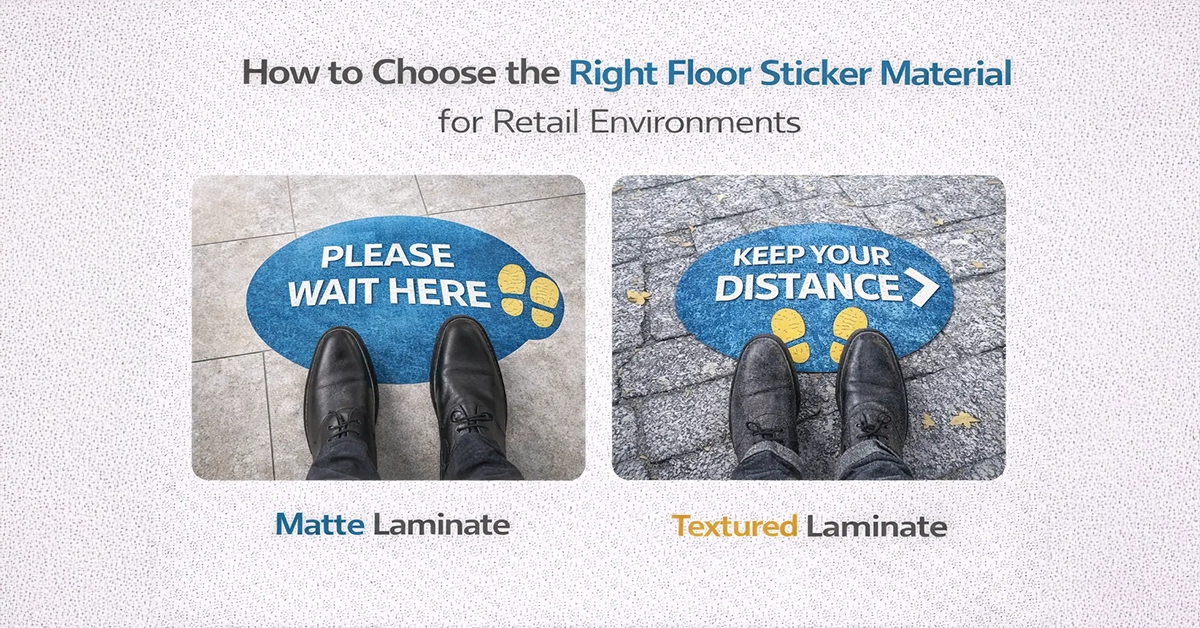
A common, versatile choice for smooth indoor surfaces. This material is ideal for:
It offers strong print clarity and easy removal. However, for ongoing use it requires an anti-slip laminate to maintain safety and withstand cleaning.
Polymeric vinyl offers improved stability and longevity compared with standard monomeric vinyl. When paired with an anti-slip laminate, it provides:
This combination is well suited to aisles, checkouts, point-of-sale zones and high-density retail areas.
For retailers managing high footfall or areas with additional wear, textured films offer enhanced performance through:
They typically require no additional laminate, offering long-lasting performance even under heavy use.
Standard vinyl does not adhere well to carpet. Carpet-compatible materials use specialised adhesives and are ideal for:
These graphics are specifically engineered to remain secure without damaging the carpet beneath.
The following table summarises common materials and their typical retail applications.
| Material Type | Best For | Lifespan | Slip Resistance | Suitable Surfaces | Notes |
|---|---|---|---|---|---|
| Self-Adhesive Floor Vinyl | Short-term retail promotions | Weeks to a few months | Requires laminate | Smooth indoor floors | Easy installation and removal |
| Polymeric Vinyl + Laminate | Medium- to long-term floor graphics | Several months | R10–R12 | Tile, polished concrete, vinyl flooring | Stable and durable in high-traffic areas |
| Textured Films | Heavy footfall areas | Months to a year+ | High (R10+) | Indoor smooth floors | No laminate needed; robust surface |
| Carpet-Compatible Graphics | Soft flooring areas | Short-term | Varies | Carpet tiles and low-pile carpet | Ideal for campaigns and fast updates |
Slip resistance is essential when selecting floor sticker material. R-value ratings help identify how a surface performs under foot:
Retailers must match slip resistance to their specific store conditions. Using an unsuitable R-value increases the likelihood of accidents, especially in busy or moisture-prone areas.
Different areas within a retail space require different performance levels.
Polymeric vinyl with a slip-resistant laminate typically delivers the best long-term performance.
Choose textured materials or higher-rated laminates to handle moisture brought in by customers.
Areas such as checkouts, product aisles and promotional zones often benefit from textured films or laminated polymeric vinyl.
Use graphics specifically designed to withstand UV exposure, moisture and fluctuating temperatures.
Opt for removable vinyl for pop-up displays, seasonal offers or rapid in-store changes.

Even high-quality materials fail if installed incorrectly. To support secure adhesion:
Following these steps helps the material perform as intended and reduces the chances of peeling or lifting.
Retail floors require frequent cleaning, and graphics must withstand routine maintenance. To maintain longevity:
Consistent care ensures the graphics remain safe, clear and visually effective.
Initial cost is only part of the story. In high-traffic retail environments, cheaper materials often fail more quickly and require multiple replacements, increasing overall expense.
High-quality materials provide:
Investing in the right material supports long-term value and consistent in-store presentation.
When the correct materials are used, floor graphics enhance retail spaces by supporting:
These applications remain clear, safe and effective when matched with suitable materials and proper maintenance.
Floor stickers do far more than decorate a shop floor. They contribute to customer experience, store organisation, safety standards and brand communication. Selecting the right floor sticker material ensures your graphics stay durable, safe and visually consistent throughout their lifespan.
By assessing your environment, traffic levels, floor surfaces and cleaning routines, you can confidently choose a material that meets the demands of your retail space.
If you’re looking to specify the right floor sticker materials for your store or want expert guidance on installation and performance, now is the time to take action. Get in touch to discuss the best solution for your retail environment and create floor graphics that work reliably in the real world.

Unit 4-10 Stanton Road Ind. Est.
Stanton Road
Southampton
Hampshire
United Kingdom
SO15 4HU