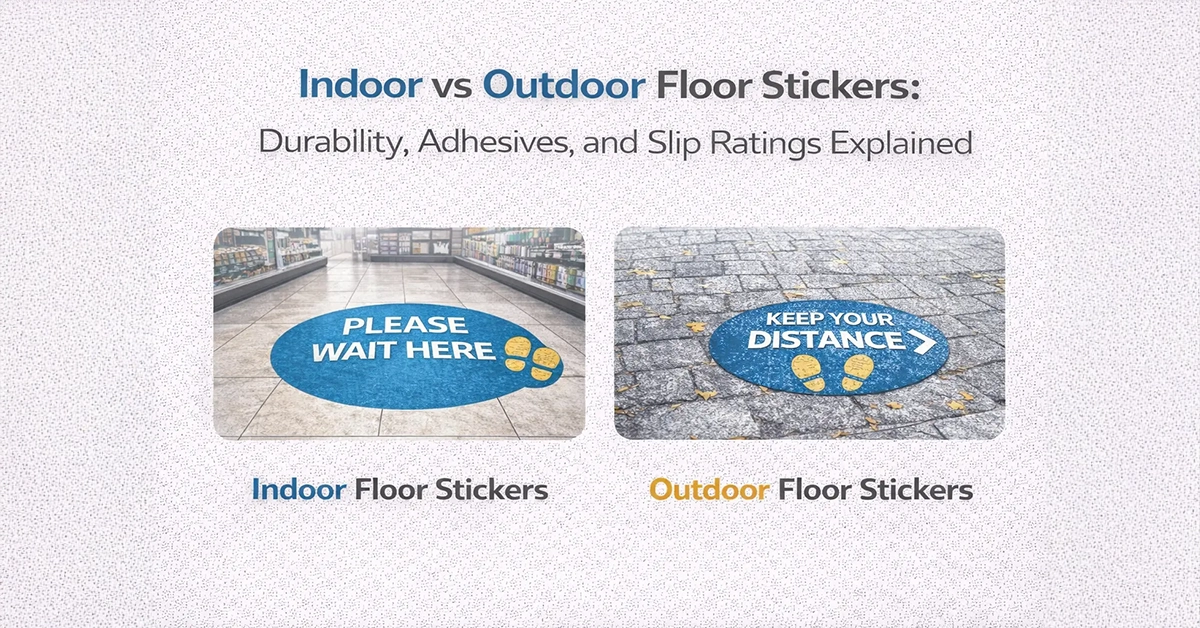
Choosing the right type of floor sticker can significantly influence safety, visibility and long-term performance. Whether you’re designing retail signage, planning an outdoor marketing campaign or improving wayfinding within your workplace, understanding the differences between indoor and outdoor floor stickers is essential. Many buyers overlook key factors such as adhesive strength, surface compatibility and slip ratings, which can lead to poor results or unsafe installations.
This guide explains everything you need to know so you can make informed, confident decisions for your space.
Floor stickers, also known as floor decals or floor graphics, are printed vinyl signs designed to adhere directly to the ground. They’re widely used across retail stores, offices, schools, leisure centres and outdoor venues. Most are produced from durable vinyl with an adhesive backing and, in many cases, a textured laminate to improve grip and depth of colour.
Common applications include:
Indoor and outdoor versions differ in durability, adhesive specification and slip resistance. Knowing these distinctions helps ensure your graphics stay safe, vibrant and securely in place.
You may also find it useful to explore related print knowledge, such as how design affects clarity and legibility. The UK Health and Safety Executive offers guidance on slip testing and safe pedestrian surfaces.
Indoor floor stickers are designed for controlled environments with stable temperatures, dry conditions and smoother floor surfaces. Outdoor floor stickers, by contrast, must handle rain, frost, UV exposure and rough textures such as concrete or paving.
Key differences include:


Floor sticker durability is influenced by three main factors:
A laminated graphic offers greater protection from scuffing, cleaning products and dirt, making it the best choice for any medium to long-term use.
Adhesive choice is one of the biggest contributors to long-term performance. Indoor stickers typically use standard adhesive designed for smooth, non-porous floors. Outdoor stickers require high-tack or permanent solvent-based adhesives to bond to unsealed, rough or textured surfaces.
Key considerations:
Always ensure surfaces are dry, clean and free from dust before installation.
Slip resistance is critical for any floor sticker used in commercial or public environments. UK testing typically references DIN 51130 R-ratings or Pendulum Test Values (PTV), which indicate how safe a surface is under wet or dry conditions.
Recommended slip ratings:
The UK’s HSE guidance states that a PTV of 36 or above is generally required for safe use when floors may be wet.
| Environment | Recommended Adhesive | Slip Rating | Typical Lifespan | Suitable Surfaces |
|---|---|---|---|---|
| Indoor (Dry) | Standard adhesive | R9–R10 | 6–12 months | Tiles, laminate, sealed wood |
| Indoor (Occasionally Wet) | Medium-tack adhesive | R11 | 3–9 months | Entrances, corridors |
| Outdoor (General Use) | High-tack/permanent adhesive | R12 | 1–3 months | Concrete, tarmac |
| Outdoor (High Risk/Wet) | High-tack/permanent adhesive | R13 | Weeks–2 months | Paving, outdoor walkways |
Indoor floor stickers are ideal for clear, bold communication within controlled environments. They are widely used in:
Indoors, the absence of weather exposure means graphics stay vibrant and stable for longer, especially when laminated. This makes them ideal for brand reinforcement, directional signage and safety messaging.
Outdoor floor stickers must endure harsher conditions and therefore require stronger adhesive, higher slip ratings and thicker materials. They are commonly used on:
Because outdoor environments present greater risk, regular checks are recommended to ensure edges remain secure and surfaces remain safe.

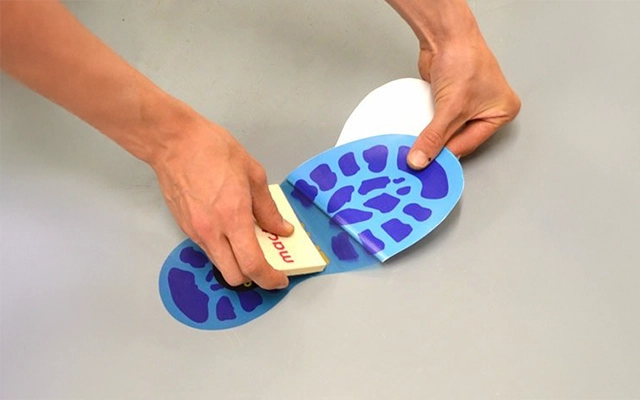
Proper installation ensures maximum performance and safety.
Tips for best results:
Outdoor installations on concrete or paving may require additional preparation to ensure optimal adhesion.
A practical way to make the right decision is to assess:
Quick matching guide:
Common errors include:
Avoiding these pitfalls helps maintain safety, appearance and lifespan.
Indoor and outdoor floor stickers serve different purposes, and selecting the correct option leads to safer, longer-lasting results. By understanding materials, slip ratings, adhesives and installation best practice, you can confidently choose graphics that perform effectively in your environment.
If you’re ready to plan your next signage project or want expert support selecting the right indoor or outdoor floor graphics, now is the perfect time to take the next step. Reach out for guidance and start creating floor signage that works precisely where you need it.

Unit 4-10 Stanton Road Ind. Est.
Stanton Road
Southampton
Hampshire
United Kingdom
SO15 4HU