Floor sticker printing has become a powerful and practical tool across UK retail spaces, from supermarkets and shopping centres to boutique stores and pop-ups. Whether used for wayfinding, branding, queue systems, safety messaging, or promotional displays, they offer a highly visible and cost-effective way to guide customers. One question, however, remains key for retailers: how long do floor stickers actually last?
This guide explains the factors that influence durability, common lifespan ranges, real-world usage scenarios, and practical ways to maximise longevity. If you’re planning to introduce floor graphics into your store, this article will help you make reliable, informed decisions backed by industry insight.
The durability of a floor sticker begins with its materials. Long-lasting graphics typically use:
These elements protect against foot traffic, minimise colour fading, and support safe use in busy public environments.
Some surfaces allow floor stickers to bond more securely:
Any contamination such as dust, moisture, or cleaning residue can weaken adhesion. Proper preparation is one of the biggest contributors to longevity.
Abrasion from shoes, trolleys, and cleaning equipment is the biggest cause of wear. High-traffic areas such as entrances, main aisles, and queue systems naturally shorten a sticker’s lifespan. Lower-traffic areas see slower wear and longer performance times.


Indoor retail spaces offer stable environments that support long-lasting graphics. Outdoor surfaces expose stickers to:
To perform well outdoors, graphics must be printed on weatherproof, UV-stable materials with a textured, anti-slip laminate.
Even the best materials fail early if installed poorly. For optimum adhesion:
Professional installation significantly improves both durability and safety.
A simple maintenance routine extends sticker life considerably:
This approach keeps graphics effective, safe, and visually sharp.
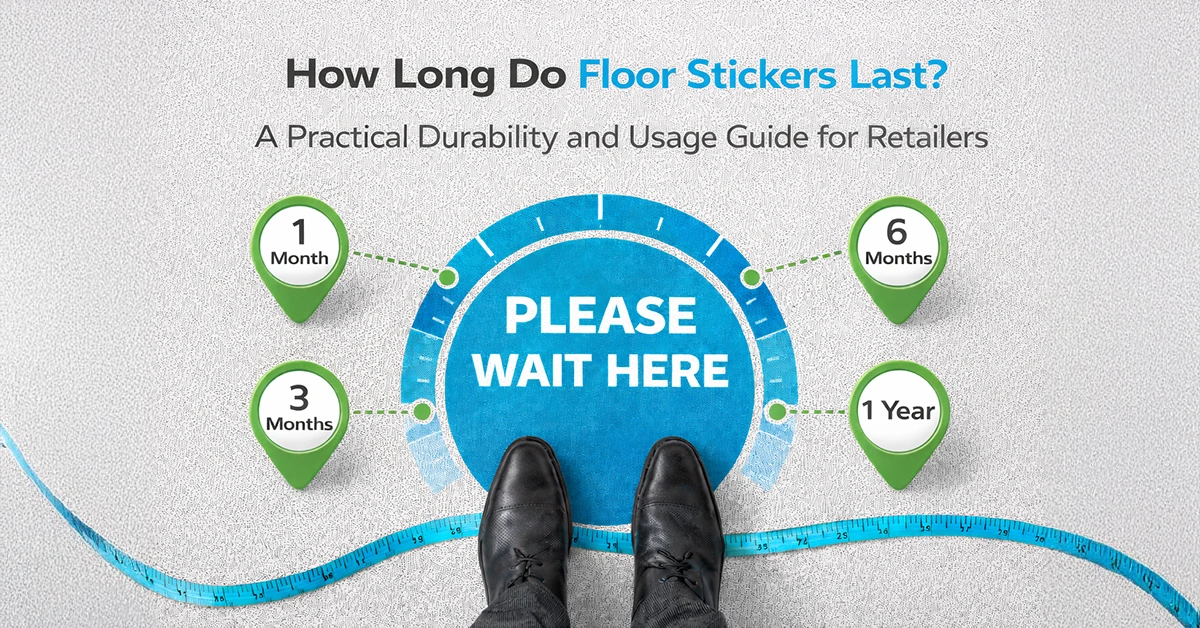
Floor stickers can last anywhere from a few weeks to several years, depending on material choice and usage conditions.
Premium vinyl with anti-slip laminate consistently delivers the longest performance indoors.
Compare floor sticker lifespans by footfall level, with recommended materials and notes to help you choose the right option for your space.
| Placement Type | Expected Lifespan | Recommended Material | Notes |
|---|---|---|---|
| Low-footfall indoor retail | 12–24+ months | Premium laminated vinyl | Long lifespan with gentle cleaning |
| Medium-footfall retail | 6–12 months | Laminated vinyl | Suitable for everyday retail navigation |
| High-footfall areas | 3–6 months | Heavy-duty vinyl / textured laminate | Designed for entrances and busy aisles |
| Pop-up shops / seasonal campaigns | 2–12 weeks | Standard vinyl | Ideal for temporary promotions |
| Outdoor surfaces | 1–5 years | Weatherproof, UV-stable vinyl | Requires specialist anti-slip laminate |
Constant movement, varied footwear, and frequent cleaning make durability more challenging. Laminated or textured floor graphics are the best option here.
Typical lifespan: 3–12 months.
Heavy use is balanced by wider aisles and smoother surfaces. With routine maintenance, stickers often remain effective for over a year.
Typical lifespan: 6–18 months.
Independent retailers experience slower wear, enabling high-quality floor stickers to last much longer.
Typical lifespan: 18–30 months.
Temporary installations prioritise easy removal and quick application.
Typical lifespan: 2–12 weeks.


This approach extends lifespan and ensures safe use in public environments.
Matching the right material to your intended usage is essential.
Most UK retailers require materials that meet recognised slip-resistance ratings for customer safety. Checking slip ratings ensures compliance and supports risk-free use in public spaces.
Floor stickers deliver strong value when chosen and maintained correctly. One straightforward way to assess long-term cost is to calculate:
Cost of installation ÷ expected duration in months = cost per month
This helps you compare:
Floor graphics also influence customer movement, support stronger promotional messaging, and make efficient use of underused space.
When flooring conditions or traffic levels present challenges, alternatives such as printed mats or fixed signage may supplement your graphics to provide a complete in-store experience.
If you’re ready to use floor stickers in your retail space, now is an excellent time to select materials that match your store’s traffic patterns and campaign goals. With the right preparation, installation, and maintenance, floor graphics can deliver long-lasting performance and strong visual impact.
Start planning your next floor sticker installation today and create a standout in-store experience for your customers.

Unit 4-10 Stanton Road Ind. Est.
Stanton Road
Southampton
Hampshire
United Kingdom
SO15 4HU