Z fold brochures remain a reliable and versatile choice for marketing campaigns, product overviews, menus, and event materials. Their structured, multi-panel format makes them ideal for guiding readers through information step by step. However, the paper weight, finish, and lamination you choose significantly influence how effective the brochure is in real-world use.
Each decision affects fold quality, durability, readability, colour performance, and overall customer perception. This guide breaks down the essential considerations for choosing the right materials for your Z fold brochures, helping you achieve a professional finish that performs well and supports your marketing objectives.
A Z fold brochure opens and closes in a zig-zag motion, creating three or more distinct panels. This format is excellent for structured storytelling, product journeys, or step-by-step demonstrations.
However, because the brochure relies on several alternating folds, choosing unsuitable materials can lead to issues such as:
Z fold brochures are commonly used across retail, hospitality, events, and corporate communications, meaning the paper and finish must perform well in varied environments. Selecting stock that folds cleanly and maintains structural integrity is key to achieving a polished final product.
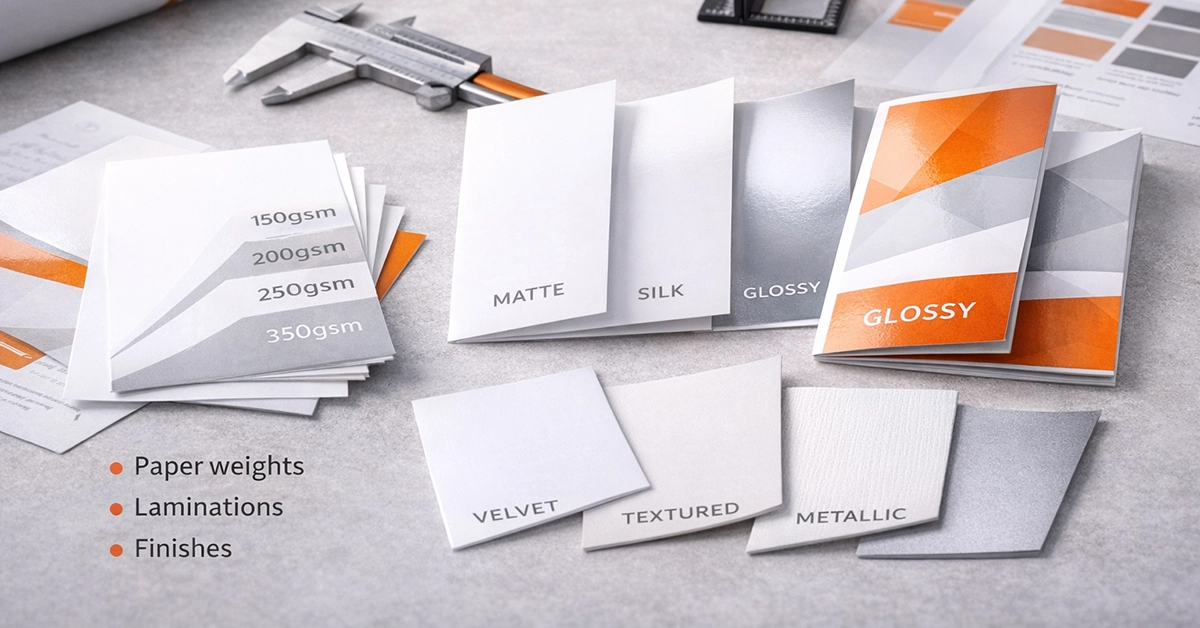
Paper weight in the UK is measured in GSM (grams per square metre). This determines how thick, sturdy, or flexible the stock feels.
Heavier stocks add impact but require proper creasing to prevent cracking, especially across multiple Z folds.
Choosing the right GSM ensures your brochure folds cleanly and maintains a professional appearance.
A heavier brochure often feels more premium but must be paired with the right finish or lamination to maintain smooth folding.
The finish you select affects both the look and function of your brochure, influencing colour depth, readability, and tactile qualities.
Matching the finish to your content helps ensure clarity and visual consistency.


Lamination adds a protective layer that strengthens the brochure and enhances its tactile experience. For Z folds, this additional durability is particularly valuable.
Lamination helps prevent cracking along folds, reduces fingerprinting, and improves longevity—beneficial for brochures used in hospitality, retail, exhibitions, or high-handling environments.
| Feature | Recommended Options | Ideal Uses | Notes |
|---|---|---|---|
| GSM Range | 130–170gsm (standard), 170–250gsm (premium) | General marketing, hospitality, events | Heavier stocks should be pre-creased |
| Finish Types | Gloss, Silk, Matt, Uncoated | Product showcases, corporate info, menus | Gloss for imagery; Matt/Silk for readability |
| Lamination | Gloss, Matt, Soft-Touch | High-handling brochures | Protects folds and improves durability |
| Use-Case Match | Based on brand and audience needs | Retail, trade shows, internal comms | Consider tactile expectations and lighting conditions |
The intended use of your brochure should guide your material decisions.
Understanding the real-world environment helps ensure your brochure performs effectively.
Sustainable print choices are increasingly important for UK businesses.
Eco-conscious options include:
While recycled paper may slightly mute colour output, it provides a distinctive aesthetic that suits many brands.

Attention to detail during the printing and finishing stages ensures a consistent, high-quality brochure.
These steps help maintain structural integrity and consistent visual quality.
Selecting the right paper weight, finish, and lamination for your Z fold brochure ensures your content is presented clearly, professionally, and in a way that matches your brand’s intentions. Each element—from GSM to lamination—plays a vital role in how the final product feels, behaves, and communicates your message.
If you are preparing a new brochure, now is an ideal time to explore your material options and choose a combination that supports both your design and your marketing goals.

Unit 4-10 Stanton Road Ind. Est.
Stanton Road
Southampton
Hampshire
United Kingdom
SO15 4HU