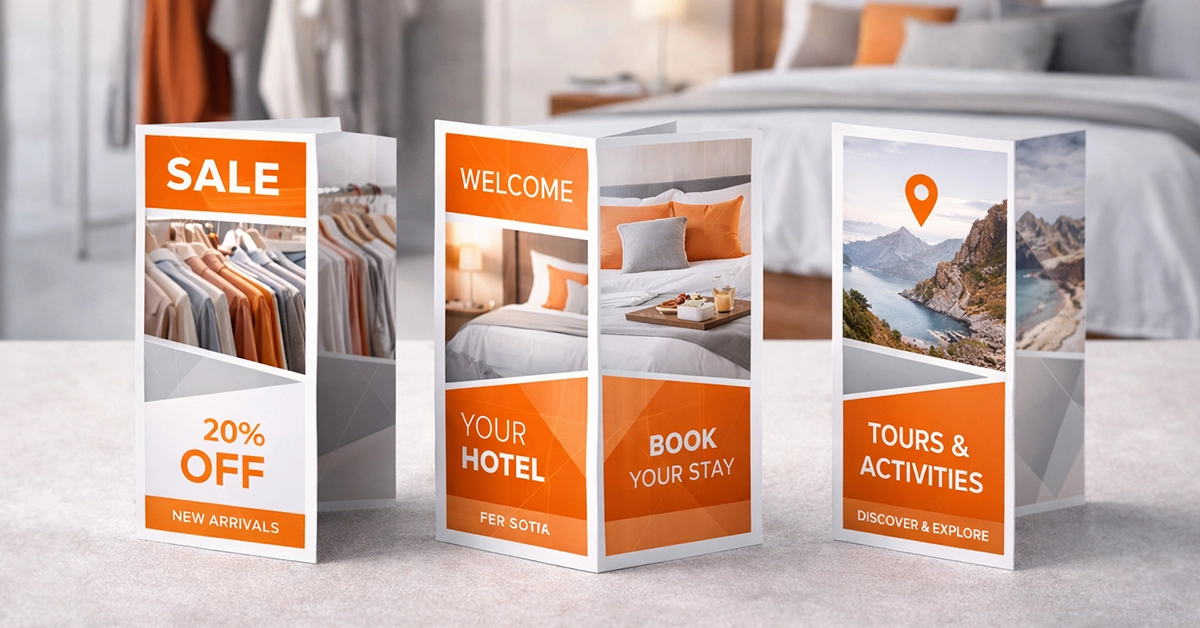
Z Fold printing continues to be one of the most versatile and practical printed formats for UK businesses. Their panelled structure makes them ideal for product storytelling, menus, maps, guides, and promotional campaigns. Whether used in retail, hospitality, or tourism settings, Z Fold leaflets help readers absorb information in a clear sequence that supports both discovery and decision-making.
This article explores how real organisations across these sectors use Z Fold marketing to inspire action and improve customer experience. Supported by UK-relevant data and practical examples, it highlights why this format remains essential within modern print strategies.
The Z Fold format is popular because it offers:
Research consistently supports the impact of printed marketing:
These behaviours align perfectly with the strengths of Z Fold brochures. Their panelled layout mirrors how people naturally consume printed content, making information easier to scan, absorb, and revisit.
This makes them especially effective in sectors such as:
In environments where customers want quick, reliable information, Z Fold brochures provide a clear, structured format that supports both engagement and action.
A high-street beauty retailer used a Z Fold brochure to accompany a new skincare launch. The front panel showcased campaign imagery, while the internal panels provided a step-by-step product routine. The final panel featured a QR code linking to tutorial videos, helping customers understand the range before purchasing.
Because the Z Fold format unfolds progressively, it supports structured storytelling that encourages shoppers to explore the product line fully.
A fashion retailer produced a Z Fold seasonal lookbook positioned at store entrances and changing rooms. Each panel displayed a full outfit with pricing and bundle suggestions, helping shoppers visualise complete looks.
This approach increased average order value because customers could browse inspiration before trying items on.
Some retailers use Z Folds to enhance discovery areas within stores. Examples include:
Printed materials increase customer confidence, particularly in categories where shoppers want reassurance or product clarity.
This comparison table provides an at-a-glance view of how Z Fold brochures perform across different industries.
| Sector | Common Use Cases | Why the Z Fold Works Well |
|---|---|---|
| Retail | Product launches, lookbooks, promotions | Sequential storytelling, catalogue-style layout, strong visual flow |
| Hospitality | Welcome guides, menus, event schedules | Easy navigation, clear panel structure, ideal for QR-linked services |
| Tourism | Maps, walking trails, attraction guides | Large inside spread for maps, supports route planning, family-friendly |
Boutique hotels often use Z Fold welcome leaflets instead of traditional compendiums. These typically cover:
Since guests frequently carry these brochures during their stay, the format works well as a persistent information tool. Hospitality research from 5 Star Up North shows that 97% of hotels consider printed visitor information important for guest experience, highlighting the continued role of print in influencing engagement and on-site decisions.
Restaurants have adopted Z Fold brochures for festive and themed menus. Benefits include:
This layout helps customers make decisions faster, especially during busy periods or special occasions.
Hotels and event venues use Z Fold brochures to guide attendees through schedules, venue maps, and speaker lists. The structured layout gives delegates a clear overview without overwhelming them.
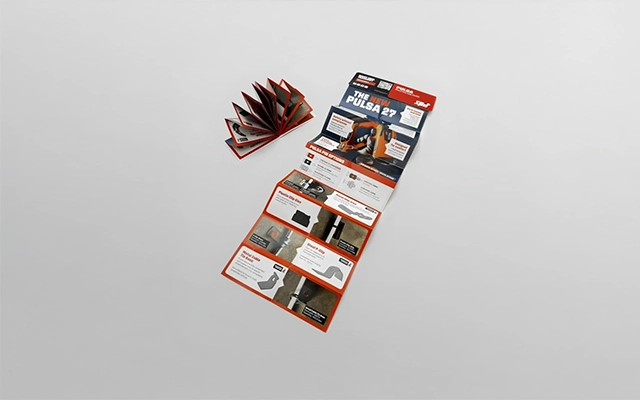

Tourism boards often rely on Z Fold leaflets for walking trails and route guides. The wide inside spread is ideal for maps, while the remaining panels highlight points of interest, safety guidance, and wildlife information.
Research from Two Sides shows that consumers continue to value printed materials for their clarity, reliability, and ease of understanding, particularly when accessing important information.
In tourism settings, where visitors need clear directions and quick access to information, printed guides provide a dependable and easy-to-use format that supports exploration and decision-making on the go.
Museums frequently use Z Fold brochures as discovery trails for families. These often include:
The brochure serves both as a guide and a keepsake.
Z Fold brochures are commonly used in visitor centres to help travellers explore local restaurants, shops, and attractions. Because each panel can represent a category, the format remains tidy and easy to navigate.
Z Fold brochures support hybrid campaigns by offering multiple digital entry points. Effective examples include:
With several panels available, brands can position QR codes strategically to understand which messages drive the highest engagement.
For Z Fold brochures to perform well, consider:
These principles help ensure the brochure communicates clearly and performs effectively across different environments.
Across retail, hospitality, and tourism, Z Fold brochures succeed because they are:
In a landscape crowded with digital messaging, printed materials still provide clarity, trust, and physical presence.
Z Fold brochures remain one of the most impactful and adaptable formats for UK businesses across retail, hospitality, and tourism. Whether you want to guide visitors, promote a new collection, or support on-site decision-making, the multi-panel structure offers clarity and control over how your message is presented.
If you’re planning your next campaign and want your printed materials to work harder, start by mapping your key messages and identifying where a structured Z Fold layout can support your goals. With the right design and strategy, they deliver meaningful engagement and measurable results.

Unit 4-10 Stanton Road Ind. Est.
Stanton Road
Southampton
Hampshire
United Kingdom
SO15 4HU