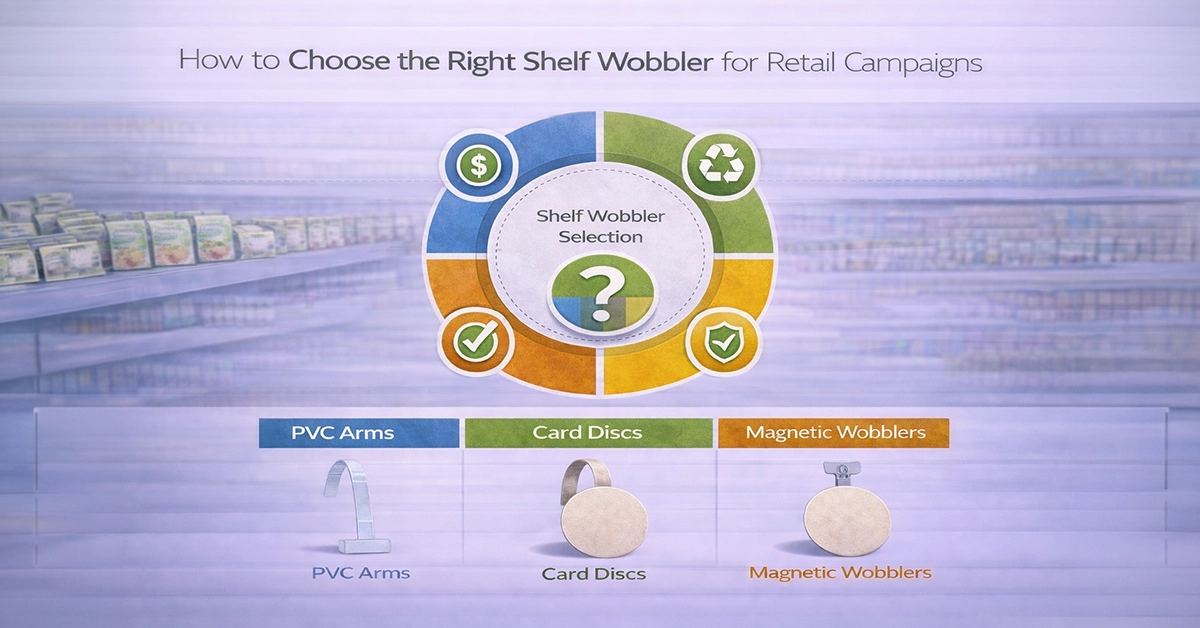
Shelf wobblers remain one of the most effective in-store marketing tools for capturing customer attention and influencing purchase decisions. With most buying choices made right in front of the shelf, retailers and brands need signage that stands out immediately. This guide explains how to choose the right shelf wobbler for any retail campaign, covering design, materials, placement, messaging and strategy. Whether you are launching a product, promoting a discount or supporting seasonal activity, choosing the right wobbler can make a measurable difference to store performance.
A shelf wobbler is a small but powerful point-of-sale display attached to shelves using a flexible arm. It extends into the shopper’s eye line and moves subtly as people walk past, making it naturally attention-grabbing. These displays are frequently used to highlight promotions, new products and key brand messages directly at the shelf edge.
Shelf wobblers work because movement draws the eye and proximity reduces hesitation. In a busy aisle environment, friction-free communication helps products stand out quickly. For retailers and marketers, they are one of the most cost-effective ways to improve visibility where it matters most.
Shelf wobblers influence several aspects of shopper behaviour. Their motion captures attention, while their placement beside the product encourages quicker decisions.
Key benefits include:
When designed well, a shelf wobbler functions as a targeted signpost that guides shoppers to priority products.
Before selecting a shelf wobbler, define what the campaign needs to achieve. Clear objectives ensure you choose the right format, size and message.
Common campaign goals include:
Understanding your goals ensures every design choice serves a clear commercial purpose.
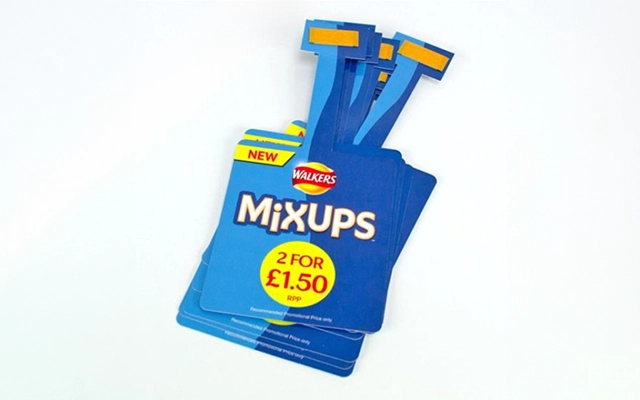
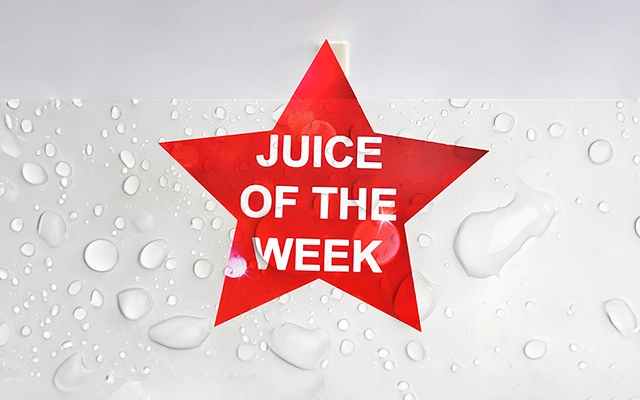
Shelf wobblers come in various shapes and formats, each offering its own visual impact. Selecting the right one depends on your objectives and store environment.
Options include:
The right shape enhances visibility without overwhelming the shelf or distracting from nearby products.
Good design is critical for shelf wobblers to perform effectively in-store. Shoppers make decisions in seconds, so clarity and contrast are essential.
Design priorities:
A well-designed wobbler communicates instantly, even in a busy aisle.
Shelf wobblers are produced using different materials depending on campaign objectives, store conditions and sustainability priorities. The material you choose affects durability and print clarity. Take a look at the below table for more information:
| Material Type | Best Use Case | Durability | Sustainability | Notes |
|---|---|---|---|---|
| PVC Arm + Printed Card | Long-term or high-traffic promotions | High | Moderate | Offers movement and strong stability |
| Recyclable Card | Short-term retail campaigns | Medium | High | Suitable for brands prioritising sustainability |
| PET or PP Plastic | Chilled or moisture-prone environments | High | Moderate | Ideal for refrigerated sections |
| Laminated Card | Premium or extended displays | Medium | Moderate | Protects against scuffs while enhancing colour |
| Eco Alternatives (Biodegradable Card) | Environmentally focused campaigns | Medium | Very High | Supports CSR commitments and waste reduction |
For sustainability guidelines, consult UK waste and recycling standards such as WRAP.
Choosing the correct fixing ensures your wobbler stays securely in place throughout the campaign.
Common fixing options:
Match the fixing to the shelf system used in-store to avoid wobblers falling, tilting or becoming misaligned.
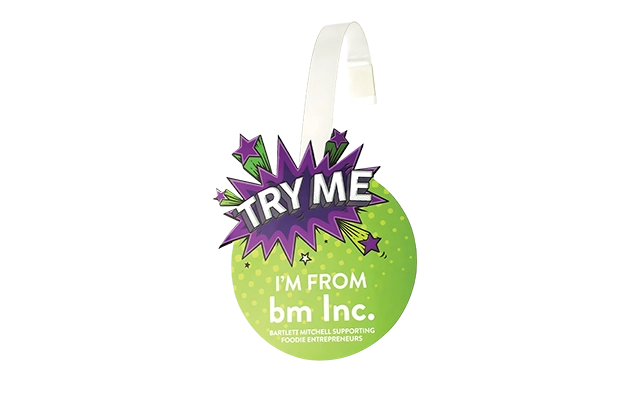
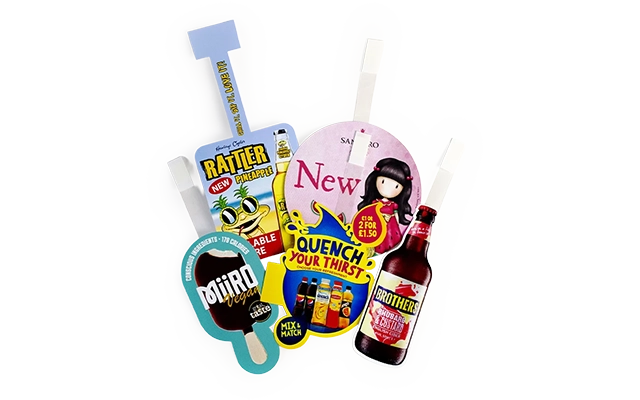
Placement plays a significant role in how effective a shelf wobbler is. Positioning should reflect shopper behaviour and store layout.
Effective placement strategies:
The right placement helps draw attention exactly where you need it.
To get the best results from POS campaigns, ongoing optimisation is essential.
Consider testing:
Measure success through:
Refining your approach ensures your wobblers continue performing strongly over time.
Even small errors can limit impact. Keep your campaigns effective by avoiding:
Small improvements make a meaningful difference in-store.
Choosing the right shelf wobbler can significantly enhance the performance of any retail campaign. With the right combination of design, materials, placement and testing, you can create POS displays that capture attention, guide shoppers and support your commercial goals.
If you’re planning your next in-store activation, now is the perfect moment to refine your approach. Thoughtful shelf wobblers help your products stand out and support a stronger in-store experience.
Ready to make your next campaign more effective? Start designing your shelf wobblers today and ensure your message is seen exactly where it matters.

Unit 4-10 Stanton Road Ind. Est.
Stanton Road
Southampton
Hampshire
United Kingdom
SO15 4HU