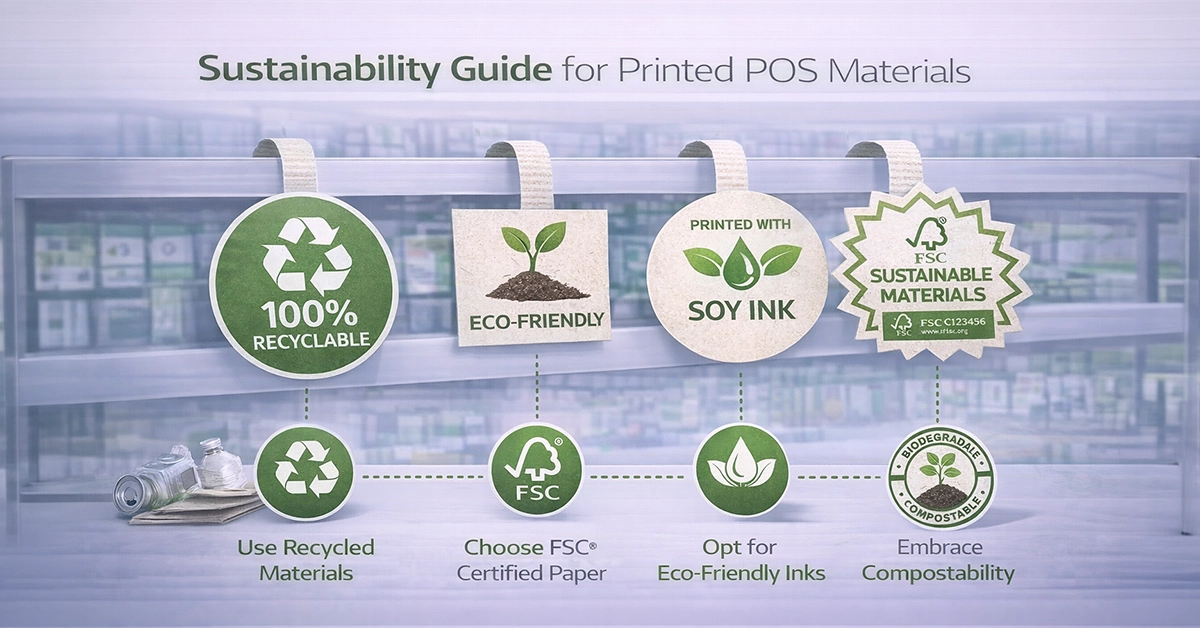
Sustainable retail marketing has become a core expectation across the UK, with brands rethinking how shelf wobbler strips and other POS materials are designed, produced, and recycled. Shoppers increasingly value environmental responsibility, and in-store displays play a significant role in reinforcing those commitments. When POS materials are chosen and handled sustainably, they can reduce waste, cut carbon emissions, and strengthen long-term brand trust.
This guide outlines the essential principles behind sustainable POS, from material selection and design choices to production methods and end-of-life strategies. It provides practical insight for retail marketers, designers, procurement teams, and environmental leads looking to improve both environmental performance and campaign effectiveness.
Printed POS displays are essential for promotions, launches, and visual merchandising. However, traditional substrates and finishes often lead to waste, especially in short-term retail campaigns. As environmental awareness grows, the demand for sustainable POS materials has increased sharply.
Studies focusing on British consumer behaviour indicate that sustainability-linked purchasing has risen across nearly all retail categories. POS materials, due to their visibility, are a powerful way to reinforce responsible brand values and demonstrate measurable improvement.
Sustainable POS printing considers the entire lifecycle of a display, ensuring every stage reduces environmental impact. Effective strategies include selecting the right materials, optimising production, designing intelligently, and enabling straightforward recycling or reuse.
A lifecycle-led approach ensures sustainability is integrated from design concept to disposal.
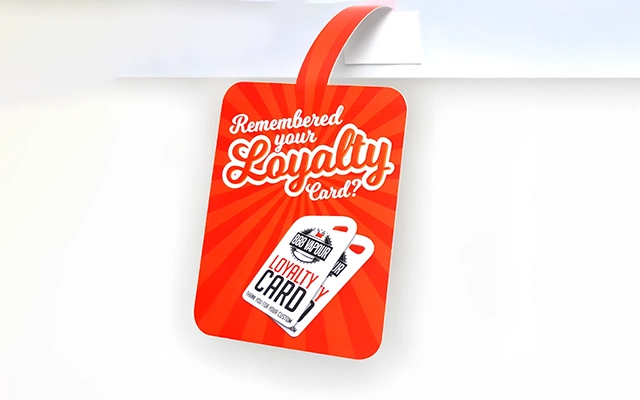
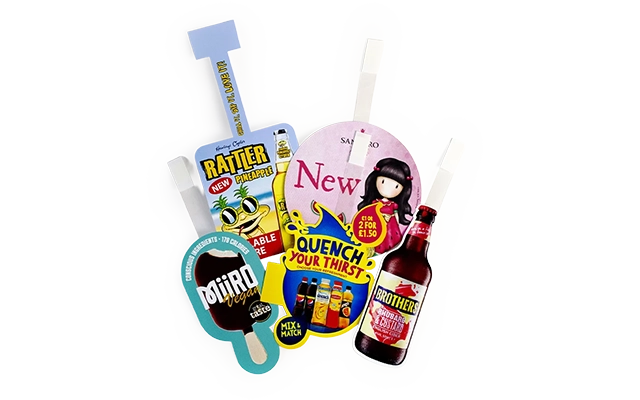
Selecting the right materials has the greatest influence on environmental performance. Sustainable substrates can support recyclability, lower resource consumption, and reduce transport emissions without compromising print quality.
When durability is required, recycled plastics or mono-material designs allow displays to meet structural needs while supporting recyclability and reducing environmental impact.
Water-based or vegetable-based inks reduce VOC emissions and help ensure materials remain recyclable. Avoiding unnecessary laminates also prevents contamination of recycling streams.
Clear, accurate measurement supports better decision-making and helps brands compare material and design options. Environmental assessment tools allow teams to quantify the footprint of each POS unit.
Integrating these metrics into design and procurement ensures sustainability targets remain measurable and transparent.
This table provides a quick overview of commonly used sustainable POS materials, outlining their key benefits, recyclability, and typical retail applications. It is designed to help brands and marketing teams compare material options at a glance and make more informed decisions when planning environmentally responsible POS campaigns.
| Material Type | Key Benefits | Recyclability | Typical Use Cases |
|---|---|---|---|
| FSC-certified cardboard | Renewable, versatile | Widely recyclable | Display headers, dump bins, shelf POS |
| Recycled cardboard | Lower impact, affordable | Widely recyclable | Standees, signage, promotional panels |
| Recycled plastics | Durable for longer campaigns | Recyclable depending on type | Hanging signs, structural elements |
| Water-based inks | Lower VOCs, improved recyclability | High | Most printed POS applications |
| Mono-material units | Simpler recycling | Fully recyclable | Freestanding displays, multi-panel units |
Thoughtful design reduces waste, cuts production costs, and supports easier recycling or reuse. Designing with sustainability as a foundation delivers stronger long-term benefits.
Small design adjustments can dramatically reduce waste and improve the lifespan of POS components.


Even well-designed displays can create unnecessary impact if production processes are inefficient. Aligning with responsible production standards ensures environmental integrity throughout the manufacturing process.
Brands adopting these methods often see long-term cost and waste reductions.
End-of-life planning is an essential part of sustainable POS. Ensuring displays are easy for retailers to recycle prevents unnecessary landfill waste.
Circular design ensures that value is retained beyond a single activation.
Sustainable POS supports both commercial and environmental goals. As sustainability influences purchasing decisions, responsible POS materials can reinforce brand trust and boost the effectiveness of in-store marketing.
Sustainable POS is not only environmentally responsible but strategically valuable.
This checklist helps ensure sustainability remains central throughout the project.
Sustainability in printed POS materials is essential for modern retail. By choosing low-impact materials, designing with efficiency in mind, reducing waste in production, and planning for responsible disposal, brands can dramatically reduce their environmental footprint while strengthening customer relationships.
If you are exploring more responsible approaches to POS printing or want help transitioning to sustainable materials and design, now is an excellent time to review your current practices and outline your long-term goals. Thoughtful changes today will support both brand success and environmental progress.

Unit 4-10 Stanton Road Ind. Est.
Stanton Road
Southampton
Hampshire
United Kingdom
SO15 4HU