PVC vs Mesh vs Fabric Banners: Choosing the Best Material for Your Environment
5–7 minutes
Selecting the right banner material is crucial if you want your campaign to perform reliably in real-world conditions. Whether you’re promoting a retail offer, branding an event, or installing signage on a construction site, the environment will strongly influence how your banner looks, lasts, and withstands the elements. PVC, mesh, and fabric banners each offer distinct benefits, and understanding these differences helps you make an informed, cost-effective choice.
This guide explores each banner type in detail, explaining what they are, how they perform, and where they work best. By the end, you’ll have a clear understanding of which banner material suits your location, conditions, and long-term branding needs.
Understanding the Three Main Banner Materials
Before comparing performance, it helps to know the basics of each material.
PVC Banners
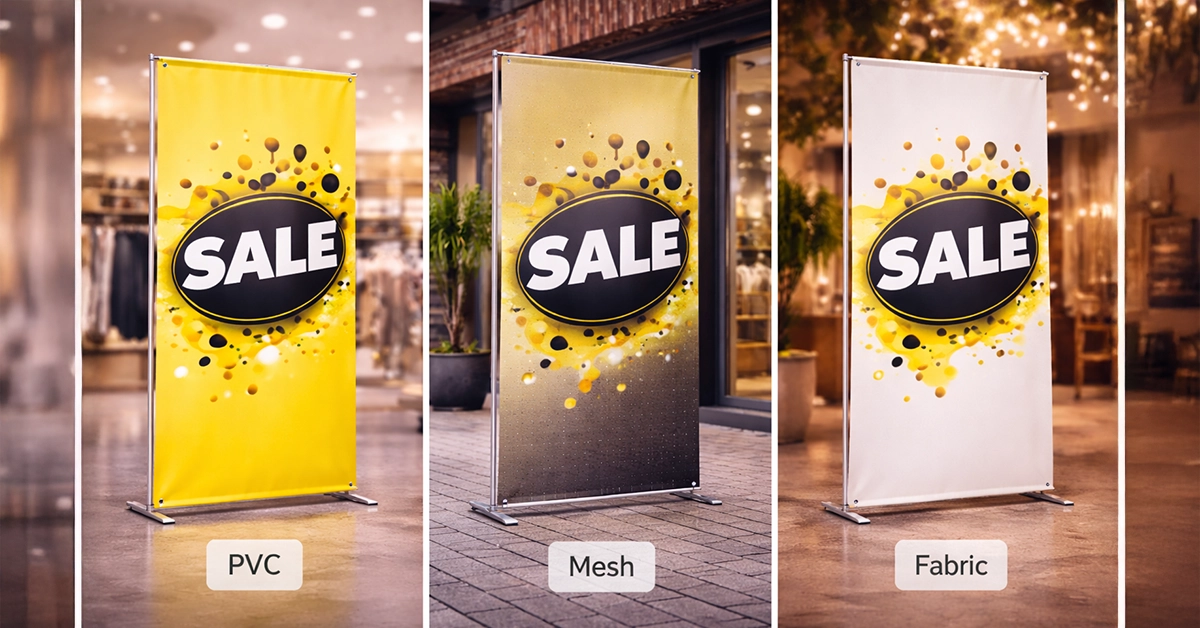
PVC banners are made from polyvinyl chloride and are available in weights such as 440gsm or 510gsm. They deliver crisp print quality, resist rain and UV exposure, and are widely used in both indoor and outdoor settings.
Mesh Banners
Mesh banners use a PVC base with thousands of small perforations that allow air to pass through. This reduces wind load and keeps large or exposed installations stable.
Fabric Banners
Fabric banners, commonly produced from polyester or textile blends, offer a soft, premium finish. They are lightweight, foldable, and often chosen for indoor branding or sustainability-focused campaigns.
Why PVC Banners Remain a Popular All-Round Choice
PVC banners remain widely used across the UK due to their durability, versatility, and print quality.
Benefits of PVC Banners
High-resolution graphics with strong colour reproduction.
Excellent performance in moderate outdoor conditions.
Water-resistant and UV-resistant for reliable long-term use.
A cost-effective option for short- or medium-term campaigns.
Considerations
Heavier than mesh or fabric banners.
Less suited to windy locations, where they can act like a sail.
Not the most sustainable option due to PVC composition.
Best Settings for PVC
Shopfront advertising
Busy community or seasonal events
Outdoor signage in sheltered areas
Internal POS displays or sales promotions
Mesh Banners: Designed for Windy or Exposed Outdoor Conditions
Mesh banners are engineered for sites where standard PVC banners may struggle. Their breathable construction makes them ideal for large-scale or exposed outdoor installations.
Benefits of Mesh Banners
Superior wind resistance thanks to perforated structure.
Lightweight and easy to handle.
Allows partial visibility and natural light through glass or scaffolding.
Highly durable in harsh outdoor environments.
Considerations
Slightly reduced print sharpness due to the perforations.
Not ideal for artwork requiring fine detail.
Often higher in price compared to basic PVC banners.
Best Settings for Mesh
Construction hoardings and scaffolding
Outdoor venues with high wind exposure
Building wraps
Installations covering windowed or glazed areas
Fabric Banners: A Premium, Lightweight, and Sustainable Alternative
Fabric banners offer a stylish finish that works particularly well in indoor environments. They’re frequently chosen by brands that prioritise both presentation and environmental responsibility.
Benefits of Fabric Banners
Lightweight and easy to transport.
Foldable without cracking, ideal for repeated use.
Attractive, professional appearance for indoor branding.
More environmentally considerate than PVC-based options.
Considerations
Less durable outdoors, especially in rain or UV exposure.
Potential for fading with long-term sunlight.
Can crease if not stored correctly.
Best Settings for Fabric
Indoor exhibitions and conferences
Retail interiors
Corporate displays
Pop-up events or seasonal activations
Banner Material Comparison Table
Use this table compares the key differences between PVC, mesh, and fabric banners.
Feature / Factor
PVC Banner
Mesh Banner
Fabric Banner
Durability Outdoors
High in moderate conditions
Excellent in high wind
Low
Print Quality
Very high
Medium
High
Wind Resistance
Low
Very high
Low
Weight
Medium to heavy
Light
Very light
Eco-Friendliness
Lower
Medium
Higher
Ideal Use
Indoor/outdoor promotions
Exposed outdoor sites
Indoor displays
How to Match Banner Material to Your Environment
Choosing the right banner material starts with understanding how and where it will be displayed.
1. Assess Wind Exposure
High or unpredictable wind → mesh
Controlled environments or sheltered outdoor areas → PVC
2. Consider Print Detail and Visibility
High-detail artwork, fine text, or photography → PVC or fabric
Large, bold graphics viewed from a distance → mesh
Durability in tough weather → mesh, reducing the need for replacements
4. Review Handling and Storage Needs
Frequent transport or set-up → fabric
Long-term fixed outdoor installation → PVC or mesh
5. Account for Lighting Conditions
Installation over glass or windows → mesh
Indoor spotlighting → fabric provides a smooth, soft finish
Design Tips for Getting the Best Results from Each Banner Type
Optimising PVC Banner Artwork
Use sharp, high-resolution images.
Consider UV-resistant inks for outdoor longevity.
Ideal for campaigns featuring product photography or detailed graphics.
Optimising Mesh Banner Artwork
Use bold fonts and strong colour contrast to compensate for perforations.
Avoid intricate elements or small text.
Works best for large, striking visuals intended for long-distance viewing.
Optimising Fabric Banner Artwork
Select colours that complement indoor lighting conditions.
Use tensioned display systems to minimise visible creasing.
Suitable for premium or branded indoor environments.
Cost, Lifespan, and Long-Term Value
Each banner material offers different levels of cost efficiency, durability, and total value.
PVC Banners
Budget-friendly and long-lasting in moderate outdoor settings.
Strong return on investment for short- or medium-term campaigns.
Mesh Banners
Can cost more upfront but offer superior durability in exposed environments.
Ideal for avoiding repeated replacement costs in windy locations.
Fabric Banners
Highly reusable and portable.
Excellent value for businesses attending multiple indoor events or exhibitions.
Sustainability Considerations Across Banner Materials
Many UK organisations now prioritise sustainable marketing materials. Fabric banners, especially those made from recycled polyester or alternative textile blends, offer a more environmentally considered option. While PVC and mesh remain highly durable, their recycling routes are more limited. However, mesh’s wind resistance and durability can reduce waste by lowering the likelihood of frequent replacements.
Next Steps: Choosing the Right Banner for Your Campaign
The ideal banner material depends on your location, weather conditions, design requirements, and sustainability values. PVC offers versatility and strong print quality, mesh excels in challenging outdoor conditions, and fabric provides a premium finish for indoor spaces. By understanding how each material behaves in different environments, you can select a banner that performs reliably and delivers maximum visual impact.
If you’re planning a campaign or preparing for an event, now is the perfect time to ensure your signage is ready. Get in touch to discuss your project, request material samples, or explore the full range of PVC, mesh, and fabric banner options best suited to your environment.