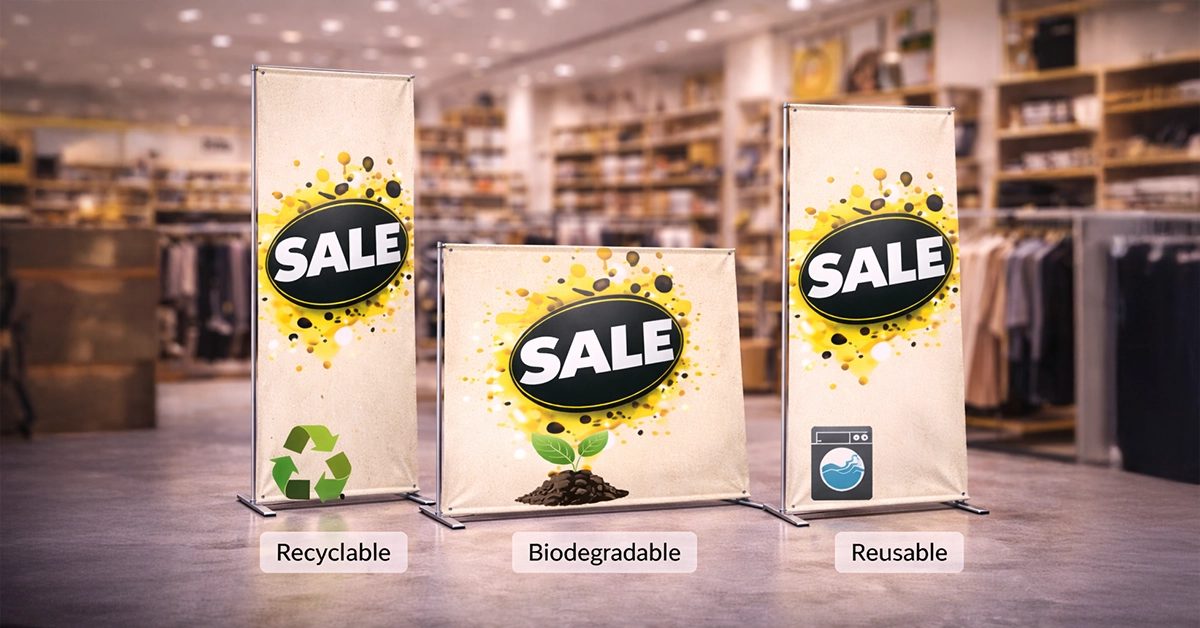
Sustainability is now a key priority for UK organisations aiming to reduce waste and operate responsibly. Marketing assets such as banners are increasingly evaluated for their environmental impact, prompting a move away from traditional PVC and towards recyclable, reusable and low-impact alternatives.
This guide explores what makes a banner sustainable, the best PVC-free materials available, eco-conscious printing technologies, and practical disposal and recycling options across the UK. It offers clear, actionable insights for businesses aiming to reduce environmental impact while maintaining strong campaign performance.
PVC banners have long been the default choice thanks to their durability and affordability. However, their environmental drawbacks are significant:
As sustainability expectations grow, many organisations now seek alternatives that support corporate responsibility goals.
A sustainable banner is designed with its full lifecycle in mind. This involves:
Sustainability is most effective when integrated into every stage of the banner’s creation and use.
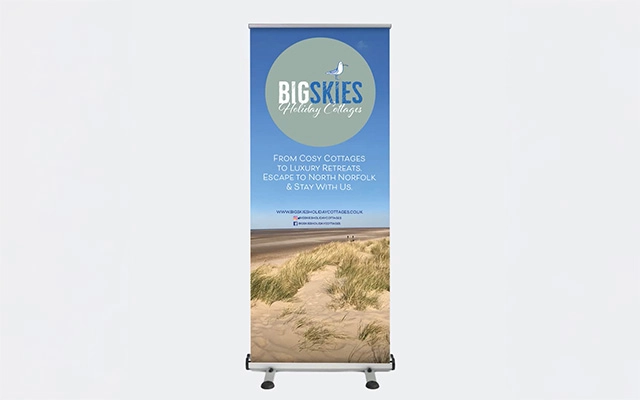

A range of high-quality materials now offer strong performance without the environmental drawbacks of PVC. These include recyclable plastics, textiles and fibre-based options.
These materials reduce environmental impact while still delivering high-quality branding and visibility.
The inks used on banners play an important role in sustainability. Low-emission printing supports healthier work environments and responsible disposal.
Choosing environmentally considerate inks enhances both print quality and the banner’s recyclability at end-of-life.
Modern sustainable materials have been engineered to match the quality and practicality of PVC. Key considerations include:
While PVC-free materials may be slightly more expensive in some scenarios, they often deliver longer reuse potential and stronger sustainability credentials.
This table supports fast decision-making for teams evaluating eco-friendly banner options.
| Material Type | Recyclable in UK | Typical Use | Environmental Benefit | Durability Level |
|---|---|---|---|---|
| Polypropylene (PP) | Yes (Plastic Code 5) | Outdoor displays, promotions | Reduces plastic waste; fully recyclable | Medium to high |
| Polyester Fabric | Yes (Textile Recycling) | Indoor signage, exhibitions | Lightweight, reusable, lower-impact production | High |
| PET/PE Films | Yes | Indoor and outdoor displays | PVC-free with long-term resilience | High |
| Paperboard | Yes | Indoor, short-term campaigns | Recyclable; FSC-certified options | Low to medium |
A banner’s sustainability depends heavily on how it is managed once it is no longer needed. Responsible disposal avoids unnecessary landfill and supports circular practices.
Useful guidance:
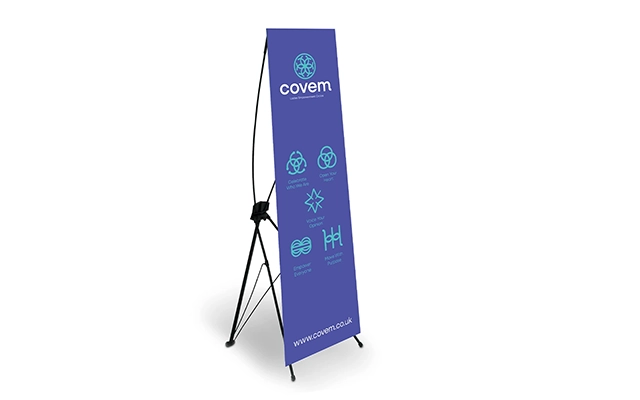
Working with the right partner ensures your banners meet both performance and environmental expectations. Consider whether the supplier:
Transparency and environmental accountability are essential when assessing sustainability claims.
Businesses can reduce their long-term signage footprint by adopting smarter planning:
These small adjustments contribute to meaningful reductions in signage waste.
Sustainable banner printing enables UK businesses to reduce waste, support eco-friendly operations and maintain strong branding impact. By opting for PVC-free materials, recyclable substrates and low-impact printing technologies, organisations can ensure that their marketing assets are both effective and environmentally responsible.
With thoughtful planning and informed material choices, banners can be produced, used and disposed of in ways that support a greener future.
Now is the ideal moment to review how your organisation approaches banner printing. Assess the materials you currently use, speak with your print partner about PVC-free alternatives, and establish a clear plan for reuse and recycling. Taking action today ensures your marketing remains impactful while contributing to a more sustainable UK.

Unit 4-10 Stanton Road Ind. Est.
Stanton Road
Southampton
Hampshire
United Kingdom
SO15 4HU