Custom printed swing tags do more than display prices. They shape brand perception, reinforce product quality, and influence whether customers pause long enough to explore what you offer. The right swing tag size, shape, and die-cut design can support storytelling, improve usability, and strengthen shelf appeal across fashion, beauty, retail, and lifestyle sectors. This guide explains everything UK businesses need to know about swing tag sizing, shape selection, and custom die-cut options to help you create effective, memorable tags.
Swing tags are often the first printed element a customer touches, so their physical form plays a key role in the product experience. A tag that is too small limits space for essential information, while an oversized tag can look disproportionate or distract from the product.
Size and shape directly influence:
Industry reports by Mintel, highlight that packaging quality strongly affects buying confidence. Swing tags are an extension of this customer expectation.
While there is no official universal standard, the UK print industry consistently relies on a set of practical, versatile dimensions that work across sectors.
Popular UK swing tag sizes:
These sizes follow logical proportions similar to ISO 216 paper standards, offering a comfortable balance between readability and visual appeal.


Selecting the right swing tag size depends on both visual balance and functional needs.
Helpful guidelines:
If including barcodes or QR codes, they must meet GS1 UK minimum readability requirements to scan reliably.
Your choice of shape affects how customers interpret your brand at a glance.
Versatile, cost-effective, and suitable for almost any sector. Provides ample space for information and branding.
A modern layout ideal for logo-led designs or compact displays.
Soft and approachable, often used in gifting, beauty, and lifestyle packaging.
Stylish and refined, ideal for heritage-inspired or natural product lines.
Design principles from organisations such as Adobe show how shapes influence visual perception and user experience, making this an important part of swing tag planning.
| Category | Typical Dimensions | Best For | Notes |
|---|---|---|---|
| Rectangular | 50 x 90 mm / 60 x 100 mm | Fashion, general retail | Versatile layout |
| Square | 55 x 55 mm / 60 x 60 mm | Boutique items, handmade goods | Strong for logo focus |
| Circular | 60–80 mm diameter | Beauty, gifting | Adds softness and a premium feel |
| Oval | 50 x 90 mm (varied) | Natural or heritage branding | Distinctive silhouette |
| Large tags | 80 x 140 mm | Homeware, premium goods | Ideal for care instructions or storytelling |
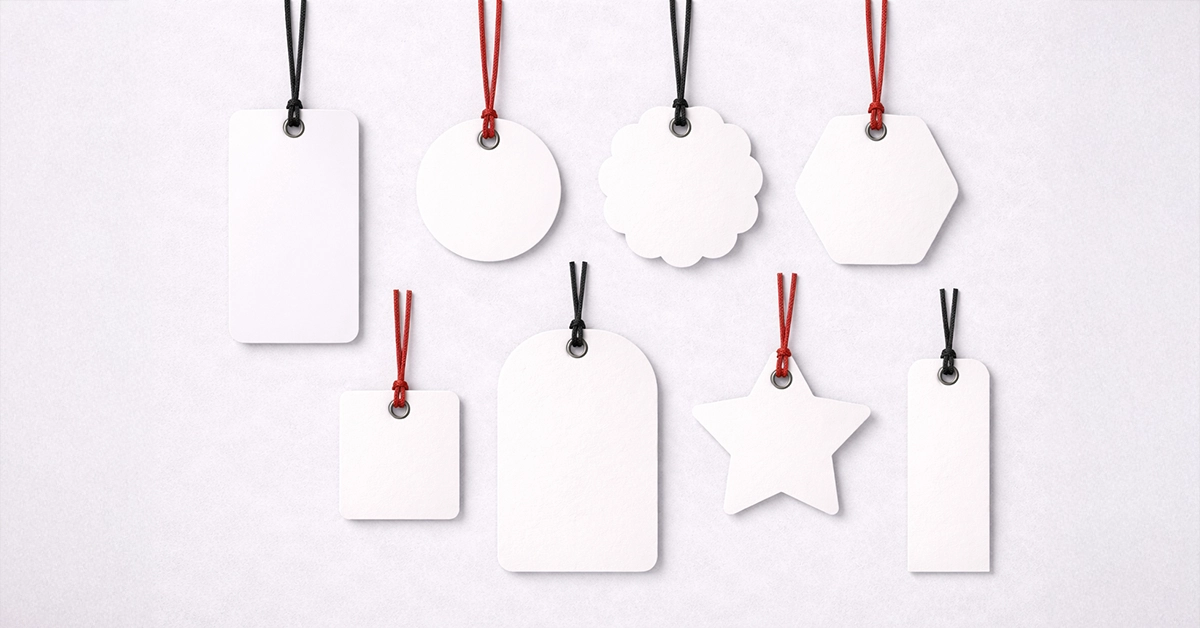
Custom die-cut swing tags allow brands to showcase personality and reinforce distinctive design elements. Steel-rule dies can create a wide variety of shapes including:
Laser cutting is used for fine detail or intricate interior shapes. While slower than traditional die-cutting, it offers exceptional precision for complex designs.
Understanding the limitations of die-cutting makes the design process smoother and avoids production challenges.
Key considerations:
These details ensure that the final result looks polished while performing well in everyday retail handling.

Material weight determines how the tag feels and how well it endures handling.
Typical GSM ranges:
Sustainability is increasingly important to UK consumers. Organisations such as WRAP and DEFRA highlight the growing demand for recyclable and responsibly sourced packaging. Using FSC-certified or recycled stocks supports this expectation.
The finish you choose can enhance the tag’s aesthetic or influence its structural suitability.
Key finishing considerations:
Finishes should complement the chosen size and shape rather than overpower them.
Each retail category has patterns in how they approach swing tag design:
These trends help guide your decisions based on how similar products are presented in the market.
Eco-friendly swing tags have moved from optional to expected. Businesses increasingly choose:
Sustainability can influence the available finishes or shapes, particularly when the goal is full recyclability.
Before sending artwork to print, review the following:
These steps minimise delays and ensure the final tags meet quality expectations.
Well-designed swing tags help products stand out, express your brand identity, and support customer confidence. Whether you are choosing a standard size, exploring bespoke die-cut shapes, or planning sustainable material choices, each decision contributes to a consistent and compelling brand experience. Now is the ideal moment to refine your design and create swing tags that resonate with your audience.

Unit 4-10 Stanton Road Ind. Est.
Stanton Road
Southampton
Hampshire
United Kingdom
SO15 4HU