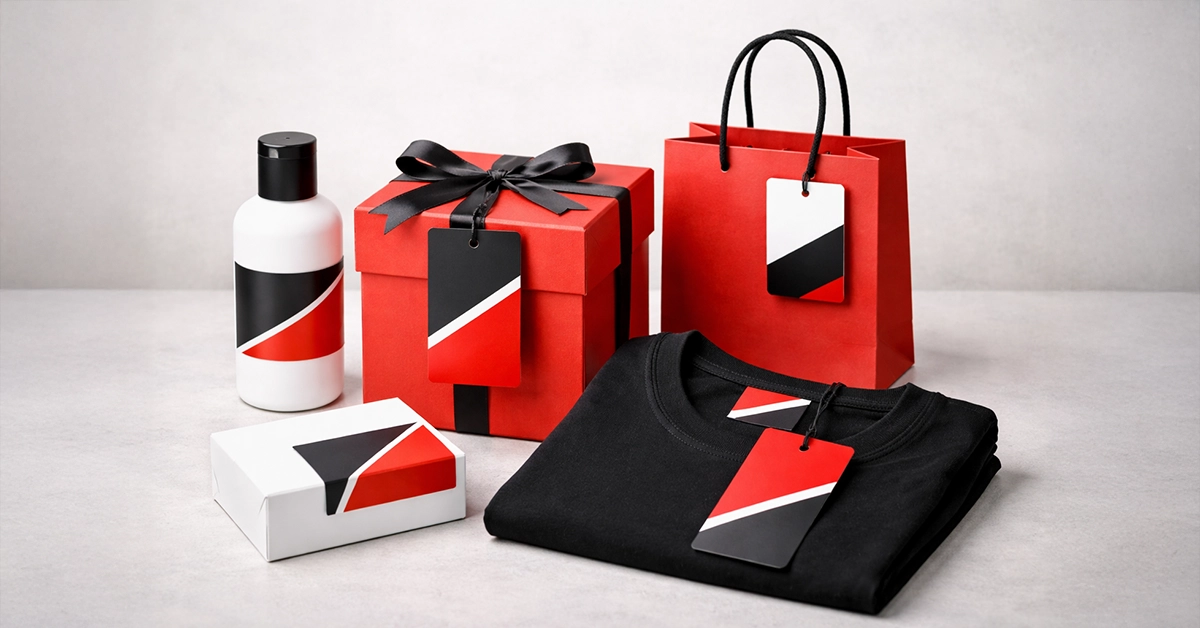
Matching swing tags to your packaging and wider branding is one of the most effective ways to create a unified product experience. Swing tags influence customer perception before a product is even handled. When designed as part of a cohesive system, they support brand recognition, trust, and perceived quality across every touchpoint.
This article explains how to align swing tags with packaging, labels, and brand identity to strengthen product presentation and consistency.
Swing tags do far more than share prices or care instructions. They help shape the overall impression of your product and play a key role in brand storytelling. When tags match packaging and labelling:
Research into packaging psychology shows that shoppers make fast judgements based on visual cues. When swing tags sit comfortably within your brand’s design system, they reinforce a positive perception from the start.
Before choosing materials or layouts, it is essential to anchor your design decisions in your brand identity. Clear brand definition ensures your swing tag aligns with every packaging element.
Review these brand foundations:
With these foundations in place, your swing tag design will naturally sit within your wider branding.
Material selection influences both visual consistency and how customers perceive product quality. The stock and finish of a swing tag should complement those used across your packaging.
For example, if your packaging uses kraft boxes or sleeves, pairing them with a silk-coated swing tag risks creating a disjointed appearance. Harmonising materials ensures a polished product presentation.


Colour and typography are powerful brand identifiers. Even small inconsistencies can make products appear mismatched.
This visual synergy helps customers recognise your products instantly, especially across collections or ranges.
Swing tags should complement, not repeat, what appears on labels or external packaging.
Tone of voice is just as important. If your packaging copy is friendly and conversational, your swing tag should follow the same approach.
| Branding Element | What to Match | Why It Matters | Recommended Approach |
|---|---|---|---|
| Material | Paper weight, texture, finish | Ensures tactile consistency | Choose stocks that mirror packaging substrates |
| Colour Palette | Core and secondary colours | Reinforces brand recognition | Use colour-calibrated artwork |
| Typography | Font families and hierarchy | Enhances visual cohesion | Match packaging and label typefaces |
| Messaging | Tone, values, storytelling | Builds authenticity | Keep language aligned across all touchpoints |
| Print Finishes | Embossing, foiling, lamination | Reflects product positioning | Use matching or complementary finishes |
| Sustainability | Recycled stocks, eco inks | Strengthens green credentials | Ensure both tag and packaging show clear alignment |
Different product categories require different approaches to alignment. Here’s how to tackle the most common ones.
This category-by-category approach ensures your tags feel intentional and rooted in the product style.


Swing tags form a key part of the product journey, from first interaction to unboxing.
Consider how swing tags contribute to:
Tags can help guide customers from physical packaging to online content, such as care videos or brand stories.
If your packaging promotes environmental responsibility, your swing tags must reflect this commitment.
Customers increasingly expect consistency in sustainability claims. Aligning your materials across all packaging elements demonstrates authenticity.
Use this checklist to ensure your swing tags remain aligned with your brand:
Quick reference points like these can prevent misaligned or inconsistent print runs.
Certain issues can undermine an otherwise strong brand presentation:
These small missteps can reduce perceived product quality and disrupt brand recognition.
Swing tags are a powerful extension of your packaging strategy. When aligned with your labels and overall design language, they help create a strong, unified brand presence. Consistent materials, colours, messaging, and finishes make products look more intentional and trustworthy, increasing customer confidence from the first interaction.
If you’re developing a new product line or refreshing existing designs, now is the ideal moment to ensure your swing tags support your full branding system. Review your materials, refine your design approach, and create tags that enhance your product story across every touchpoint.

Unit 4-10 Stanton Road Ind. Est.
Stanton Road
Southampton
Hampshire
United Kingdom
SO15 4HU