Outdoor branding relies heavily on durable, weather resistant bollard covers that continue to look professional throughout an entire campaign. Whether in retail parks, fuel forecourts, or busy car parks, the lifespan of a bollard cover directly affects campaign consistency, safety messaging, and overall cost efficiency.
Understanding how long bollard covers last, and what influences their performance outdoors, helps brands choose the right material for their timeline, environment, and budget. This guide explores the key factors behind durability, including material selection, UK weather conditions, print method, and installation quality.
The UK’s climate is unpredictable, with prolonged rain, fluctuating UV levels, and seasonal freeze thaw cycles. These conditions affect outdoor signage in several ways:
In busy retail and commercial environments, durability influences how consistently a campaign presents across multiple sites and how often signage needs replacing. High quality, long lasting covers reduce both downtime and ongoing printing costs.
Several core elements influence outdoor lifespan. Understanding these ensures you choose the right specification for your campaign.
Each of these factors contributes differently depending on campaign length and the conditions on site.

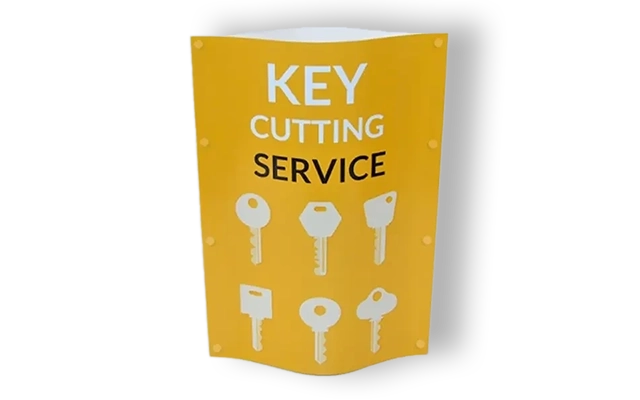
Bollard covers are available in several materials, each suited to different levels of durability and weather resistance.
Correx is lightweight and suitable for short term promotions. It is water resistant but has moderate UV resistance. Lifespan is typically 6 to 18 months, depending on exposure and print protection.
This material offers strong impact and UV resistance, making it ideal for medium term campaigns. Expected outdoor lifespan is 2 to 3 years.
PVC performs well in challenging conditions where moisture, abrasion, and temperature changes are common. With appropriate UV protection, it lasts 18 months to 4 years.
A strong choice for long term or semi permanent installations. It offers excellent UV stability and structural durability, lasting 3 to 7 years outdoors.
This table compares common bollard cover materials based on their outdoor performance characteristics, including lifespan, resistance to UV exposure, water, and impact. It provides a quick reference to help match material choice with expected usage duration and environmental conditions.
| Material | Typical Outdoor Lifespan | UV Resistance | Water Resistance | Impact Resistance | Suitable For |
|---|---|---|---|---|---|
| Correx | 6 to 18 months | Moderate | High | Moderate | Short term promotions |
| Solid polypropylene | 2 to 3 years | High | High | High | Medium term branding |
| PVC | 18 months to 4 years | Good | Very high | Good | Medium to long term signage |
| HDPE | 3 to 7 years | Excellent | Excellent | Very high | Long term installations |
British weather plays a major role in how long bollard covers last. The following conditions are the most significant.
UV exposure gradually reduces colour intensity. Reds and yellows fade fastest, while blues and blacks remain vibrant for longer. UV cured inks and lamination help maintain strength and reduce fading over long term exposure.
Polypropylene and HDPE are naturally waterproof, while PVC maintains stability in wet conditions. Correx can trap moisture inside the flutes if edges are damaged. High rainfall increases surface wear on unlaminated print.
Wind resistance depends largely on how securely the cover is fitted. A tight, accurate fit reduces strain. In busy car parks and forecourts, physical impact from vehicles and trolleys may affect lifespan more than weather exposure.
In winter, freeze thaw cycles can cause stress to rigid plastics. In summer, higher temperatures can cause slight softening in PVC. Material selection should take these conditions into account for long term installations.
The print process significantly impacts durability. UV cured print bonds strongly to the material, providing:
Laminating the print surface adds further protection against abrasion and cleaning. Industry research in print coatings shows that lamination can extend outdoor longevity by 30 to 50 percent, especially for campaigns in high exposure areas.
For deeper insight into UV ink performance, visit the British Coatings Federation.
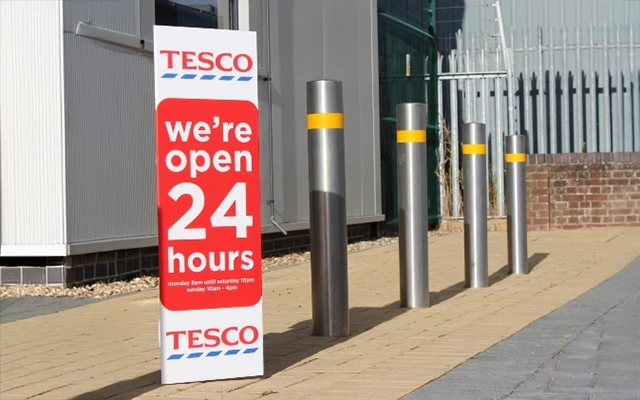
A well fitted bollard cover extends its lifespan considerably. Key installation considerations include:
In many UK retail and forecourt environments, installation quality can influence durability just as strongly as the material itself.
Selecting the right material ensures the cover performs consistently throughout its intended use.
When planning campaigns across multiple sites, this guidance helps ensure consistent quality and predictable timelines.
Observations across retail estates, petrol forecourts, and car parks show reliable patterns in outdoor performance:
These patterns help teams set realistic expectations for both long and short term use.
Many bollard cover materials are recyclable, including polypropylene, Correx, and HDPE. Choosing durable, recyclable materials reduces replacement frequency and supports more sustainable outdoor signage strategies. DEFRA guidance highlights the importance of recyclable plastics in commercial waste planning, which aligns with long lasting signage solutions.
The durability of a bollard cover is shaped by material selection, environmental exposure, print protection, and installation quality. Correx supports short term promotions, polypropylene and PVC suit medium term branding, and HDPE provides long term reliability.
With the right combination of material and print finish, brands can achieve clean, consistent presentation across multiple outdoor locations while reducing maintenance and replacement costs.
If you are preparing a new retail, car park, or forecourt campaign, choosing the right bollard cover is essential for long term performance. By matching materials to your campaign length and site conditions, you can achieve strong visibility and reliable durability across every location.
If you would like help selecting materials or planning a durable outdoor signage strategy, support is available.

Unit 4-10 Stanton Road Ind. Est.
Stanton Road
Southampton
Hampshire
United Kingdom
SO15 4HU