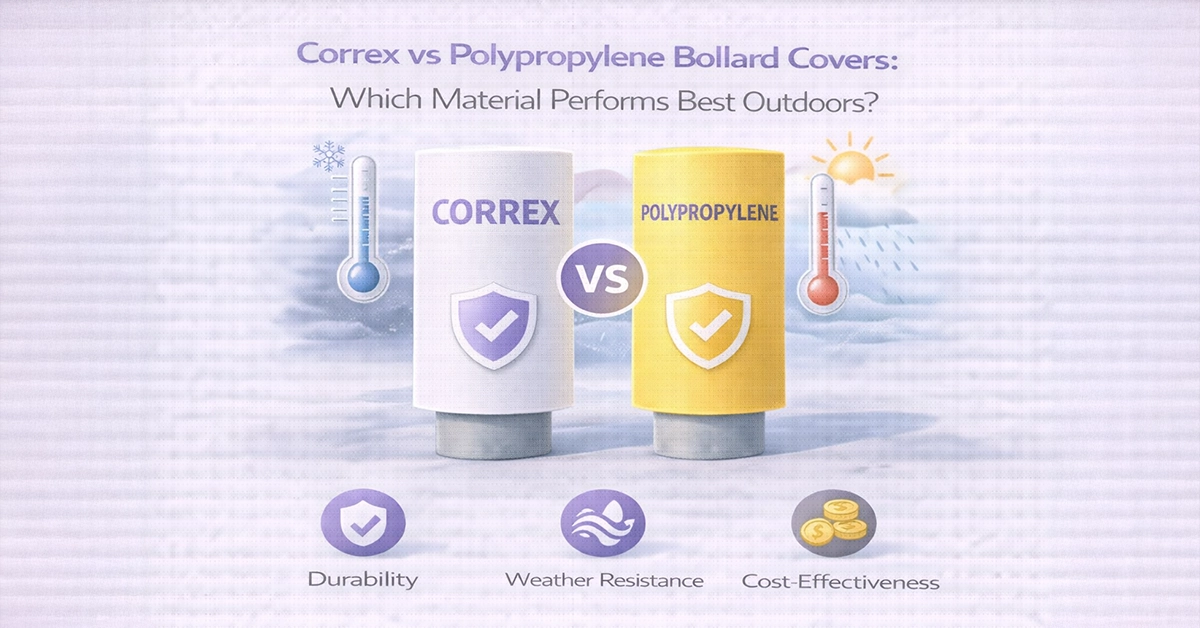
Choosing the right material for outdoor bollard covers can significantly affect the lifespan, performance and impact of your signage. Many buyers compare Correx with polypropylene, sometimes without realising that Correx is actually a fluted polypropylene. Even so, not all polypropylene is made equal, and variations in structure, thickness and finish have a noticeable effect outdoors.
This guide breaks down the differences between Correx and other polypropylene formats to help you choose the most suitable material. It explains how each performs in UK weather, how they hold print, and which offers the best long-term value.
Correx is an extruded, fluted polypropylene formed with a twin-wall structure. Its internal channels provide rigidity while keeping the material extremely lightweight. This makes Correx easy to fold, assemble and lock into bollard sleeve shapes.
Other polypropylene formats, such as solid polypropylene sheets, are non-fluted and much more rigid. They are heavier, stronger and designed for demanding outdoor applications.
For buyers new to printed signage, referencing material glossaries or manufacturing guides can help reinforce understanding.
Outdoor bollard covers must withstand rain, wind, cold, and UV exposure. British weather varies widely, so material choice plays a key role in how long bollard covers last and how well they maintain their appearance.
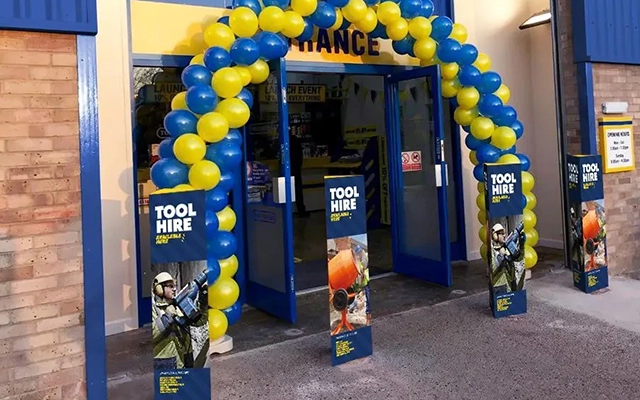
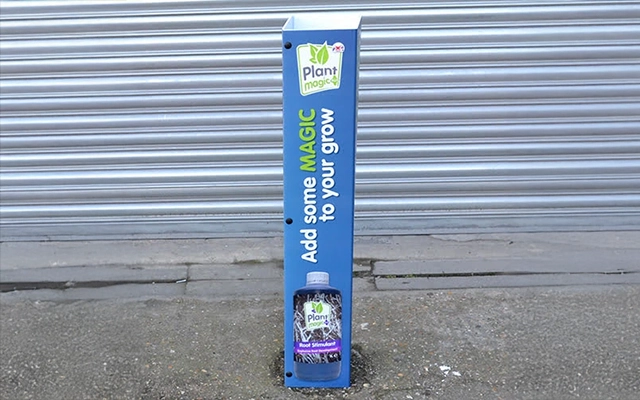
Print finish is crucial for brands using bollard covers to deliver clear, eye-catching messaging. Material choice directly influences colour vibrancy and the longevity of printed graphics.
Ease of installation is a major consideration for teams deploying bollard covers across multiple locations.
Both materials can be installed tool-free, but Correx is noticeably easier to deploy at scale.
Correx is known for being cost-effective, especially for short-term campaigns. Its low weight and ease of production make it ideal for tactical or seasonal use.
Solid polypropylene has a higher initial cost but offers greater longevity, often reducing the need for replacements over several years.
When assessing value, businesses should consider campaign duration, installation frequency and environmental exposure.
Take a look at the following table that shows the characteristics of Correx and Solid Polypropylene materials.
| Material Characteristic | Correx (Fluted Polypropylene) | Solid Polypropylene |
|---|---|---|
| Construction | Fluted twin-wall | Solid rigid sheet |
| Weight | Very light | Heavier and sturdier |
| Outdoor lifespan | Short to medium term | Medium to long term |
| UV resistance | Moderate without UV treatment | Stronger UV stability |
| Print finish | Good for general promotions | Premium, high definition |
| Ease of installation | Quick and flexible | More rigid, steadier |
| Best use-case | Temporary campaigns, events | Long-term installations |
| Cost profile | Lower initial cost | Higher initial cost, longer value |
Both Correx and solid polypropylene fall under PP recycling (code 5), and they can be recycled through appropriate schemes. However, local authority capabilities vary, so businesses should check their regional guidance.
Correx can often be reused across multiple campaigns, reducing waste. Solid polypropylene minimises waste through its extended lifespan, meaning fewer replacements in long-term installations.
External resources such as UK recycling frameworks or plastic classification guides can further support sustainable decision-making.
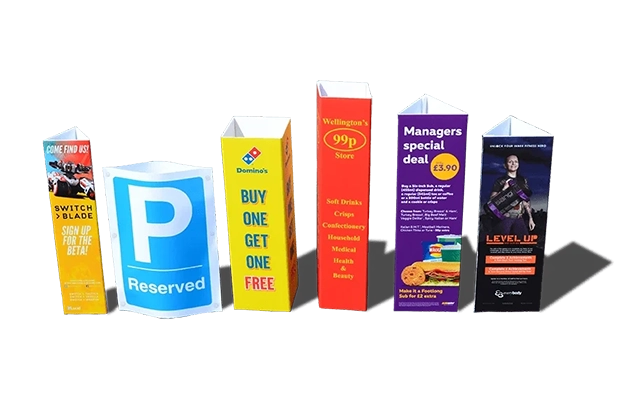
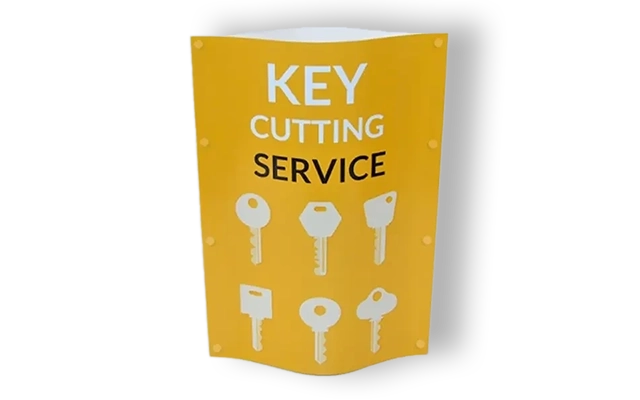
Correx is a strong choice when:
Solid polypropylene is ideal when:
Both Correx and solid polypropylene perform well outdoors, but their strengths apply to different scenarios. Correx is cost-effective, adaptable and perfect for short-term outdoor campaigns. Solid polypropylene offers long-term strength, premium print quality and reliable performance in challenging conditions.
Before choosing, consider campaign length, environmental exposure and visual requirements. Matching material to purpose ensures your bollard covers last as long as intended while delivering consistent branding.

Unit 4-10 Stanton Road Ind. Est.
Stanton Road
Southampton
Hampshire
United Kingdom
SO15 4HU