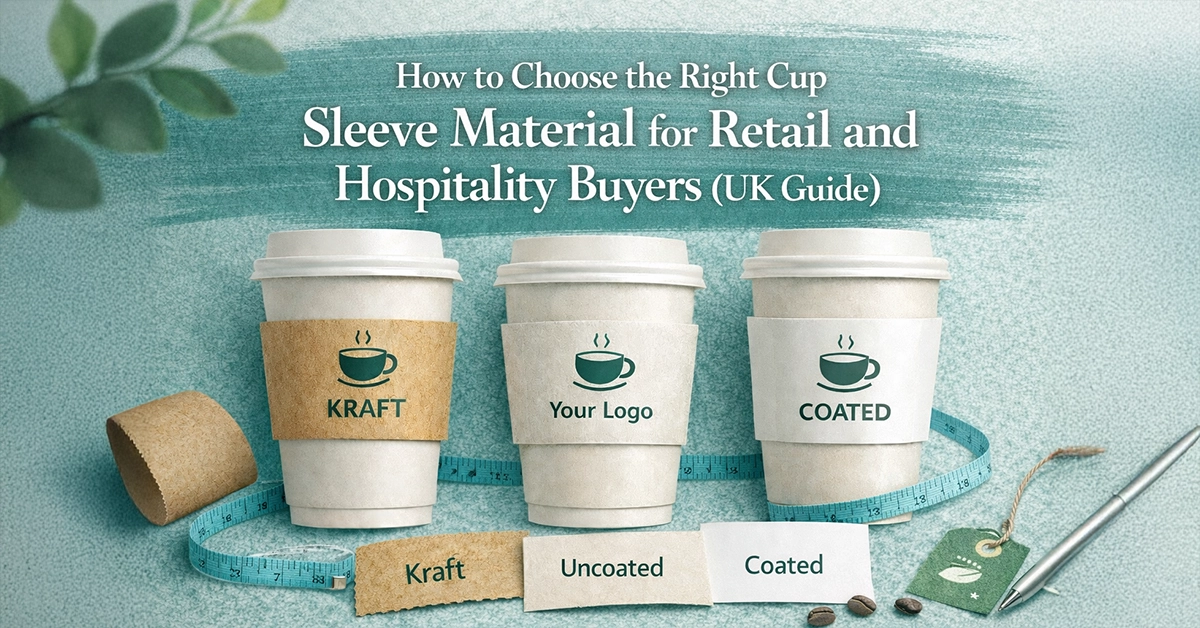
Choosing the right cup sleeve material is more than a packaging choice. For cafés, restaurants, food-to-go outlets, and retail operators, it directly influences customer comfort, sustainability outcomes, and brand perception. With UK consumers becoming increasingly concerned about waste and responsible sourcing, businesses must understand how different sleeve materials perform and how they support operational goals.
This refined guide explains material options, sustainability considerations, cost factors, and practical buying steps tailored to UK hospitality teams.
Cup sleeves are insulating paper-based bands designed to protect hands from the heat of takeaway drinks. They are especially important for single-wall cups, which offer minimal insulation. A well-chosen sleeve improves grip, reduces heat transfer, enhances safety, and delivers a more polished presentation for customers on the move.
Sleeves also support strategic branding. A printed sleeve can reinforce your brand wherever your drinks travel, turning every cup into a mobile advertisement.
Each sleeve material offers unique benefits depending on your priorities, such as insulation, eco performance, or brand appeal.
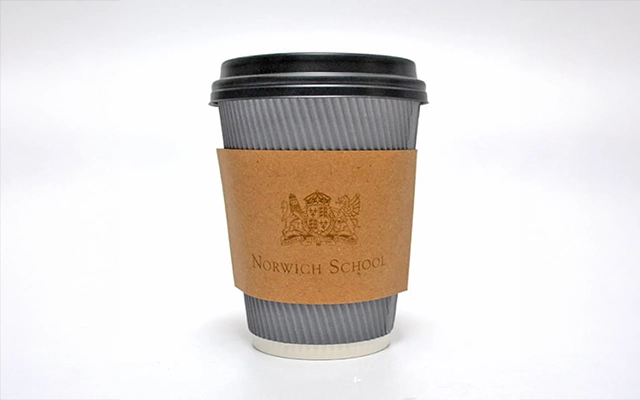
Kraft sleeves provide a natural, organic appearance and are a popular choice among environmentally conscious brands.
Key advantages include:
Best fit: cafés prioritising sustainability or aiming for a natural brand aesthetic.
Recycled paperboard sleeves contain post-consumer fibres, reducing demand for virgin paper and supporting sustainability commitments.
Advantages:
Best fit: brands seeking a balance of sustainability and premium print quality.
Corrugated sleeves feature a textured fluted interior that provides superior insulation. They suit high-heat drinks and busy environments where customer comfort is essential.
Advantages:
Best fit: high-volume or premium hot drink operations.
UK operators often weigh up sleeves against double-wall cups. Each has advantages.
Single-wall cups plus sleeves offer flexible branding through custom sleeves, lower base cup costs, adjustable insulation depending on sleeve material, and stronger sustainability outcomes when responsibly sourced materials are used.
Double-wall cups provide built-in heat protection, reduce the need for sleeves, and offer a clean appearance, but usually come at a higher unit cost.
Even when double-wall cups are used, many brands maintain sleeves for consistency, improved grip, or promotional messaging.
Sustainable packaging is central to UK hospitality strategy, and cup sleeves play a key part in improving waste management and public perception.
Most paper sleeves are recyclable if uncoated. Compostable sleeves may require industrial composting facilities, which are not available in every council area. Businesses should confirm disposal options within their local waste infrastructure.
Look for FSC certification, recycled content verification, and clear disposal labelling. These reinforce environmental commitments and help customers dispose of packaging responsibly.
Cup sleeve materials compared by insulation, sustainability, and use case to support smarter packaging choices.
| Sleeve Material | Insulation Level | Sustainability Profile | Best Use Case | Texture/Appearance |
|---|---|---|---|---|
| Kraft Paper | Medium | Recyclable, natural finish | Eco-focused cafés | Rustic, fibrous |
| Recycled Paperboard | Medium | High recycled content | Sustainable retail | Smooth, printable |
| Corrugated Cardboard | High | Recyclable | High-volume hot drinks | Textured, premium feel |
Sleeves must match cup diameter to perform well. Poor fitting sleeves lead to slipping, weak insulation, and negative customer experiences.
Key considerations include confirming cup size, typically 8 oz, 12 oz, or 16 oz in UK markets, checking sleeve tension and grip, testing compatibility with both single- and double-wall cups, and accounting for differences in cup tapering.
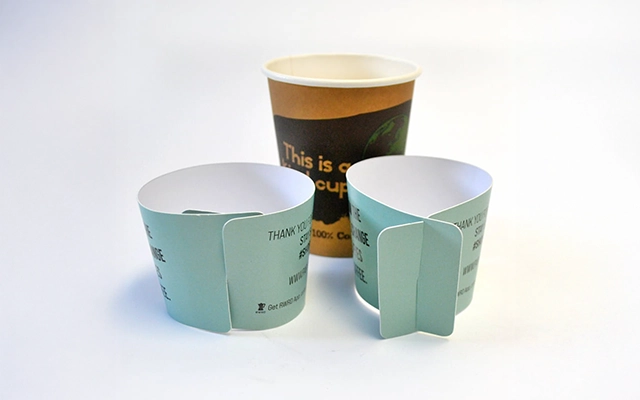
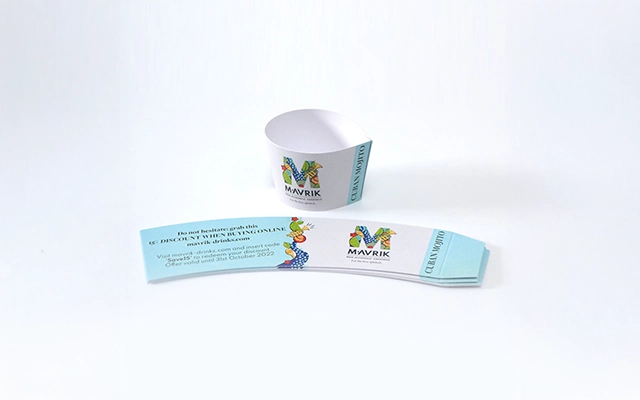
Printed sleeves provide a consistent, portable brand presence. Whether promoting a new drink, showcasing your logo, or sharing seasonal artwork, sleeves offer a high-visibility marketing space.
Branding opportunities include minimalist kraft designs for natural appeal, full-colour prints for bold identity, QR codes directing customers to digital campaigns, and limited-edition or event-based artwork.
Design considerations include strong colour contrast for legibility, concise messaging, confirmed print specifications, and consistent use of brand colours.
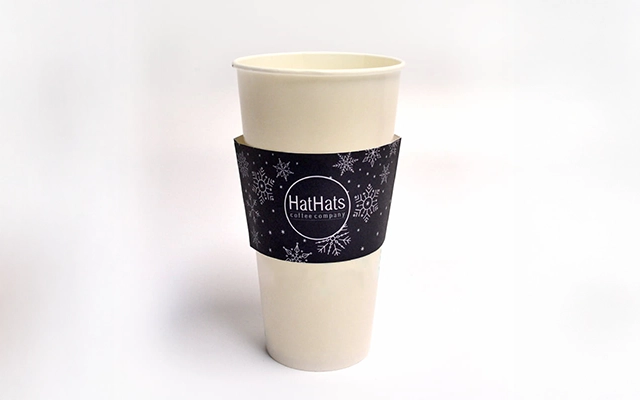
Material choice affects both unit cost and long-term value.
Kraft sleeves are typically the most cost-efficient. Recycled paperboard offers sustainability benefits with balanced pricing. Corrugated sleeves cost more but provide superior insulation.
When assessing cost, consider brand impact, storage requirements, customer comfort, and reductions in double-cupping or heat-related complaints.
Use this structured approach to select the right cup sleeve:
This framework ensures purchasing decisions support both operational efficiency and brand goals.
Different environments benefit from different materials.
Café operators often choose kraft sleeves to support sustainable values and create a natural look. Corporate catering teams frequently use printed sleeves to reinforce brand presence at meetings and events. Transport hubs and high-traffic locations often prefer corrugated sleeves to handle higher drink temperatures safely.
Cup sleeves are small details with significant impact. The right material improves customer comfort, supports sustainability objectives, and reinforces brand identity. By weighing insulation, environmental performance, cost, and design, UK businesses can make confident, informed choices.
If you would like support choosing the right cup sleeve material or exploring custom printed options, get in touch. Expert guidance can help ensure your packaging works effectively for customers, staff, and long-term brand goals.

Unit 4-10 Stanton Road Ind. Est.
Stanton Road
Southampton
Hampshire
United Kingdom
SO15 4HU