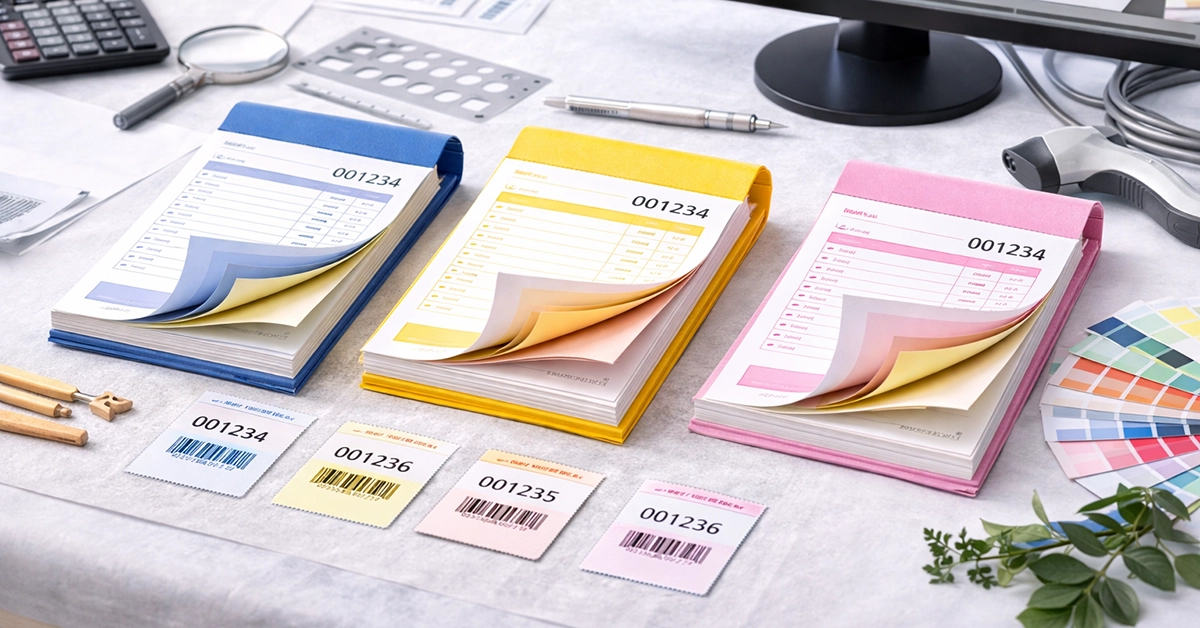
NCR printing forms continue to play an essential role for UK businesses that need fast, accurate and compliant paperwork. From delivery notes and job sheets to invoices and receipts, well-prepared artwork ensures every copy is aligned, readable and fit for purpose. A clear, well-structured NCR design improves workflow efficiency, reduces errors and supports reliable record keeping.
This guide explains best practice for setting up artwork for NCR printing, focusing on form layout, numbering, perforation design, barcode integration and pre-press preparation. Each section includes practical guidance you can apply directly to your next NCR project.
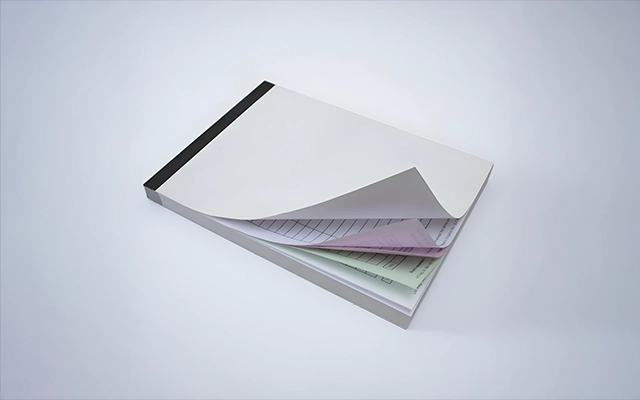
NCR (No Carbon Required) paper allows written information to transfer cleanly through multiple sheets. Because the content appears on more than one layer, the artwork must be accurate and consistent.
Clear NCR artwork ensures:
Correct setup reduces production issues and ensures the printed NCR product supports smooth business operations.
Establish the final dimensions at the beginning of the design process. Incorrect sizing can cause misalignment and trimming errors.
A 3 mm bleed around the page prevents unwanted white edges after trimming.
Keep essential content at least 5 mm inside the trim. This protects logos, signatures, and form fields from being cut too close to the edge.
High-contrast lines, clear headings and clean typography ensure each sheet remains readable, even through multiple layers.
The form should mirror the order in which the user completes it. Prioritise logical grouping:
Every field must appear in the same position on each layer. Even minor shifts can make copies harder to read or process.
Logos, colours and typographic choices should support clarity. Keep decorative elements minimal while maintaining a recognisable brand identity.
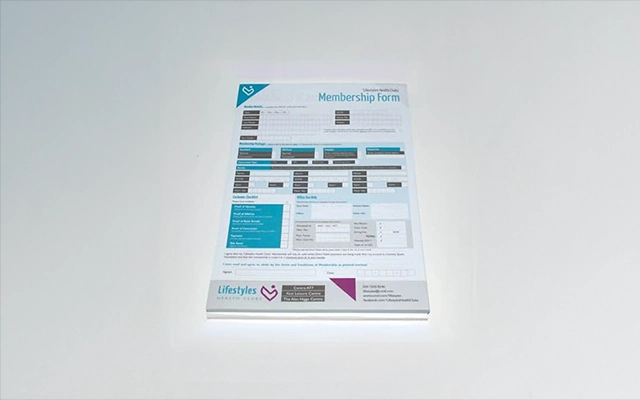
Sequential numbering supports compliance, audit processes and record accuracy. It is especially important for invoice books, delivery notes and job sheets.
Reserve a dedicated space of roughly 30 × 10 mm. Common placements include:
A monospaced font improves readability, ensuring digits align cleanly.
Because numbering is typically applied during production:
This prevents conflicts between the printed artwork and the numbering equipment.
Tear-offs are widely used for receipts, customer copies and field documents.
Keep the perforation line free from text and key fields to ensure smooth and accurate tearing.
If the NCR form will be padded or bound:
This improves durability and daily usability.
| Design Element | Best Practice | Reason |
|---|---|---|
| Bleed | 3 mm on all sides | Prevents white edges after trimming |
| Safe Zone | 5 mm inside trim | Protects important content |
| Numbering Space | Approx. 30 × 10 mm | Ensures numbering fits cleanly |
| Barcode Quiet Zone | Clear margin around code | Improves scanner accuracy |
| Perforation Line | Free from text | Allows smooth tear-off |
| Multi-Part Alignment | Identical positioning | Guarantees consistent duplicates |
| Binding Margin | Extra room on bound edge | Prevents content being obscured |
Barcodes and QR codes help organisations link physical documents to digital systems, supporting rapid scanning, automated data entry, and improved traceability.
To ensure consistent readability:
Correct barcode setup prevents delays in logistics, field operations and administrative workflows.
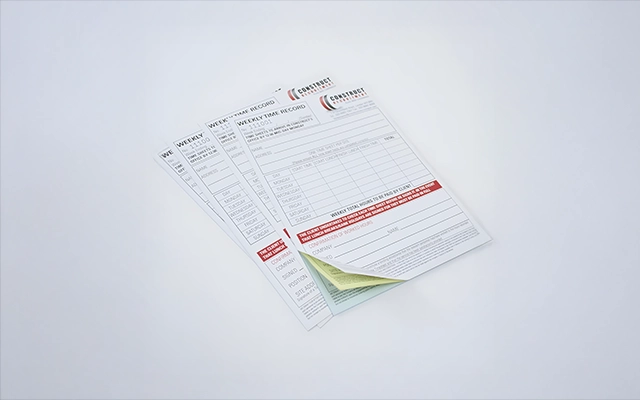
Selecting the right NCR format depends on how and where the form will be used.
Ideal for office environments where each completed set is processed individually.
Useful for field teams who need quick access and neat tear-off functionality.
Designed for secure long-term storage with a fixed audit trail.
Each option supports different working conditions, so artwork should be adapted to its intended format.
Job sheets, inspection reports and customer forms benefit from clear numbering and tear-off slips.
Delivery notes and manifests often use barcodes, multi-copy layouts and signature sections for chain-of-custody tracking.
Order pads and receipt books require fast, intuitive form layouts.
Clarity and consistency are essential for compliance and accurate reporting.
Run through this list before submitting artwork for print:
This prevents production errors and ensures the printed NCR set performs reliably.
A well-prepared NCR design supports efficient workflows, consistent record keeping and professional presentation. Attention to layout, numbering, tear-offs and barcode integration ensures the forms function precisely as intended across every copy.
If you’re planning a new NCR project or updating existing forms, now is an ideal time to refine your artwork and ensure it is print-ready. Reach out to begin discussing your design, request expert guidance or explore tailored NCR printing options that match your operational needs.

Unit 4-10 Stanton Road Ind. Est.
Stanton Road
Southampton
Hampshire
United Kingdom
SO15 4HU