NCR printing is essential for businesses across the UK that rely on accurate, immediate copies of written records. Whether used for delivery notes, invoices, job sheets, or service reports, the cost of producing NCR pads, books, or loose sets can vary far more than many buyers expect. Pricing is shaped not only by size or colour but also by material choices, labour, production method, artwork requirements, and ordering strategy.
This guide explains the true cost of NCR printing, explores the factors that influence pricing, and provides practical steps to optimise your orders. The aim is to help you make informed purchasing decisions and reduce unnecessary spend while maintaining consistent, reliable documentation.
Three main components determine the price of NCR printing:
Because NCR printing requires more handling and finishing than standard digital print, even small specification changes can have a meaningful impact on price. Understanding these factors allows you to compare quotes more effectively and avoid paying for features you do not need.
The number of sheets in each NCR set is one of the strongest cost indicators:
Choosing the right size has both functional and financial implications:
Standard NCR colours include white, yellow, pink, blue, and green. Certain colours may cost more due to supply fluctuations.
UK paper prices have seen notable increases in recent years. Data from the Office for National Statistics shows upward trends in manufacturing and material costs, reinforcing the value of strategic ordering.
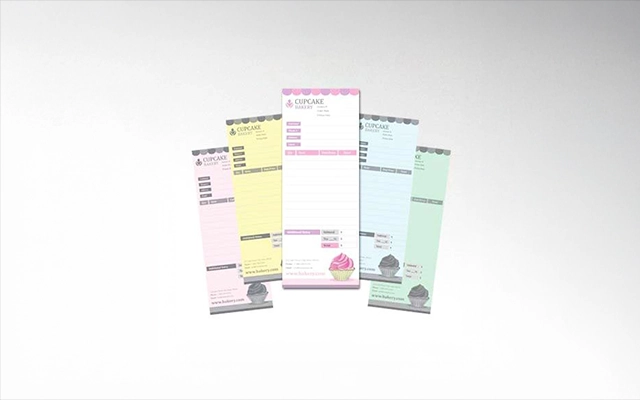
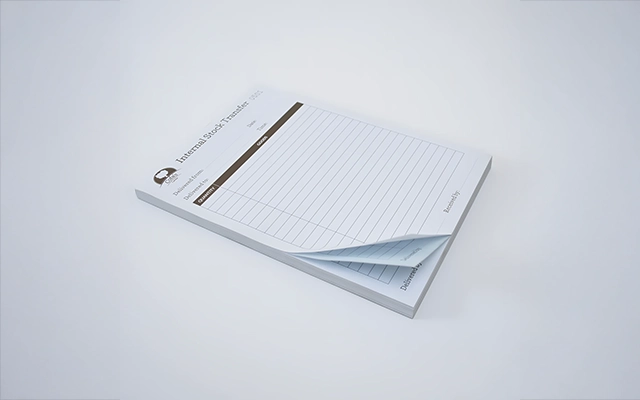
NCR printing is produced via digital or litho methods.
A crucial point: setup cost is fixed, regardless of quantity. This is why small NCR orders often appear disproportionately expensive when compared to larger batches.
Finishing work accounts for a significant portion of NCR production time. Key elements include:
Because these steps require manual inspection, finishing has a noticeable impact on final cost.
Poorly prepared artwork slows production and increases labour time. NCR forms often contain multiple fields, boxes, signature areas, and structured layouts, making prepress accuracy essential.
To keep prepress charges down, ensure artwork:
A consistent approach to artwork also helps ensure professional, repeatable results across different NCR batches.
| Cost Factor | Description | Typical Impact on Price |
|---|---|---|
| Ply Count | Number of layers per set (2, 3, or 4 part) | Increases stock use and collation time |
| Size | A6, A5, A4, DL | Larger sizes cost more due to material usage |
| Paper Colour | Choice of NCR colour sequence | Some colours have higher raw material cost |
| Print Method | Digital vs litho | Digital for short runs, litho for volume |
| Numbering | Sequential numbering | Adds labour and machine setup time |
| Perforation | Tear-off sections | Requires additional machine passes |
| Binding Type | Pads, books, loose sets | Books are the most labour-intensive |
| Artwork Setup | Prepress checks and corrections | Clean files reduce extra labour |
| Delivery | Weight-driven transport | Larger orders increase shipping cost |
Customisation enhances usability and branding but adds cost. Common upgrades include:
Sustainable stock choices typically add 5 to 15 percent depending on specification and availability.
The economics of print production mean that ordering larger quantities almost always reduces your cost per unit.
Consistency not only reduces cost but also helps maintain uniform branding across your organisation.
NCR materials are heavy, and quantities mount quickly. Delivery costs are influenced by:
Transport costs across the UK have risen in line with warehousing and fuel trends, making consolidated orders particularly beneficial for businesses aiming to control spend.
To keep costs manageable:
These steps help reduce unnecessary spend and improve workflow efficiency across departments.
NCR printing plays a vital role in business operations, but its cost is shaped by many interconnected factors. By understanding how materials, labour, production method, and order strategy impact price, you can make more informed decisions and secure better value for your organisation.
If you’re reviewing your current NCR use or planning new print requirements, now is an ideal time to assess your forms, refine specifications, and explore opportunities to reduce cost. Strategic NCR planning not only improves efficiency but also supports smoother day-to-day operations.

Unit 4-10 Stanton Road Ind. Est.
Stanton Road
Southampton
Hampshire
United Kingdom
SO15 4HU