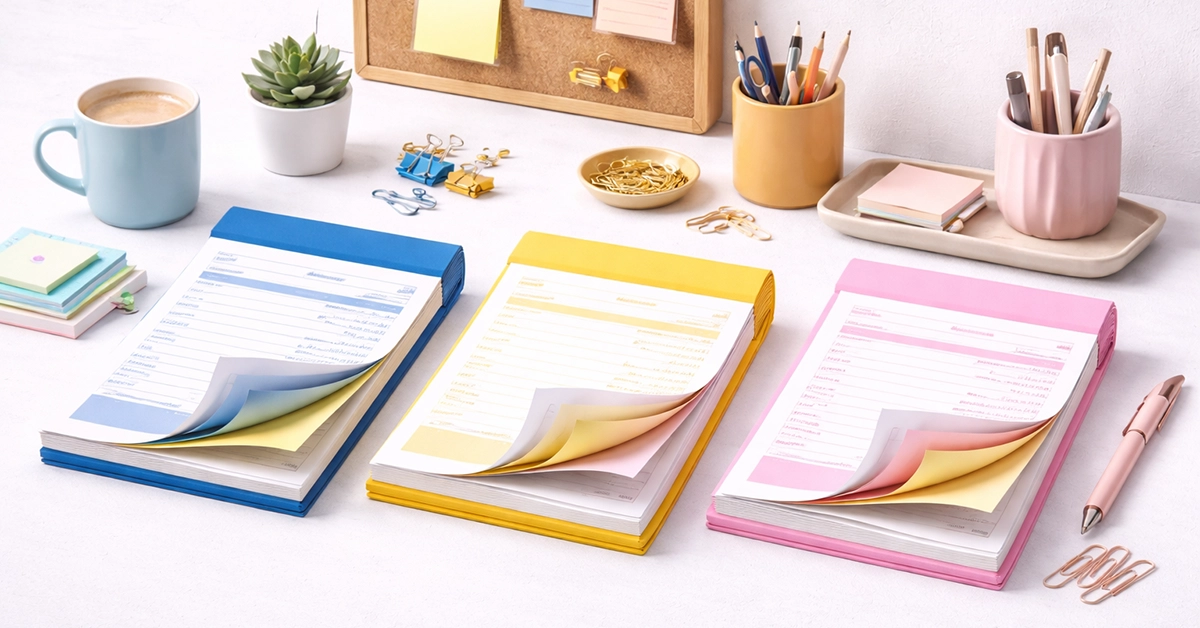
Printed NCR pads continue to play a crucial role in retail and hospitality, even as digital systems become more common. Restaurants, cafés, hotels, shops, and mobile operators still rely on NCR pads and multi-part forms for instant written records, accurate communication between teams, and dependable compliance documentation. When POS systems fail or rapid handwritten notes are required, NCR forms provide clarity and consistency.
This refined guide explains how NCR printing works, the most effective templates and layouts for customer-facing and operational use, and essential UK compliance considerations. It also highlights how structured NCR designs improve workflow, accuracy, and staff communication.
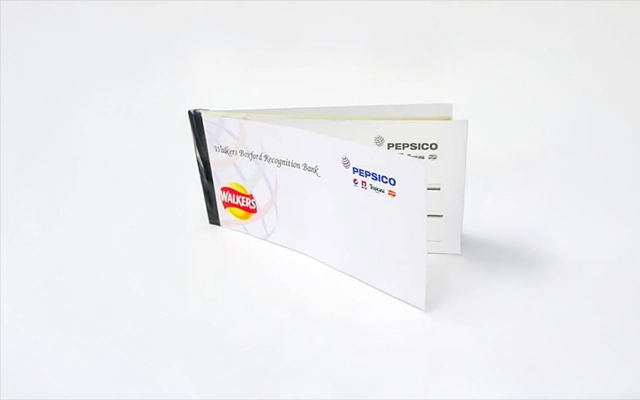
NCR printing (No Carbon Required) uses coated paper that transfers writing pressure to create immediate duplicates. It removes the need for carbon sheets and is available as:
For retail and hospitality, NCR printing remains valuable because it:
For businesses exploring professional NCR formats, similar structured paper products, such as wirobound notepads, can also support daily documentation.
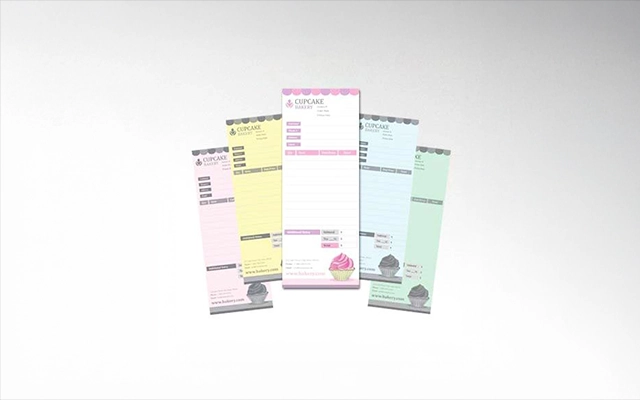
Retail businesses need concise, clear documentation that supports fast transactions and smooth customer interactions. NCR templates commonly used in shops include:
A strong retail NCR template should feature:
These components ensure accuracy and help businesses maintain compliance with HMRC requirements for sales documentation and VAT transparency.
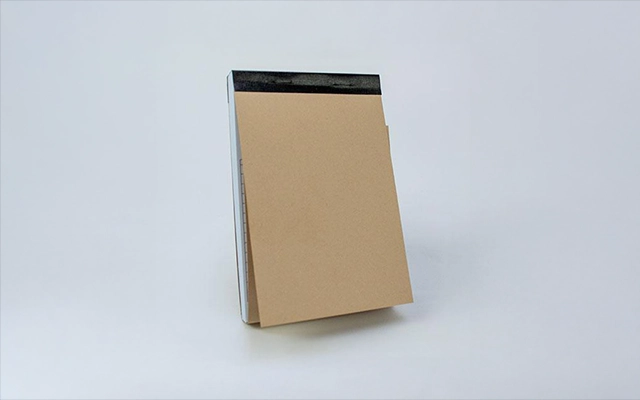
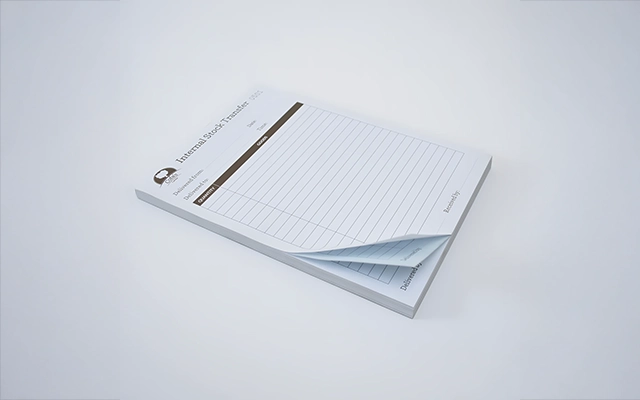
Hospitality environments demand structured order-taking and seamless communication between front-of-house and kitchen teams. NCR order pads provide this consistency.
A well-designed restaurant or café NCR template includes:
Three-part sets are commonly used:
This format reduces miscommunication, supports audits, and helps businesses document orders accurately.
Hotels, event venues, and catering companies often require structured NCR documents for more layered operations. Common templates include:
A well-built NCR layout for these environments should provide:
These templates ensure consistency across departments and provide a reliable physical record for accounting and operational checks.
| Form Type | Essential Fields | Recommended Parts | Best Use Cases |
|---|---|---|---|
| Retail Receipt | Date, reference number, VAT details, item lines, totals, signature | 2-part | Shops, boutiques, pop-up and mobile retail |
| Restaurant Order Pad | Table number, server ID, time, food/drink sections, special notes | 3-part | Restaurants, cafés, bars, takeaways |
| Hotel/Service Agreement | Guest details, booking reference, service description, terms, signature | 3 or 4-part | Hotels, event venues, catering services |
| Delivery Note | Supplier details, stock list, condition check, signature | 2 or 3-part | Back-of-house retail and hospitality stock handling |
| Maintenance or Incident Log | Issue notes, location, date/time, staff initials | 2-part | Hotels, kitchens, facilities teams |
Behind the customer-facing areas, structured NCR sets help businesses maintain clear operational records. Common uses include:
These forms provide internal accountability and contribute to seamless communication between departments such as stock control, procurement, and management.
Compliance is essential in retail and hospitality, particularly where VAT, transactions, or customer details are involved.
If VAT-registered, businesses must document the following on applicable receipts or invoices:
Although not all retail transactions require a VAT invoice, businesses must be prepared to provide one on request.
Under HMRC rules, businesses must retain transactional records for six years. NCR forms support record retention by providing clear, legible paper trails that remain accessible during audits or digital system failures.
Digital receipts and POS software offer convenience, but NCR printing adds an additional layer of operational support. A balanced approach can help businesses:
Using NCR alongside digital tools often increases operational reliability in fast-paced hospitality settings.
Well-designed NCR documents improve workflow and reduce staff errors. Key principles include:
To maintain accuracy and compliance, businesses should avoid:
Addressing these issues ensures staff can complete documentation quickly and correctly.
Across retail and hospitality, NCR printing remains an essential part of day-to-day operations. Its reliability, structure, and clarity support service quality, internal communication, and compliance obligations. Whether used independently or alongside digital systems, NCR templates provide a flexible, dependable solution for busy customer-facing and back-of-house teams.
If you want to improve your documentation, refine your templates, or ensure your forms reflect your business workflow accurately, now is an ideal time to review your existing printed materials. Updating layouts or developing new NCR designs can help support compliance, streamline processes, and create a consistent experience for both staff and customers.

Unit 4-10 Stanton Road Ind. Est.
Stanton Road
Southampton
Hampshire
United Kingdom
SO15 4HU