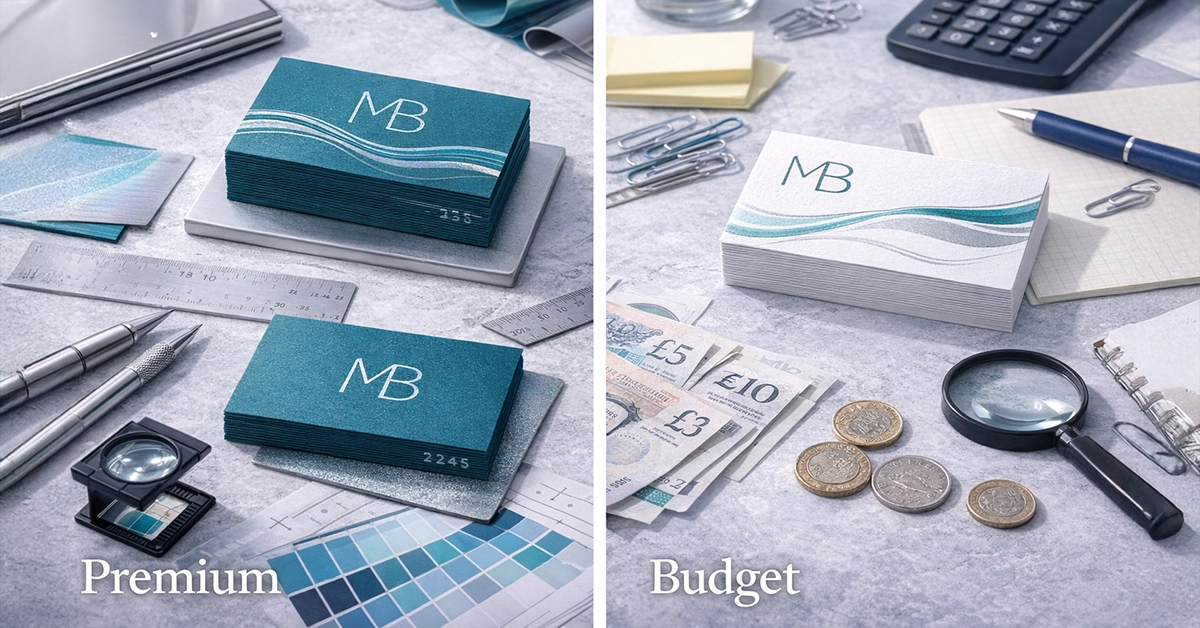
Even in a digital-first world, printing business cards continues to add value in UK networking, client meetings, exhibitions and professional introductions. This raises a key question for many business owners: should you opt for budget cards that keep costs low, or premium cards that offer stronger visual and tactile impact?
This guide explores how each option works, who they suit best, and how to choose the right type for your brand and business goals.
Despite digital alternatives, business cards remain a widely used networking tool because they offer something unique: a tangible reminder of your brand. A physical card supports recall, encourages conversation, and shows preparedness.
UK professionals continue to rely on business cards for:
Business cards vary significantly in cost, materials and finish. Understanding these differences makes the decision between premium and budget far clearer.
Budget cards typically use standard stocks and simple finishes. They focus on function, accessibility and affordability, making them suitable for high-volume situations or businesses needing frequent reprints.
Premium cards use heavier materials, richer textures and enhanced finishes such as soft-touch lamination, embossing or foil details. Their purpose is to create a strong first impression and reinforce brand identity.
Typical distinctions include:
These features influence how a recipient perceives quality and trust.
Budget cards serve as a practical option for many UK businesses. They work well when you need reach, scale and flexibility.
Key advantages include:
With a clean design and clear branding, budget cards can still support professional interaction.

Premium cards are chosen for their ability to make a noticeable impact. They support businesses where brand perception and client relationships play a key role.
Benefits include:
| Feature / Factor | Budget Cards | Premium Cards |
|---|---|---|
| Typical Paper Weight | 300–350 gsm | 400–600 gsm, multilayer or specialist stocks |
| Cost per Print Run | Low | Higher, varies by finish and material |
| Best Use Cases | Events, high-volume networking, start-ups | Client meetings, presentations, service-based work |
| Finish Options | Basic matte or gloss | Soft-touch, tactile finishes, embossing, foiling |
| Longevity | Shorter lifespan | Longer-lasting, more durable |
| Brand Impact | Functional and simple | Strong first impression, higher perceived value |
| Reprint Flexibility | Easy and cost-effective | Higher cost for frequent reprints |
| Target Audience | Broad, general | High-value clients, professional sectors |
Choosing between budget and premium business cards is less about upfront cost and more about long-term value.
A single premium card offered in the right scenario can out-perform dozens of budget cards handed out in low-value contexts.

Both card types can be printed on eco-conscious stocks. Premium recycled materials are now widely available without sacrificing durability or appearance. See Eco-Friendly Business Card Printing in the UK for additional sustainable printing advice.
Many UK businesses now combine both styles: using budget cards for events and reserving premium cards for high-value conversations.
Digital integration has become increasingly popular. You can connect print and online identity by adding:
These features improve convenience while maintaining the personal touch of a physical card.
Use the following guidance to ensure professional results:
Sustainability continues to shape how businesses source their printed materials. Consider:
These options support both brand values and environmental responsibility.
Whether you choose budget or premium business cards depends on your brand priorities, networking habits and long-term goals. Budget cards offer practical, cost-effective flexibility, while premium cards provide stronger impact and improved retention. A thoughtful approach helps you select the option that strengthens your professional presence and supports your business objectives. Some businesses choose both, using each style strategically depending on the setting.
Your business card often acts as the first tangible expression of your brand. Whether you’re aiming for practicality, impact or a blend of both, the right choice helps you communicate professionalism and purpose from the moment you make contact.

Unit 4-10 Stanton Road Ind. Est.
Stanton Road
Southampton
Hampshire
United Kingdom
SO15 4HU