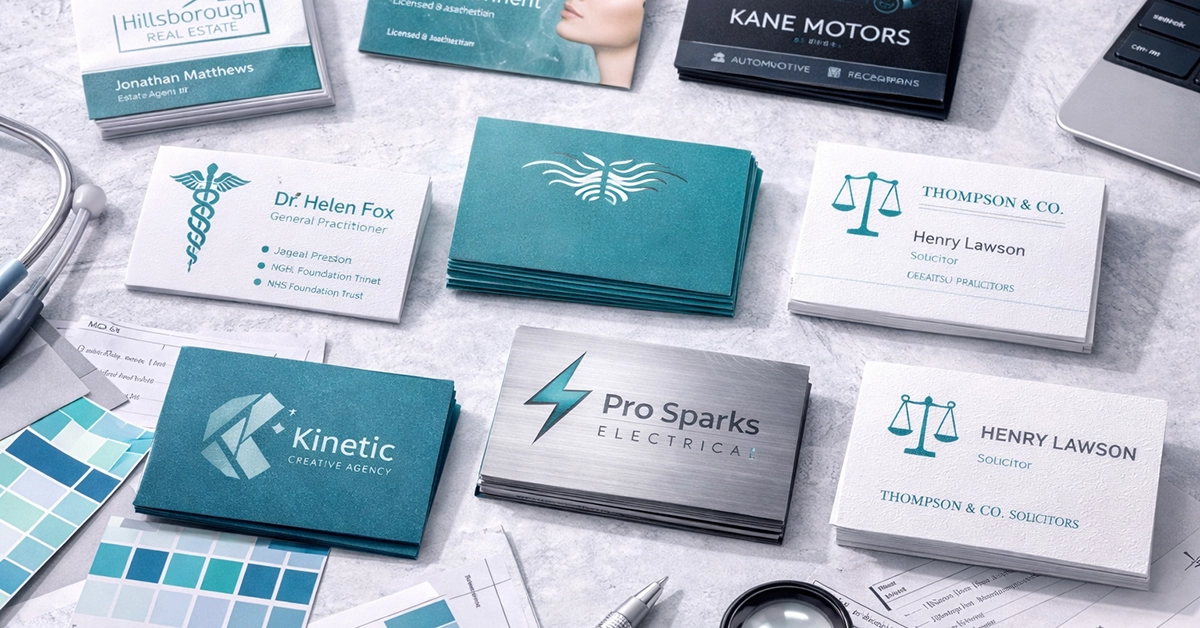
Print on business cards remain one of the most trusted ways for UK professionals to create a memorable first impression. Yet the right business card design varies significantly across industries. What suits a solicitor may feel completely out of place for a photographer, and a fitness coach’s dynamic style will differ greatly from a financial adviser’s refined layout. Choosing the right style is not about preference alone. It is about aligning your design with the expectations of your sector and the needs of your audience.
This guide explores the most popular business card styles across major UK industries, explaining how design choices affect perception, credibility, and brand identity. Whether you work in professional services, creative fields, trade, wellness, tech, or retail, you will find practical insights tailored to your sector.
Every industry has its own visual language shaped by audience expectations and long-standing brand norms. A business card reinforces those expectations instantly. Choices around colour, layout, typography, material, and finishing techniques all send subtle signals about reliability, creativity, or professionalism.
Several factors influence style selection:
Research into consumer perception consistently shows that tactile materials and visual clarity drive trust. A strong business card remains a key component of brand credibility, particularly in sectors where personal presentation matters.
Across all industries, several design components influence how a business card is received:
Different industries prioritise these elements in different ways depending on audience expectations and branding goals.
Professional services depend on clarity, trust, and authority. Their business card styles typically reflect these values.
Common Features:
Creatives often treat their business cards as portfolio pieces. The goal is to stand out and express originality.
Typical design traits:
For photographers and illustrators, a sample image on one side is common because it reinforces brand identity instantly.

Trade professionals need designs that are extremely practical and durable.
Popular characteristics:
These cards are designed to communicate reliability and ensure the essential details stand out.
Wellness-focused businesses benefit from cards that feel calming or energising depending on their niche.
Common stylistic features:
These elements help convey comfort, expertise, or motivation.
Cards in the hospitality sector often reflect the experience customers can expect.
Typical design choices:
These cards help reinforce ambience, theme, and character.
Modern, minimal, tech-driven branding characterises this sector.
Popular traits:
Tech business cards often act as a bridge from physical networking to digital engagement.
Retailers rely on business cards both as branding tools and customer retention assets.
Common features:
These cards support recognition and repeat engagement.
| Industry | Common Style | Materials / Finishes | Primary Purpose |
|---|---|---|---|
| Professional Services | Minimal, refined, typographic | Uncoated, soft-touch, foil | Communicate trust and expertise |
| Creative Industries | Artistic, bold, unique | Textured papers, die-cuts, triplex | Showcase creativity |
| Trades & Construction | Durable, simple, high-visibility | Gloss or matt laminate, heavy stock | Practicality and clarity |
| Health & Wellness | Soft, clean, natural | Textured or uncoated, rounded corners | Reassurance and comfort |
| Hospitality & Events | Elegant, atmospheric | Soft touch, foil, textured stocks | Reflect venue ambience |
| Tech & Startups | Modern, minimal, digital-first | Matt, recycled stock, QR codes | Innovation and connectivity |
| Retail & Small Business | Practical, colourful, promotional | Gloss, silk | Branding and customer retention |
Across all industries, several trends continue to influence card design decisions:
These trends highlight a shift towards professional clarity, tactile quality, and environmentally conscious branding.


To ensure your card supports your brand effectively, consider the following:
Your business card is often the first physical representation of your brand. The right design strengthens trust, improves recognition, and supports smoother networking.
Business card styles vary for good reason. Each industry relies on different design cues to communicate professionalism, creativity, reassurance, or innovation. By selecting a style that matches your sector and reflects your brand identity, you ensure every introduction feels intentional and meaningful.
If you would like expertly designed cards that represent your business with clarity and confidence, now is the perfect time to refine your ideas and choose a style that works for your industry. A well-crafted business card helps your brand stand out and makes every meeting more memorable.

Unit 4-10 Stanton Road Ind. Est.
Stanton Road
Southampton
Hampshire
United Kingdom
SO15 4HU